India Inc’s Experience With Ind AS

India Inc has taken a giant leap forward, aligning its accounting practices with International Financial Reporting Standards (IFRS), through the adoption of a new set of accounting standards called ‘Indian Accounting Standards' or ‘Ind AS' new accounting standards have mandatory from April 1, 2016 for companies with a net worth exceeding Rs 500 crore as of 31 March 2014. These were classified as “Phase 1 companies”. Simultaneous with these Phase 1 companies, their group entities – subsidiaries, associates and joint ventures, have also adopted Ind AS. There are more than 1,000 such corporate groups in India that are part of this first phase of transition – from existing Indian Generally Accepted Accounting Principles (GAAP) to Ind AS.
By March 31, 2020, more than 10,000 corporate groups outside the financial services and insurance sector; and more than 12,000 groups in the financial services and insurance sector, including non-banking financial companies, will make their journey of adoption of Ind AS.
Till date, a little more than 600 companies listed on Indian stock exchanges have reported quarterly financial results as per Ind AS for the first three quarters of financial year 2016-17. Quarterly financial results, by their very design and nature, provide only a summary view of the impact of this momentous change on India Inc's accounting. Nevertheless, an analysis of the first financial results under Ind AS – for quarter ended June 30, 2016, submitted by listed companies to stock exchanges in 10 key sectors revealed that 10 key areas of Ind AS impacted their earnings for the comparative period, though with a differing veracity for each sector. This ‘10x10 view' is demonstrated in the chart below:
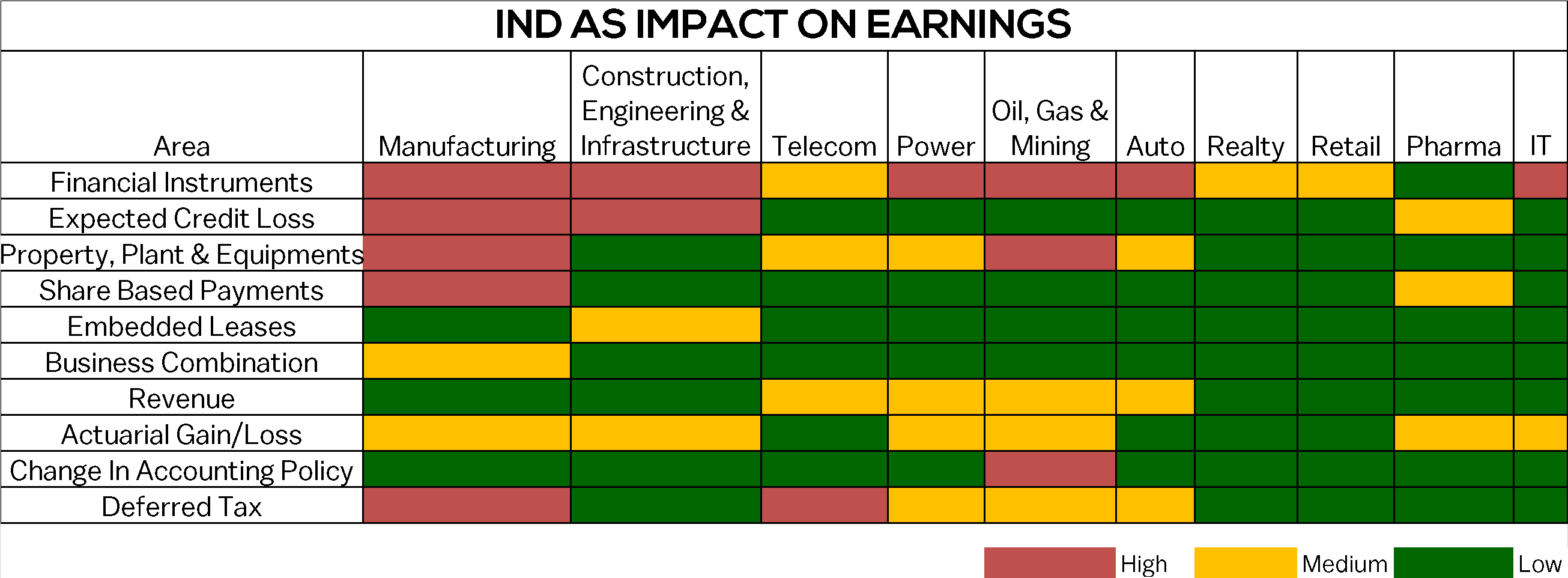
As can be seen above, measurement of financial instruments is one area where transition to Ind AS has had a pervasive impact across sectors. Further, the manufacturing sector appears to be most affected as a result of this transition.
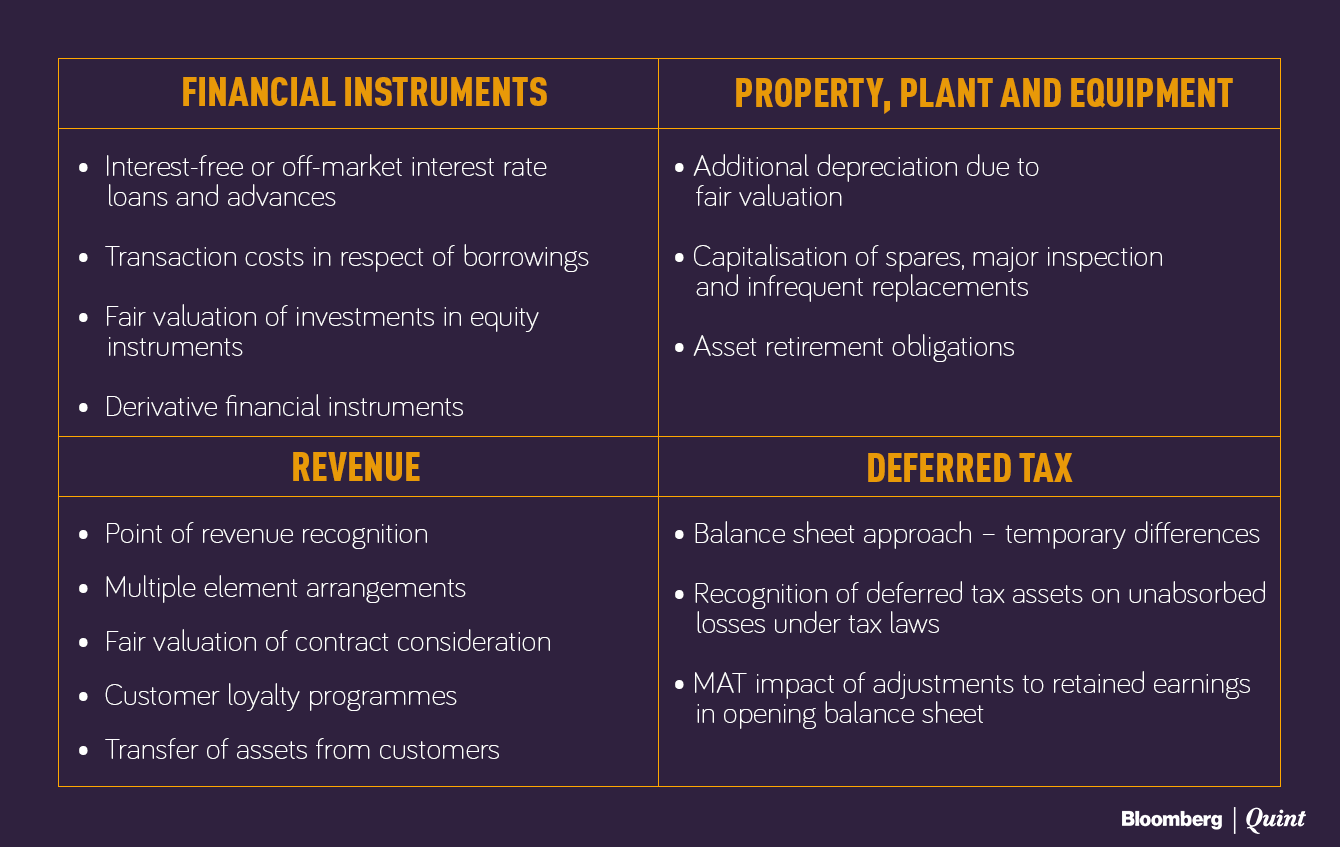
The following table puts into perspective the key transactions within some of these areas wherein India Inc. experienced significant impact on their reported earnings:
The picture has not unfolded completely, and there are several reasons for that.
One crucial aspect of the transition to Ind AS is that the new accounting standards are to be applied retrospectively, and the entire impact as a result thereof is to be adjusted in opening equity on the date of transition.
This is April 1, 2015 for Phase 1 companies with financial year-end in March. While submitting their quarterly financial results, India Inc was not required to report the impact of such adjustments on the equity or shareholder's funds of the entity. However, the annual financial statements contain a mandatory disclosure of a reconciliation of equity and net profit/loss as per existing Indian GAAP and as per Ind AS.
The matter gets complex as corporates are allowed to make certain accounting policy choices on the date of transition. Till now, investors are not aware as to what accounting policy choices have been made by the companies and the impact of the same on their net worth. However, the annual financial statements will lay down those accounting policies very clearly.
The following table summarises a few key choices available to corporates, only once i.e. on the transition date:
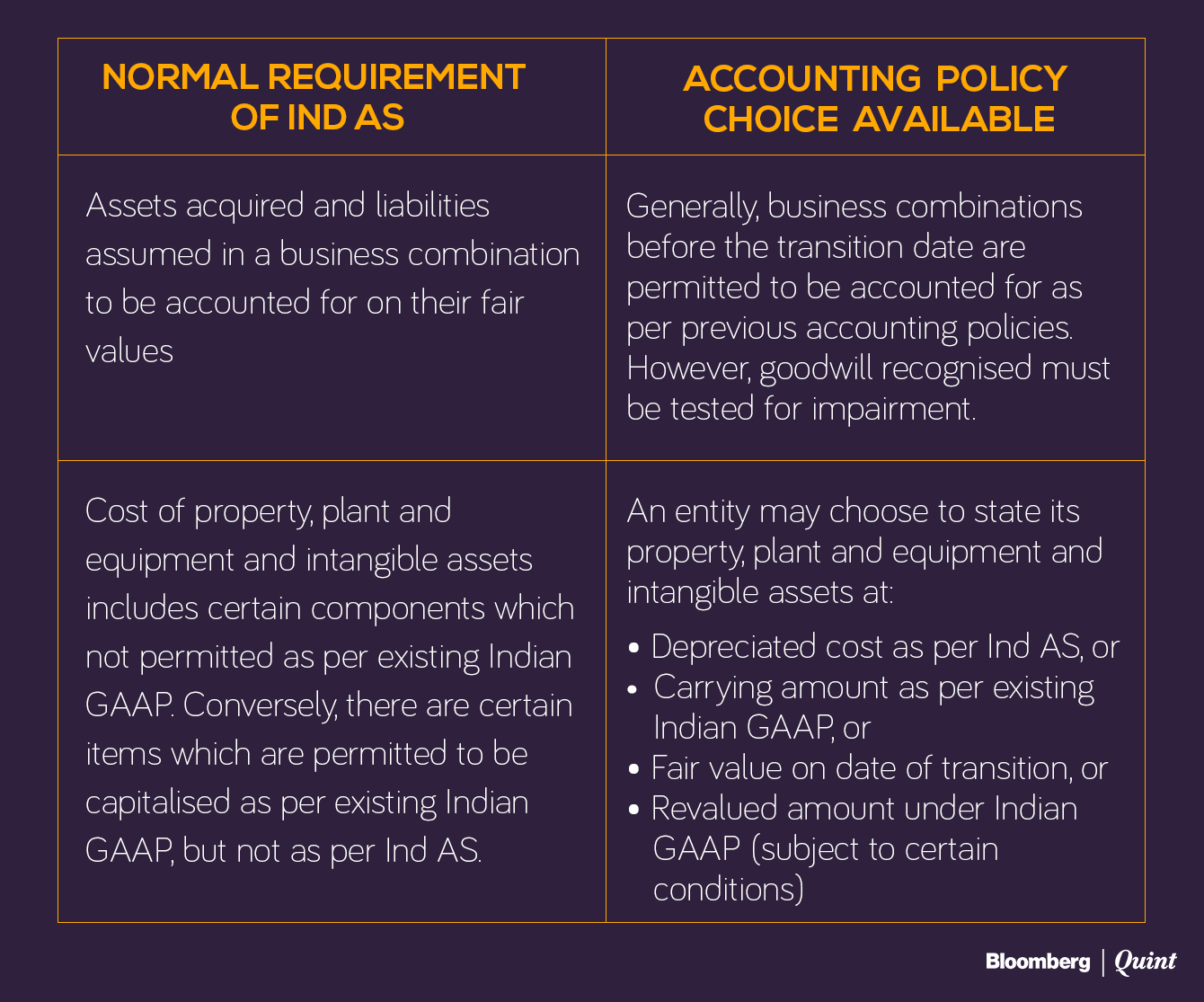
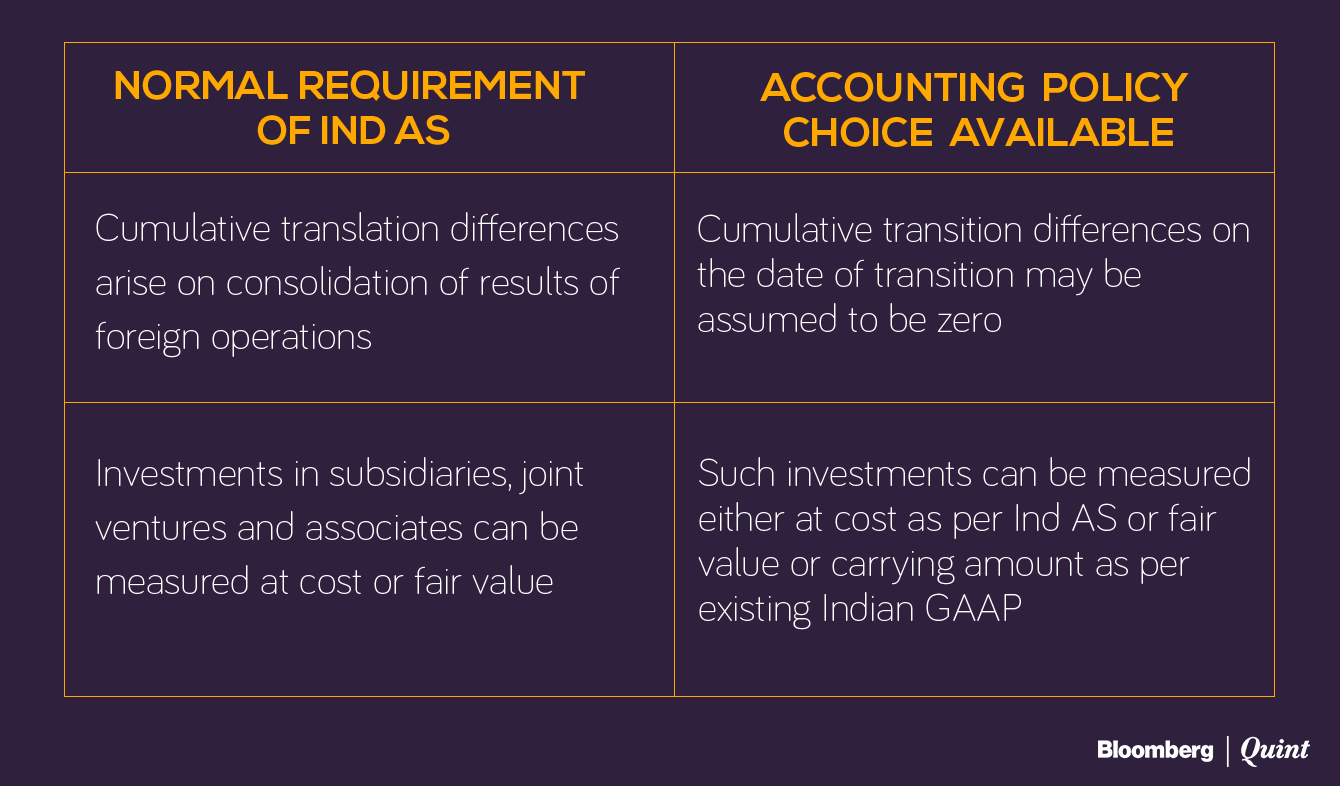
To illustrate, a decline in the value of financial instruments could be offset by appreciation in the value of property, plant and equipment, but the quarterly results have not demonstrated these changes to the investors yet. It is only when the companies start publishing their complete set of financial statements that their policy decisions shall become visible to investors.
Appropriate decision making about the financial health of companies will be possible only after review of such details.
The nature of adjustments made, the judgment of management behind those and quality of their disclosures, will be some indicators of corporate governance of India Inc.
Accounting experts will closely see how companies communicate with their investors about the results of their transition and choices made. Their eyes will also be set on the disclosures made about key areas like financial instruments and taxes. Eventually, the objective of making these disclosures should be to inform and not to confuse.
Last, but not the least, it needs to be seen how tax authorities look at accounting positions upon transition and during ongoing implementation.
Siddharth Talwar is partner at Grant Thornton India LLP.
The views expressed here are those of the author's and do not necessarily represent the views of BloombergQuint or its editorial team.

-
Unhedged Position: Can India See An Indonesia-Style Time Correction?

The Nifty is trading below levels it first clocked in 2024. Is there, then, as I have suggested in the headline, potential that the current time correction drags on painfully for the next three-five, even ten years?
-
Navigating Friction And Energy Realities: An Analysis Of Marco Rubio's October Visit To India
Occurring at a critical juncture marked by stalled trade negotiations and escalating geopolitical pressures over global energy supplies, the visit offers a profound window into modern US-India relations.
-
India Exports Capital. Why Not Export Trusteeship?
The big question, then, is whether India can build an institution that global borrowers, investors, banks, and lawyers can trust, even without an Indian connection.
-
France's Economy & Politics Are In Crisis | The Reason Why
Let's look at how the French economy and politics evolved under Nicolas Sarkozy, Franois Hollande and Emmanuel Macron.
-
You May Inherit The Business. You Must Earn Its Credibility.
Succession tests the founder's ability to share authority as much as it tests the next generation's readiness to assume it.
-
Signing Deals Is One Thing; Making Them Work Is Another | The Week In Whys
Sometimes, things don't turn out as planned. Indian companies have lost some bids to rivals, some projects won't produce until 2030.
-
FOMC Wall, PERM Suspension, Hospital Stocks | Talking Points This Week
A PERM suspension would directly affect green-card sponsorship rather than H-1B visas, so the near-term earnings impact could remain relatively limited. The key question is whether this marks a new phase in US scrutiny of Indian IT.
-
Everything, Everywhere, All At Once: Dalal Street's Week To Forget | Joining The Dots
Visa curbs, a Starlink spat and cancer drug caps: what connects this week's shocks for Indian markets
-
India Is Going Abroad For Critical Minerals. But It May Take Years To Pay Off | The Reason Why
Although India's steps are in the right direction, they remain modest compared with India's growing dependence.
-
When Everyone Has AI, What Gives You An Edge?
India's young workforce is entering an uncertain world of work where powerful AI tools are becoming widely accessible. The advantage will belong to those who combine deep expertise with digital fluency, and the distinctly human capabilities that technology cannot manufacture.