India In Historic Technical Recession, RBI Says In First "Nowcast"
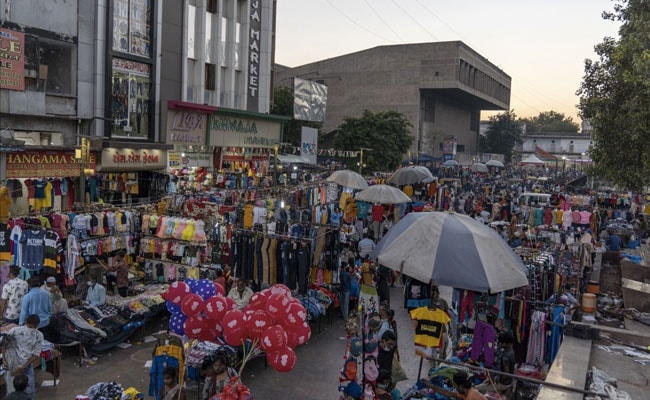
India's economy probably shrank for a second straight quarter, according to a team of economists including Michael Patra, the central bank's deputy governor in charge of monetary policy, pushing the country into an unprecedented recession.
Gross domestic product contracted 8.6 per cent in the quarter ended September, the Reserve Bank of India showed in its first ever published 'nowcast,' which is an estimate based on high-frequency data. The economy had slumped about 24 per cent in April to June.
"India has entered a technical recession in the first half of 2020-21 for the first time in its history," the authors wrote. The government is due to publish official statistics on November 27.

The Reserve Bank's number is buoyed by cost cuts at companies that boosted operating profits even as sales dipped. The team of authors also used a range of indicators from vehicle sales to flush banking liquidity to signal brightening prospects for October. If this upturn is sustained, the Indian economy will return to growth in the October-December quarter, earlier than projected by Governor Shaktikanta Das last month, when he pledged to keep monetary policy accommodative.
However, "there is a grave risk of generalization of price pressures, unanchoring of inflation expectations feeding into a loss of credibility in policy interventions," the team of economists wrote in the Reserve Bank's bulletin. They also highlighted risks to global growth from a second wave of coronavirus infections.
‘Challenging Times'
"Lurking around the corner is the third major risk -- stress intensifying among households and corporations that have been delayed but not mitigated, and could spill over into the financial sector," the economists concluded. "We live in challenging times."
Consumers cut back on spending as millions lost their jobs, preferring instead to squirrel away cash. Preliminary estimates presented in the central bank's bulletin showed a jump in household financial savings to 21.4 per cent of GDP in April-June, up from 7.9 per cent in the same period a year ago and 10% in January-March. The bulk of these savings are bank deposits.
“The trend of higher than usual household financial savings can persist for some time till the pandemic recedes and consumption levels get normalized,” the RBI's Sanjay Kumar Hansda, Anupam Prakash and Anand Prakash Ekka wrote, adding that this could taper as the virus curve flattens and economic activity revives.
(Except for the headline, this story has not been edited by NDTV staff and is published from a syndicated feed.)

-
Blue Wave Will Derail the AI Trade but Won't Dismantle the AI Era | Unhedged Position

The Democrats' sweep of the US Congress will see politics collide with economic forces both over the long and short term.
-
It's Time To Take The GST Council's Bet On Trust Global
Payment records can prove India's services exports, and clear, proportionate rules can bring foreign digital sellers into the tax net.
-
Opinion | India at 38: From Innovation Overperformer to Innovation Powerhouse
India now has 453 VC-backed deep science startups, 18 of them late-stage, after 117 percent growth since 2020. Laurus Labs, at USD 9.3 billion, is the most valuable deep science company in any middle-income economy outside China.
-
Navigating Energy Crossroads: S Jaishankar's Call For Diversified Supply Chains At G20 Ministerial Meeting
As geopolitical fault lines continue to test maritime trade routes and commodity flows, Jaishankar's message remains pertinent: true economic resilience requires open markets, protected transit lines, and a genuine commitment to multilateral cooperation rather than coercion.
-
Indians Are Travelling, But Not Every Journey Is A Holiday | The Week In Whys
Pilgrims, patients and working women are the real travellers, and the system hasn't quite caught up with them.
-
Getting To Work Costs Women More | The Reason Why
It is not just about women paying more than men. It is about women paying much more in cities than in villages.
-
AI Bias In Investing Cannot Be Eliminated, But It Can Be Governed
Framing is a particularly important example as identical financial information presented in terms of gains rather than losses can lead an LLM to reach a different assessment.
-
Joining The Dots | Dark Skies, Steady Diya: Why Hope Holds This Diwali
With war, a weak rupee and foreign outflows weighing on sentiment, policymakers at the NDTV World Summit and market veterans at NDTV Profit Ignite: Diwali Edition offered the same advice: stay invested and filter out the noise.
-
The Curious Case of Equitas Small Finance Bank And A CEO Who Quit For Stock
PN Vasudevan believes persistent investor concerns over a perceived conflict of interest had become a governance overhang on Equitas Small Finance Bank's stock, even as the lender improved profitability and asset quality.










