India Highest Recipient Of Remittances In 2017, Receives $69 Billion: World Bank
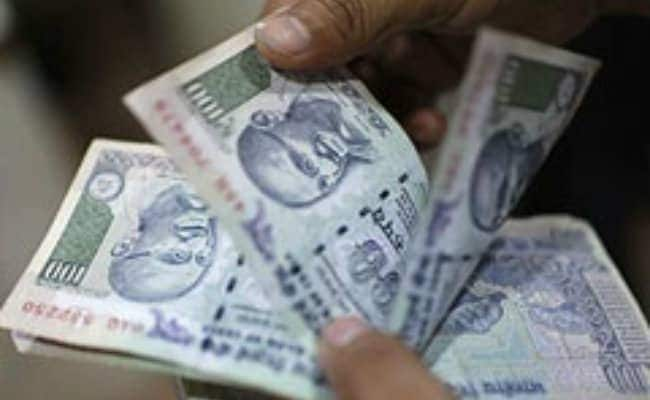
Washington/New Delhi: India topped as the highest recipient of remittances globally in 2017, with its diaspora sending back $69 billion, a World Bank statement said here on Monday.
"Remittance inflows improved in all regions and the top remittance recipients were India with $69 billion, followed by China ($64 billion), the Philippines ($33 billion), Mexico ($31 billion), Nigeria ($22 billion), and Egypt ($20 billion)," the statement said.
Remittances to India rose sharply by 9.9 per cent in 2017, reversing the previous year's sharp decline, the report added.
Global remittances are expected grow 4.6 per cent to $642 billion in 2018, it said.
Remittances to low and middle-income countries rebounded to a record level in 2017 after two consecutive years of decline, says the World Bank's latest Migration and Development Brief.
"The overall recovery in remittances is better than we expected. It is driven by stronger growth in the European Union, the Russian Federation, and the United States. The rebound in remittances, when valued in US dollars, was helped by higher oil prices and a strengthening of the euro and ruble," said Dilip Ratha, lead economist at the World Bank in his blog.
"The global average cost of sending $200 was 7.1 per cent in the first quarter of 2018. The cost ranges from the most expensive average cost of 9.4 percent in Sub-Saharan Africa, to the lowest average cost of 5.2 percent in South Asia. The average cost is higher than the Sustainable Development Goal target of 3 percent in all regions," he said.
"While remittances are growing, countries, institutions, and development agencies must continue to chip away at high costs of remitting so that families receive more of the money. Eliminating exclusivity contracts to improve market competition and introducing more efficient technology are high-priority issues," Ratha added.
The Bank estimates that officially recorded remittances to low and middle-income countries reached $466 billion in 2017, an increase of 8.5 per cent over $429 billion in 2016.
Global remittances, which include flows to high-income countries, grew 7 percent to $613 billion in 2017, from $573 billion in 2016.
Remittances to South Asia grew a moderate 5.8 percent to $117 billion in 2017. Remittances to many countries appear to be picking up after the slowdown in 2016.
Remittances to the East Asia and Pacific region rebounded 5.8 percent to $130 billion in 2017, reversing a decline of 2.6 percent in 2016.
It said remittances to countries in Europe and Central Asia grew a rapid 21 percent to $48 billion in 2017, after three consecutive years of decline.
(Except for the headline, this story has not been edited by NDTV staff and is published from a syndicated feed.)

-
Talking Points This Week: Tech Nerves, FII Buying, And A Faraway Banking Shock

The global markets are not shining this Diwali. The exception in the large markets is, India.
-
Midterm Rally Lasted A Day. The Hard Reality Of A Divided US May Last Two Years | Opinion
Between a contested AI boom, a debt ceiling that arrives in 2027 and a president with every incentive to act alone, the next two years may prove more volatile than the first day's rally suggests.
-
Blue Wave Will Derail the AI Trade but Won't Dismantle the AI Era | Unhedged Position
The Democrats' sweep of the US Congress will see politics collide with economic forces both over the long and short term.
-
It's Time To Take The GST Council's Bet On Trust Global
Payment records can prove India's services exports, and clear, proportionate rules can bring foreign digital sellers into the tax net.
-
Opinion | India at 38: From Innovation Overperformer to Innovation Powerhouse
India now has 453 VC-backed deep science startups, 18 of them late-stage, after 117 percent growth since 2020. Laurus Labs, at USD 9.3 billion, is the most valuable deep science company in any middle-income economy outside China.
-
Navigating Energy Crossroads: S Jaishankar's Call For Diversified Supply Chains At G20 Ministerial Meeting
As geopolitical fault lines continue to test maritime trade routes and commodity flows, Jaishankar's message remains pertinent: true economic resilience requires open markets, protected transit lines, and a genuine commitment to multilateral cooperation rather than coercion.
-
Indians Are Travelling, But Not Every Journey Is A Holiday | The Week In Whys
Pilgrims, patients and working women are the real travellers, and the system hasn't quite caught up with them.
-
Getting To Work Costs Women More | The Reason Why
It is not just about women paying more than men. It is about women paying much more in cities than in villages.
-
AI Bias In Investing Cannot Be Eliminated, But It Can Be Governed
Framing is a particularly important example as identical financial information presented in terms of gains rather than losses can lead an LLM to reach a different assessment.









