India Defends Its Decision To Ban Rice, Wheat Exports At WTO
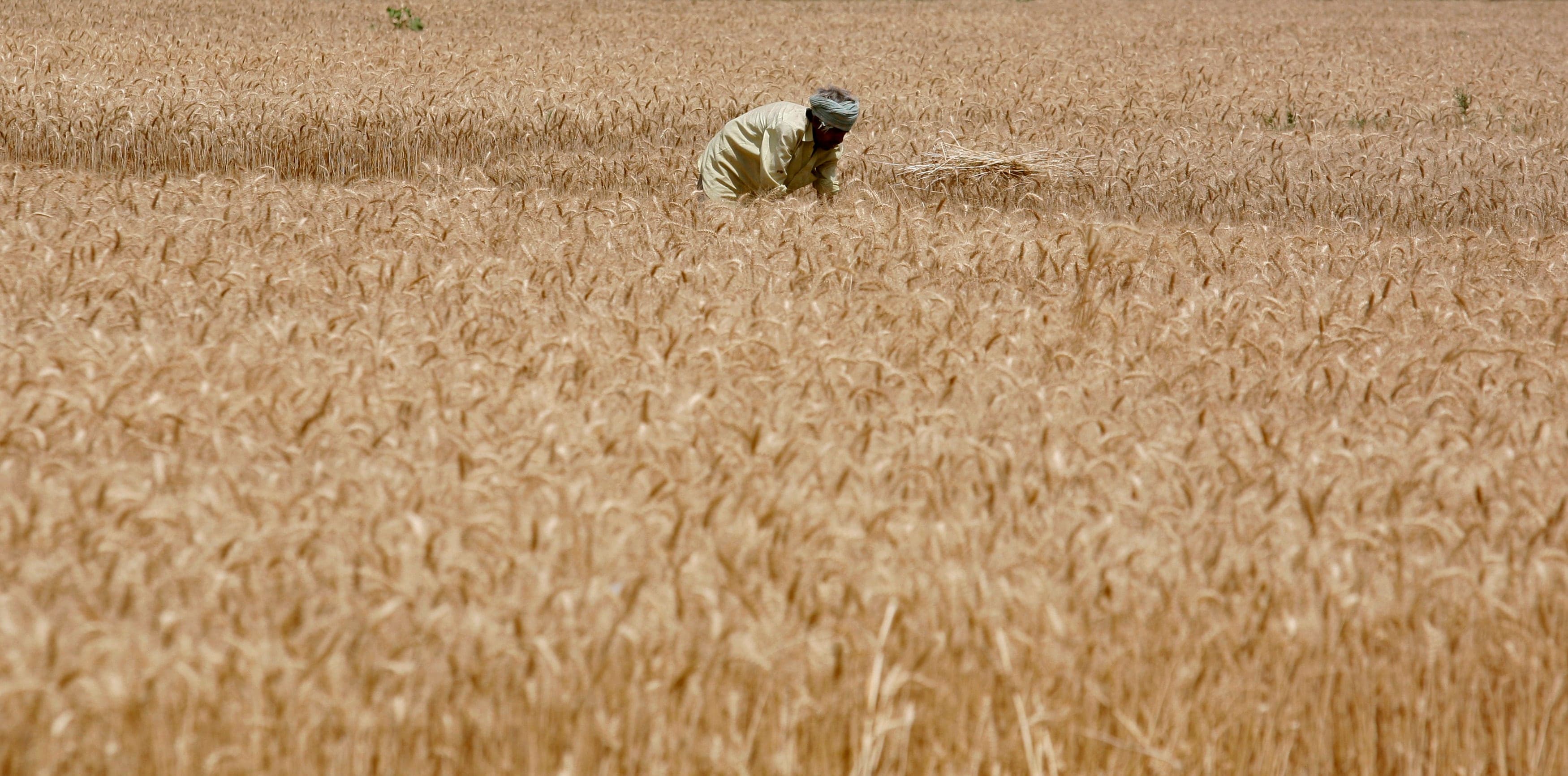
India has defended its decision to ban export of wheat and rice at a WTO meeting even as some member countries have flagged concerns over the country's stand, an official said.
At a meeting last week in Geneva, Senegal, the US and the European Union raised questions over this decision, stating it could have adverse implications on global markets.
In May, India restricted export of wheat to enhance domestic availability. This month, it also banned export of broken rice and imposed a 20 per cent export duty on non-Basmati rice except for parboiled rice to boost domestic supplies amid a fall in area under paddy crop in the current kharif season.
Defending its decision, India clarified that the ban on export of broken rice, which is used in poultry feed, follows a rise in the grain's exports in recent months which put pressure on the domestic market.
In the case of wheat, food security concerns necessitated export curbs.
“India has also stated that the measures are temporary in nature and under continuous monitoring,” the official said.
Senegal, a major importer of India's broken rice and other rice products, urged India to keep trade open in these difficult times to ensure food sufficiency, the official added.
At the meeting, Thailand, Australia, Uruguay, the US, Australia, Canada, Brazil, New Zealand, Paraguay, and Japan requested for consultations with India regarding the use of the peace clause to protect its food programmes against action from trade disputes.
In April, India invoked the peace clause, for the third time, for exceeding the 10 per cent ceiling on support it offers to rice farmers. It informed the World Trade Organization that it has used the peace clause of the WTO to provide excess support measures to rice farmers for marketing year 2020-21 in order to meet the domestic food security needs of its poor population.
Under the peace clause, WTO member countries refrain from challenging any breach in the prescribed subsidy ceiling given by a developing nation at the dispute settlement forum of WTO. Subsidies over and above the prescribed ceiling are seen as trade distortion. The limit is fixed at 10 per cent of the value of food production for developing countries like India.
India has strongly pitched for finding a permanent solution to the issue but there has been no progress so far.
The 164-member Geneva-based multilateral body WTO deals with global exports and import-related norms. Besides, it adjudicates trade disputes between the member countries. PTI RR ANU ANU
(This story has not been edited by NDTV staff and is auto-generated from a syndicated feed.)

-
High US Salaries, No Green Card Certainty: The Financial Calculation Facing Indian H-1B Families

The suspension of PERM processing at eight technology employers does not cancel existing H-1B visas. What it does is force a question many Indian families have been avoiding: is the US salary worth tying your career and family plans to one employer?
-
Swiggy vs Eternal: Food Delivery's Two Rivals Are No Longer In The Same Race
Eternal is building a private AI assistant, dark.ai. Swiggy is still working out how to make Instamart pay, with an operating loss of Rs 895 crore in the July-September quarter while Blinkit stayed profitable.
-
Where You Live Shapes How You Get To Work | The Reason Why
Two-wheelers are the most popular way to get to work in India, accounting for nearly 43% of workplace commutes.
-
Unhedged Position: Can India See An Indonesia-Style Time Correction?
The Nifty is trading below levels it first clocked in 2024. Is there, then, as I have suggested in the headline, potential that the current time correction drags on painfully for the next three-five, even ten years?
-
Navigating Friction And Energy Realities: An Analysis Of Marco Rubio's October Visit To India
Occurring at a critical juncture marked by stalled trade negotiations and escalating geopolitical pressures over global energy supplies, the visit offers a profound window into modern US-India relations.
-
India Exports Capital. Why Not Export Trusteeship?
The big question, then, is whether India can build an institution that global borrowers, investors, banks, and lawyers can trust, even without an Indian connection.
-
France's Economy & Politics Are In Crisis | The Reason Why
Let's look at how the French economy and politics evolved under Nicolas Sarkozy, Franois Hollande and Emmanuel Macron.
-
You May Inherit The Business. You Must Earn Its Credibility.
Succession tests the founder's ability to share authority as much as it tests the next generation's readiness to assume it.
-
Signing Deals Is One Thing; Making Them Work Is Another | The Week In Whys
Sometimes, things don't turn out as planned. Indian companies have lost some bids to rivals, some projects won't produce until 2030.
-
FOMC Wall, PERM Suspension, Hospital Stocks | Talking Points This Week
A PERM suspension would directly affect green-card sponsorship rather than H-1B visas, so the near-term earnings impact could remain relatively limited. The key question is whether this marks a new phase in US scrutiny of Indian IT.









