India Bonds Defy Global Rout As Note Ban Brings Rate Cut Into View
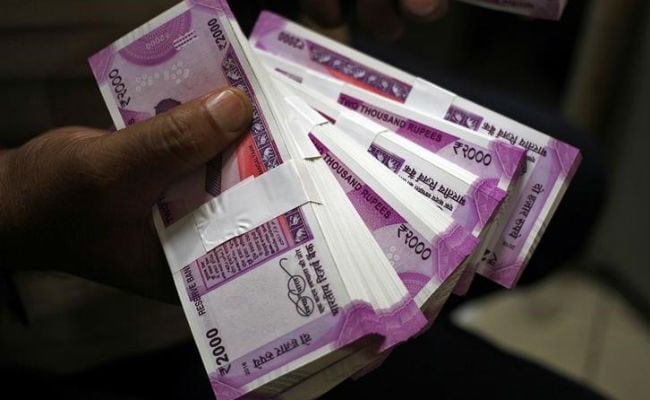
Mumbai: A shock move by the Indian government to withdraw over 80 per cent of the country's currency in circulation has sparked a rally in bonds that could extend into late December as markets bet on a rate cut as soon as next month.
Since Prime Minister Narendra Modi announced the sudden removal of Rs 500 and Rs 1,000 notes on Nov. 8 to crack down on corruption and forgeries, banks have been awash in liquidity as households rushed to tender their old bills - putting the brakes on a cash-reliant economy.
The near term hit to the economy has fed expectations of a rate cut in December, helping stoke the rally in Indian debt even as global bonds crumbled in the wake of Republican Donald Trump's upset US presidential election win.
India's benchmark 10-year bond yields have dived 36 bps to 6.44 per cent, a 7-1/2 year low, since PM Modi's banknotes announcement. That contrasted with the 10-year US Treasury yield rising to an 11-1/2-month high of 2.339 per cent on Friday on the view Mr Trump's policies will prove reflationary and lead to faster-than-expected Federal Reserve rate increases.
"Earlier I was expecting a rate cut in February," said Ashish Vaidya, head of trading at DBS Bank in Mumbai.
"But now I expect a rate cut in December given that the demonetisation move is fiscal and inflation positive."
Short-term rates have also slumped, with bulk deposit rates down by as much as 42 basis points, reinforcing the view that the Reserve Bank of India may cut the repo rate in December, instead of earlier expectations for a cut in February or April.
The RBI, which has already lowered rates by 175 basis points since early last year, holds its next review on Dec. 7.
LESS CASH IN HAND
PM Modi's action on banknotes has seen banks receive more than $44 billion in deposits in the first four days - or one-third of the outstanding deposits in banking system, with a significant portion of this invested into bonds.
State-run banks bought around Rs 23,100 crore ($3.39 billion) of bonds since Nov. 8, including Rs 17,400 crore on Wednesday alone, according to clearing data.
Government bonds have also benefitted on hopes that inflation will ease as consumer demand is expected to slump in the near-term as people hold off on purchases.
Inflation already eased to 4.20 per cent in October, undershooting the RBI's 5 per cent target by March. The lower inflation impulse from the banknotes move has analysts wagering on the RBI cutting rates by 50 bps by early 2017, compared to previous calls for 25 bps.
"In the very short term the move to remove the larger denomination currency will mean that the cash economy gets impacted which will slow down demand in the economy," said Anindya Dasgupta, head of local market trading at Barclays.
"So to that extent this will have a deflationary impact as well as hit growth and that can bring forward the timing of any rate cut or rate cuts."
($1 = Rs 68.1179)

-
Opinion | India at 38: From Innovation Overperformer to Innovation Powerhouse

India now has 453 VC-backed deep science startups, 18 of them late-stage, after 117 percent growth since 2020. Laurus Labs, at USD 9.3 billion, is the most valuable deep science company in any middle-income economy outside China.
-
Navigating Energy Crossroads: S Jaishankar's Call For Diversified Supply Chains At G20 Ministerial Meeting
As geopolitical fault lines continue to test maritime trade routes and commodity flows, Jaishankar's message remains pertinent: true economic resilience requires open markets, protected transit lines, and a genuine commitment to multilateral cooperation rather than coercion.
-
Indians Are Travelling, But Not Every Journey Is A Holiday | The Week In Whys
Pilgrims, patients and working women are the real travellers, and the system hasn't quite caught up with them.
-
Getting To Work Costs Women More | The Reason Why
It is not just about women paying more than men. It is about women paying much more in cities than in villages.
-
AI Bias In Investing Cannot Be Eliminated, But It Can Be Governed
Framing is a particularly important example as identical financial information presented in terms of gains rather than losses can lead an LLM to reach a different assessment.
-
Joining The Dots | Dark Skies, Steady Diya: Why Hope Holds This Diwali
With war, a weak rupee and foreign outflows weighing on sentiment, policymakers at the NDTV World Summit and market veterans at NDTV Profit Ignite: Diwali Edition offered the same advice: stay invested and filter out the noise.
-
The Curious Case of Equitas Small Finance Bank And A CEO Who Quit For Stock
PN Vasudevan believes persistent investor concerns over a perceived conflict of interest had become a governance overhang on Equitas Small Finance Bank's stock, even as the lender improved profitability and asset quality.
-
Talking Points This Week: AI Cash Burn, A Tiger Comeback And An India That Still Finds Its Own Path
India is not immune to higher oil or tighter global liquidity, yet its earnings base is broader, its domestic policy levers are still available.
-
Foreign Investors Own Half Of HDFC Bank and ICICI Bank. An LTCG Cut Could Matter Most Here
Foreign portfolio investors have US$115 billion parked in HDFC Bank, ICICI Bank. If the government cuts long-term capital gains tax, Jefferies says returning foreign money could land here first.










