India Best Market For E-Commerce Growth: Infosys Co-Founder
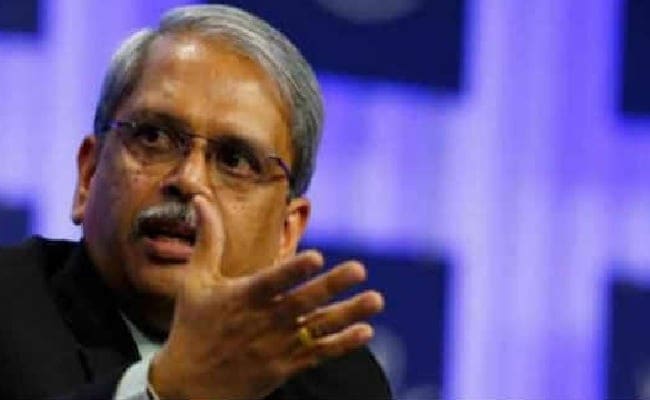
Bengaluru: With five of the top global IT services firms being Indian, India was the best market for e-commerce growth as the industry was heading in the right direction, said Infosys co-founder Kris Gopalakrishnan on Sunday.
"With GDP hitting 7.5 per cent and possibly 10 per cent in sometime, India is the best market for e-commerce growth. The increased mobile penetration will also help the industry grow," said Mr Gopalakrishnan at an event here.
The five Indian IT services firms are Tata Consultancy Services (TCS), Infosys, Wipro, HCL Technologies and Tech Mahindra.
Also noting that India was a high growth market for e-commerce business, thanks to its 1.2 billion people as consumers, the software major's former chief executive said with increasing per capita income ($2,000), their aspirations too increased.
"As the economy will double in the next 10 years, the e-commerce industry will also grow," he observed at a panel discussion on "Are Indian e-commerce firms heading in the right direction", organised by Hurun Report India.
Hurun Report, a monthly magazine, published by Luxembourg-born Rupert Hoogewerf, whose Chinese name is Hu Run, and has been ranking the wealthiest in China since 1999 under its 'China Rich List'.
Mr Hurun also presented Gopalakrishnan the 'Most Respected Entrepreneurs 2016' award for his contribution to Indian philanthropy as a pioneer of technology, SMEs (small and medium enterprises) and start-ups at its fifth edition of the meet here.
The 'Most Respected Entrepreneurs' is the highest honour awarded annually by Hurun Report, which estimates the influence of Indian entrepreneurs in past year.
Leading jewellery maker Rajesh Exports' Founder Chairman Rajesh Mehta, consumer goods major TTK Prestige Chairman T.T. Jagannathan, Clear Ventures General Partner Rajeev Madhavan were recipients of the 'Industry Achievement' awards.
Aries Group Chief Executive Sohan Roy was given the 'Rising Entrepreneur - Media and Entertainment' award.
Bollywood singer Lucky Ali was honoured with the Cultural Icon award.
Participating in the discussion, Mr Mehta said Rajesh Exports became a Fortune 500 company by following backward integration, which helped it grow worldwide.
"Globally, backward integration has caught on because of technology development. Administrative processes have become easier through technology, which will be a growth engine in the manufacturing sector," he said.
Chinese entrepreneur Alex Tang, who featured in Hurun's China Rich List, said he would soon set foot into the Indian market although he focused only on the China market in the past.
"Indian cities have an international appeal and India is regarded as one of the biggest potential markets. We will soon have a space business here," he declared.
About 200 entrepreneurs, chief executives and business leaders participated in the event, which provided a platform to develop, build and strengthen key B2B and B2C relationships, source new ideas and gather latest business data.
"By studying the country's top entrepreneurs, promoters can gain insight into what makes a business successful. Some of them were able to turn a failing company around, while others incubated a start-up from an idea," observed Hoogewerf.
Hurun Report India, which began its operations in 2012, serves as the country's voice celebrating wealth creation and growth under Hurun India Rich List and Hurun India Philanthropy List.
"Our objective is to promote entrepreneurship and India is one of the hottest markets, topping third after the US and China," said its head Anas Rahman Junaid.
(This story has not been edited by NDTV staff and is auto-generated from a syndicated feed.)

-
High US Salaries, No Green Card Certainty: The Financial Calculation Facing Indian H-1B Families

The suspension of PERM processing at eight technology employers does not cancel existing H-1B visas. What it does is force a question many Indian families have been avoiding: is the US salary worth tying your career and family plans to one employer?
-
Unhedged Position: Can India See An Indonesia-Style Time Correction?
The Nifty is trading below levels it first clocked in 2024. Is there, then, as I have suggested in the headline, potential that the current time correction drags on painfully for the next three-five, even ten years?
-
Navigating Friction And Energy Realities: An Analysis Of Marco Rubio's October Visit To India
Occurring at a critical juncture marked by stalled trade negotiations and escalating geopolitical pressures over global energy supplies, the visit offers a profound window into modern US-India relations.
-
India Exports Capital. Why Not Export Trusteeship?
The big question, then, is whether India can build an institution that global borrowers, investors, banks, and lawyers can trust, even without an Indian connection.
-
France's Economy & Politics Are In Crisis | The Reason Why
Let's look at how the French economy and politics evolved under Nicolas Sarkozy, Franois Hollande and Emmanuel Macron.
-
You May Inherit The Business. You Must Earn Its Credibility.
Succession tests the founder's ability to share authority as much as it tests the next generation's readiness to assume it.
-
Signing Deals Is One Thing; Making Them Work Is Another | The Week In Whys
Sometimes, things don't turn out as planned. Indian companies have lost some bids to rivals, some projects won't produce until 2030.
-
FOMC Wall, PERM Suspension, Hospital Stocks | Talking Points This Week
A PERM suspension would directly affect green-card sponsorship rather than H-1B visas, so the near-term earnings impact could remain relatively limited. The key question is whether this marks a new phase in US scrutiny of Indian IT.
-
Everything, Everywhere, All At Once: Dalal Street's Week To Forget | Joining The Dots
Visa curbs, a Starlink spat and cancer drug caps: what connects this week's shocks for Indian markets
-
India Is Going Abroad For Critical Minerals. But It May Take Years To Pay Off | The Reason Why
Although India's steps are in the right direction, they remain modest compared with India's growing dependence.









