India became 3rd-largest economy in 2011 from 10th in 2005: World Bank
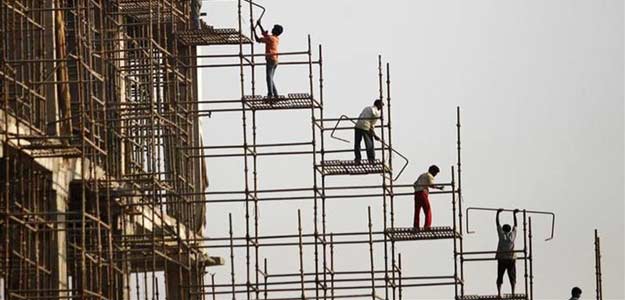
In a matter of six years, India emerged as the world's third-largest economy in 2011 from being the 10th largest in 2005, moving ahead of Japan, while the US remained the largest economy closely followed by China, latest figures have revealed.
"The economies of Japan and the UK became smaller relative to the US, while Germany increased slightly and France and Italy remained the same," according to data released today by the International Comparison Program (ICP), hosted by the Development Data Group at the World Bank Group.
"The relative rankings of the three Asian economies -- China, India, and Indonesia -- to the US doubled, while Brazil, Mexico and Russia increased by one-third or more," the report said. The world produced goods and services worth over $90 trillion in 2011 and that almost half of the total output came from low and middle-income countries, it said.
According to the major findings of the ICP, six of the world's 12 largest economies were in the middle-income category (based on the World Bank's definition).
When combined, the 12 largest economies accounted for two-thirds of the world economy and 59 per cent of the population, it said.
The purchasing power parities (PPPs)-based world GDP amounted to $90,647 billion, compared with $70,294 billion measured by exchange rates, it said, adding that the share of middle-income economies in global GDP is 48 per cent when using PPPs and 32 per cent when using exchange rates.
The six largest middle-income economies - China, India, Russia, Brazil, Indonesia and Mexico - account for 32.3 per cent of world GDP, whereas the six largest high-income economies - US, Japan, Germany, France, UK and Italy - account for 32.9 per cent, the report said.
Asia and the Pacific, including China and India, account for 30 per cent of world GDP, Eurostat-OECD 54 per cent, Latin America 5.5 per cent (excluding Mexico, which participates in the OECD and Argentina, which did not participate in the ICP 2011), Africa and Western Asia about 4.5 per cent each.
"China and India make up two-thirds of the Asia and the Pacific economy, excluding Japan and South Korea, which are part of the OECD comparison. Russia accounts for more than 70 per cent of the CIS, and Brazil for 56 per cent of Latin America. South Africa, Egypt, and Nigeria account for about half of the African economy," said the report.
"At 27 per cent, China now has the largest share of the world's expenditure for investment (gross fixed capital formation) followed by the US at 13 per cent.
India, Japan and Indonesia follow with 7 per cent, 4 per cent, and 3 per cent, respectively," the report said.
China and India account for about 80 per cent of investment expenditure in the Asia and the Pacific region.
Russia accounts for 77 per cent of CIS, Brazil for 61 per cent of Latin America and Saudi Arabia 40 per cent of Western Asia, it said.
The report said low-income economies, as a share of world GDP, were more than two times larger based on PPPs than respective exchange rate shares in 2011.
Yet, these economies accounted for only 1.5 per cent of the global economy, but nearly 11 per cent of the world population.
Roughly 28 per cent of the world's population lives in economies with GDP per capita expenditure above the $13,460 world average and 72 per cent are below that average.
The approximate median yearly per capita expenditure for the world -- at $10,057 -- means that half of the global population has per capita expenditure above that amount and half below, it said.
The five economies with the highest GDP per capita are Qatar, Macao, Luxembourg, Kuwait and Brunei.
The first two economies have more than $100,000 per capita, the ICP report said.
Eleven economies have more than $50,000 per capita, while they collectively account for less than 0.6 per cent of the world's population. The US has the 12th-highest GDP per capita.
Eight economies -- Malawi, Mozambique, Central African Republic, Niger, Burundi, Congo, Dem. Rep., Comoros and Liberia -- have a GDP per capita of less than $1,000.
The five economies with highest actual individual consumption per capita are Bermuda, US, Cayman Islands, Hong Kong and Luxembourg.
The world average actual individual consumption per capita is approximately $8,647, it said

-
High US Salaries, No Green Card Certainty: The Financial Calculation Facing Indian H-1B Families

The suspension of PERM processing at eight technology employers does not cancel existing H-1B visas. What it does is force a question many Indian families have been avoiding: is the US salary worth tying your career and family plans to one employer?
-
Swiggy vs Eternal: Food Delivery's Two Rivals Are No Longer In The Same Race
Eternal is building a private AI assistant, dark.ai. Swiggy is still working out how to make Instamart pay, with an operating loss of Rs 895 crore in the July-September quarter while Blinkit stayed profitable.
-
Where You Live Shapes How You Get To Work | The Reason Why
Two-wheelers are the most popular way to get to work in India, accounting for nearly 43% of workplace commutes.
-
Unhedged Position: Can India See An Indonesia-Style Time Correction?
The Nifty is trading below levels it first clocked in 2024. Is there, then, as I have suggested in the headline, potential that the current time correction drags on painfully for the next three-five, even ten years?
-
Navigating Friction And Energy Realities: An Analysis Of Marco Rubio's October Visit To India
Occurring at a critical juncture marked by stalled trade negotiations and escalating geopolitical pressures over global energy supplies, the visit offers a profound window into modern US-India relations.
-
India Exports Capital. Why Not Export Trusteeship?
The big question, then, is whether India can build an institution that global borrowers, investors, banks, and lawyers can trust, even without an Indian connection.
-
France's Economy & Politics Are In Crisis | The Reason Why
Let's look at how the French economy and politics evolved under Nicolas Sarkozy, Franois Hollande and Emmanuel Macron.
-
You May Inherit The Business. You Must Earn Its Credibility.
Succession tests the founder's ability to share authority as much as it tests the next generation's readiness to assume it.
-
Signing Deals Is One Thing; Making Them Work Is Another | The Week In Whys
Sometimes, things don't turn out as planned. Indian companies have lost some bids to rivals, some projects won't produce until 2030.
-
FOMC Wall, PERM Suspension, Hospital Stocks | Talking Points This Week
A PERM suspension would directly affect green-card sponsorship rather than H-1B visas, so the near-term earnings impact could remain relatively limited. The key question is whether this marks a new phase in US scrutiny of Indian IT.









