India Appeals Against WTO Panel's Ruling On Sugar Export Subsidies
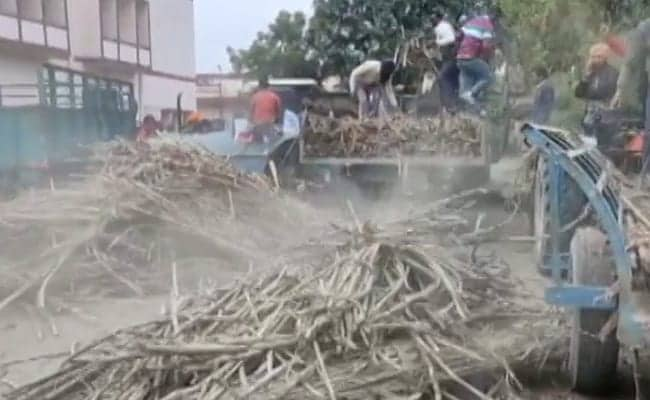
India has appealed against a ruling of the World Trade Organisation's (WTO) trade dispute settlement panel which ruled that the country's domestic support measures for sugar and sugarcane are inconsistent with global trade norms, an official said.
The appeal was filed by India in the WTO's Appellate Body, which is the final authority on such trade disputes. India has stated that the WTO's dispute panel ruling has made certain "erroneous" findings about domestic schemes to support sugarcane producers and exports and the findings of the panel are completely "unacceptable" to it.
The panel in its ruling on December 14, 2021 recommended India to withdraw its alleged prohibited subsidies under the Production Assistance, the Buffer Stock, and the Marketing and Transportation Schemes within 120 days from the adoption of this report.
Ruling in favour of Brazil, Australia and Guatemala in their trade dispute against India over New Delhi's sugar subsidies, the WTO panel has stated that the support measures are inconsistent with WTO trade rules.
The official said that the dispute panel's findings are unreasonable and not supported by the WTO rules and also evaded key issues which it was obliged to determine.
"The panel's findings on alleged export subsidies undermine logic and rationale. India has appealed in the appellate body of the WTO against the panel's ruling," the official added.
In 2019, Brazil, Australia and Guatemala dragged India into the WTO's dispute settlement mechanism alleging that New Delhi's domestic support measures to producers of sugarcane and sugar and export subsidies are inconsistent with global trade rules including various provisions of the WTO's Agreement on Agriculture, Agreement on Subsidies and Countervailing Measures, and the General Agreement on Trade and Tariffs (GATT).
Brazil is the largest producer and exporter of sugar in the world. India is the world's second largest sugar producer after Brazil. In December 2020, the government had approved a subsidy of Rs 3,500 crore to sugar mills for the export of 60 lakh tonnes of sweetener during the ongoing marketing year 2020-21 as part of its efforts to help them clear outstanding dues to sugarcane farmers.
In the previous marketing year 2019-20 (October-September), the government had provided a lump sum export subsidy of Rs 10,448 per tonne. Mills exported 5.7 million tonnes of sugar against the mandatory quota of 6 million tonnes set for the 2019-20 season (October-September), according to official data.
These three countries, which are members of the WTO, had complained that India's support measures to sugarcane producers exceeds the de minimis level of 10 per cent of the total value of sugarcane production, which according to them was inconsistent with the Agreement on Agriculture.
They had also flagged India's alleged export subsidies, subsidies under the production assistance and buffer stock schemes, and the marketing and transportation scheme.
According to WTO rules, a WTO member or members can file a case in the Geneva-based multilateral body if they feel that a particular trade measure is against the norms of the WTO.
Bilateral consultation is the first step to resolve a dispute. If both the sides are not able to resolve the matter through consultation, either can approach for the establishment of a dispute settlement panel. The panel's ruling or report can be challenged at the World Trade Organization's Appellate Body.
Interestingly, the appellate body of the WTO is not functioning because of differences among member countries to appoint members in this body. Over 20 disputes are already pending with the appellate body. The US has been blocking the appointment of the members.
Even if the body, which is the final arbiter on such trade disputes, starts working from now, it would take over an year to take up India's appeal.
According to trade experts, if the appellate body also passes a ruling against India's support measures, New Delhi has to abide by that and make appropriate changes in the way it provides those measures.

-
Midterm Rally Lasted A Day. The Hard Reality Of A Divided US May Last Two Years | Opinion

Between a contested AI boom, a debt ceiling that arrives in 2027 and a president with every incentive to act alone, the next two years may prove more volatile than the first day's rally suggests.
-
Blue Wave Will Derail the AI Trade but Won't Dismantle the AI Era | Unhedged Position
The Democrats' sweep of the US Congress will see politics collide with economic forces both over the long and short term.
-
It's Time To Take The GST Council's Bet On Trust Global
Payment records can prove India's services exports, and clear, proportionate rules can bring foreign digital sellers into the tax net.
-
Opinion | India at 38: From Innovation Overperformer to Innovation Powerhouse
India now has 453 VC-backed deep science startups, 18 of them late-stage, after 117 percent growth since 2020. Laurus Labs, at USD 9.3 billion, is the most valuable deep science company in any middle-income economy outside China.
-
Navigating Energy Crossroads: S Jaishankar's Call For Diversified Supply Chains At G20 Ministerial Meeting
As geopolitical fault lines continue to test maritime trade routes and commodity flows, Jaishankar's message remains pertinent: true economic resilience requires open markets, protected transit lines, and a genuine commitment to multilateral cooperation rather than coercion.
-
Indians Are Travelling, But Not Every Journey Is A Holiday | The Week In Whys
Pilgrims, patients and working women are the real travellers, and the system hasn't quite caught up with them.
-
Getting To Work Costs Women More | The Reason Why
It is not just about women paying more than men. It is about women paying much more in cities than in villages.
-
AI Bias In Investing Cannot Be Eliminated, But It Can Be Governed
Framing is a particularly important example as identical financial information presented in terms of gains rather than losses can lead an LLM to reach a different assessment.
-
Joining The Dots | Dark Skies, Steady Diya: Why Hope Holds This Diwali
With war, a weak rupee and foreign outflows weighing on sentiment, policymakers at the NDTV World Summit and market veterans at NDTV Profit Ignite: Diwali Edition offered the same advice: stay invested and filter out the noise.









