India Able To Do Much Better Than 7.5% Growth Rate: Arun Jaitley
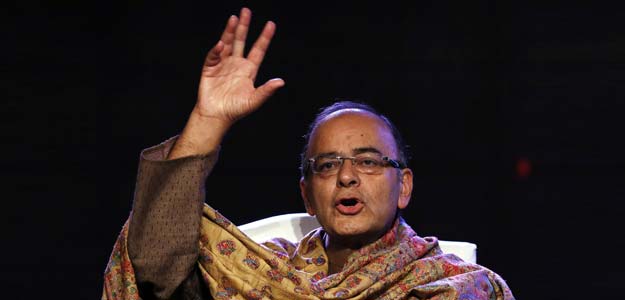
New York: India's 7.5 per cent economic growth rate is not its "best potential growth rate" and there is "restlessness" in the Narendra Modi-led government to boost economic growth and set higher GDP targets in the coming years, Union Finance Minister Arun Jaitley has said.
Mr Jaitley, who began his 10-day visit to the US yesterday, said that he is "extremely pleased" with what the government has achieved in the last one year but feel that India has the ability to do much better.
"The credibility of the Indian economy has been virtually re-established but then as I have been repeatedly saying while there is excitement, there is also a lot of restlessness as far as we in the government are concerned because we feel that the 7.5 per cent growth rate we have achieved is not our best potential growth rate," Mr Jaitley told CNBC news channel.
"We think we have an ability to do much better," he said.
He stressed that a series of reforms aided by a lot of investment particularly in infrastructure, improvement in manufacturing, agriculture will help push up India's economic growth.
Predicting an 8 per cent growth this year, he said the government will set higher GDP growth targets in the future.
"I think our growth rate certainly end of this year should be around 8 per cent. (In) Future years I am keeping my fingers crossed, our targets are going to be higher," he said.
On whether India is now a better investment than China, Mr Jaitley said he does not compare the two because "we have grown in recent years but China had a consistently 9 per cent plus growth rate for more than three decades.
"We have a lot of distance to cover before we can really equate ourselves with that but that is a good example to follow and therefore I?d rather India grow for a decade or two by that 8-9 per cent growth rate and it is only then that our entire potential will be realised."
When asked about the concerns over "renewed tax terrorism" in India, Mr Jaitley said this is a term coined by him and "it is my responsibility to make sure that it does not happen in India again."
He said as far as direct tax is concerned, the government is following a roadmap of one of the "most progressive" direct taxation regimes in India.
"The age of that kind of aggressive adversarial tax regime is over. We will probably have one of the more tax friendly regimes in India," he said as he pointed out that he had announced in the budget that over the next four years direct corporate taxes will be brought down to 25 per cent, a rate which is "globally very very competitive".
Mr Jaitley also said that there were some categories of taxation like the retrospective taxation and he has "erased that fear" as far as the present government is concerned.
He stressed that other "old issues" related to taxation will be sorted out soon.
Mr Jaitley met several investors on the first day of his trip and said "there is a positive impact of all the reforms we have carried on how the investors now view India."
On the US Federal Reserve signalling it will raise interest rates later this year and its impact on the Indian economy, Mr Jaitley said Indian interest rates are already reasonably high and the country's central bank has been working to bring them down.
"In terms of investment, if there is an easing as far as the US is concerned, it certainly has an impact on the whole world. I can't say Indian markets won't be impacted but as far as the structures of the Indian economy are concerned, they have become far more stable. I don't see any significant impact except some initial impact as far as the markets in India are concerned," he added.

-
India Exports Capital. Why Not Export Trusteeship?

The big question, then, is whether India can build an institution that global borrowers, investors, banks, and lawyers can trust, even without an Indian connection.
-
France's Economy & Politics Are In Crisis | The Reason Why
Let's look at how the French economy and politics evolved under Nicolas Sarkozy, Franois Hollande and Emmanuel Macron.
-
You May Inherit The Business. You Must Earn Its Credibility.
Succession tests the founder's ability to share authority as much as it tests the next generation's readiness to assume it.
-
Signing Deals Is One Thing; Making Them Work Is Another | The Week In Whys
Sometimes, things don't turn out as planned. Indian companies have lost some bids to rivals, some projects won't produce until 2030.
-
FOMC Wall, PERM Suspension, Hospital Stocks | Talking Points This Week
A PERM suspension would directly affect green-card sponsorship rather than H-1B visas, so the near-term earnings impact could remain relatively limited. The key question is whether this marks a new phase in US scrutiny of Indian IT.
-
Everything, Everywhere, All At Once: Dalal Street's Week To Forget | Joining The Dots
Visa curbs, a Starlink spat and cancer drug caps: what connects this week's shocks for Indian markets
-
India Is Going Abroad For Critical Minerals. But It May Take Years To Pay Off | The Reason Why
Although India's steps are in the right direction, they remain modest compared with India's growing dependence.
-
When Everyone Has AI, What Gives You An Edge?
India's young workforce is entering an uncertain world of work where powerful AI tools are becoming widely accessible. The advantage will belong to those who combine deep expertise with digital fluency, and the distinctly human capabilities that technology cannot manufacture.
-
Wrong Labels, High Pesticide Residues Holding Back Agri Exports | The Reason Why
India needs stronger domestic food-safety and labelling standards, with best practices becoming part of everyday business for farmers, traders and food companies.
-
India Is Easy To Enter, Harder To Attract | The Week In Whys
The question is no longer just whether India can attract companies and capital. It is how much value they create here, how deeply they invest, and whether India remains relatively attractive when they have plenty of other options.










