In Rare Appearance, Larry Page Discusses New Alphabet Structure
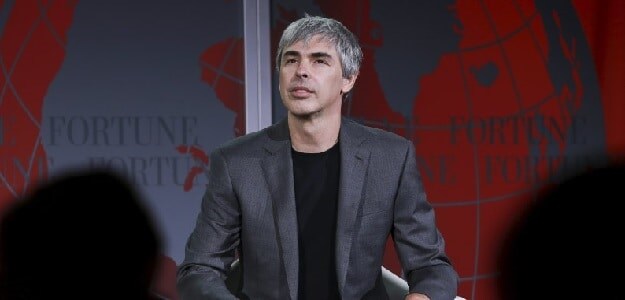
San Francisco: In a rare public appearance, Google co-founder and Alphabet Inc CEO Larry Page explained why he was spurred to create a whole new structure for the company he created with Sergey Brin almost two decades ago.
"I want to push the envelope for what's possible for an innovative company with large resources," he said during a Q&A session with Fortune editor Alan Murray at the magazine's Global Forum 2015 in San Francisco.
He said the new company would operate a little bit like a venture capital firm, a little bit like Berkshire Hathaway Inc, the conglomerate controlled by billionaire investor Warren Buffett, whom Mr Page admires.
There are "aspects of Berkshire to Alphabet", he said, but it's too early to tell how the new company would function.
Whimsically addressing how the name came about, he credited Mr Brin with it. "It's only fair since I chose Google."
He also tackled a question on Google's efforts in China, saying "we've always had operations in China" and adding "we'd like to do more". He said he had "delegated this question to Sundar", referring to Sundar Pichai, the new CEO of Google Inc, Alphabet's search engine unit.
It was a rare public appearance for Mr Page, who co-founded the Mountain View, California-based company with Stanford classmate Mr Brin in 1998. Since then, Google has grown from a popular search engine to Alphabet, a far-reaching conglomerate employing more than 40,000 employees worldwide.
He has also taken a step back from being the face of the company, largely due to a chronic medical condition affecting his vocal cords. He has appeared at only a handful of events over the last few years.
Mr Page is known for his enthusiasm for some of the company's more far-fetched efforts, such as driverless cars and other so-called "moonshots".
At Monday's event he touted Project Loon, an effort to deliver Internet service from connected air balloons. Google announced last week Loon will begin tests of its service in Indonesia as early as next year.
"Think about how cell phones have changed everyone's life. Think about how having your cell phone work anywhere in the world can change your life," he said.
Aside from Google, Alphabet's other businesses include Google X, connected home products maker Nest, venture capital arm Google Ventures and Google Capital, which invests in larger tech companies.

-
Talking Points This Week: Tech Nerves, FII Buying, And A Faraway Banking Shock

The global markets are not shining this Diwali. The exception in the large markets is, India.
-
Midterm Rally Lasted A Day. The Hard Reality Of A Divided US May Last Two Years | Opinion
Between a contested AI boom, a debt ceiling that arrives in 2027 and a president with every incentive to act alone, the next two years may prove more volatile than the first day's rally suggests.
-
Blue Wave Will Derail the AI Trade but Won't Dismantle the AI Era | Unhedged Position
The Democrats' sweep of the US Congress will see politics collide with economic forces both over the long and short term.
-
It's Time To Take The GST Council's Bet On Trust Global
Payment records can prove India's services exports, and clear, proportionate rules can bring foreign digital sellers into the tax net.
-
Opinion | India at 38: From Innovation Overperformer to Innovation Powerhouse
India now has 453 VC-backed deep science startups, 18 of them late-stage, after 117 percent growth since 2020. Laurus Labs, at USD 9.3 billion, is the most valuable deep science company in any middle-income economy outside China.
-
Navigating Energy Crossroads: S Jaishankar's Call For Diversified Supply Chains At G20 Ministerial Meeting
As geopolitical fault lines continue to test maritime trade routes and commodity flows, Jaishankar's message remains pertinent: true economic resilience requires open markets, protected transit lines, and a genuine commitment to multilateral cooperation rather than coercion.
-
Indians Are Travelling, But Not Every Journey Is A Holiday | The Week In Whys
Pilgrims, patients and working women are the real travellers, and the system hasn't quite caught up with them.
-
Getting To Work Costs Women More | The Reason Why
It is not just about women paying more than men. It is about women paying much more in cities than in villages.
-
AI Bias In Investing Cannot Be Eliminated, But It Can Be Governed
Framing is a particularly important example as identical financial information presented in terms of gains rather than losses can lead an LLM to reach a different assessment.