IMF Says Saudi Oil Cuts Will Spare Economy Where It Matters Most
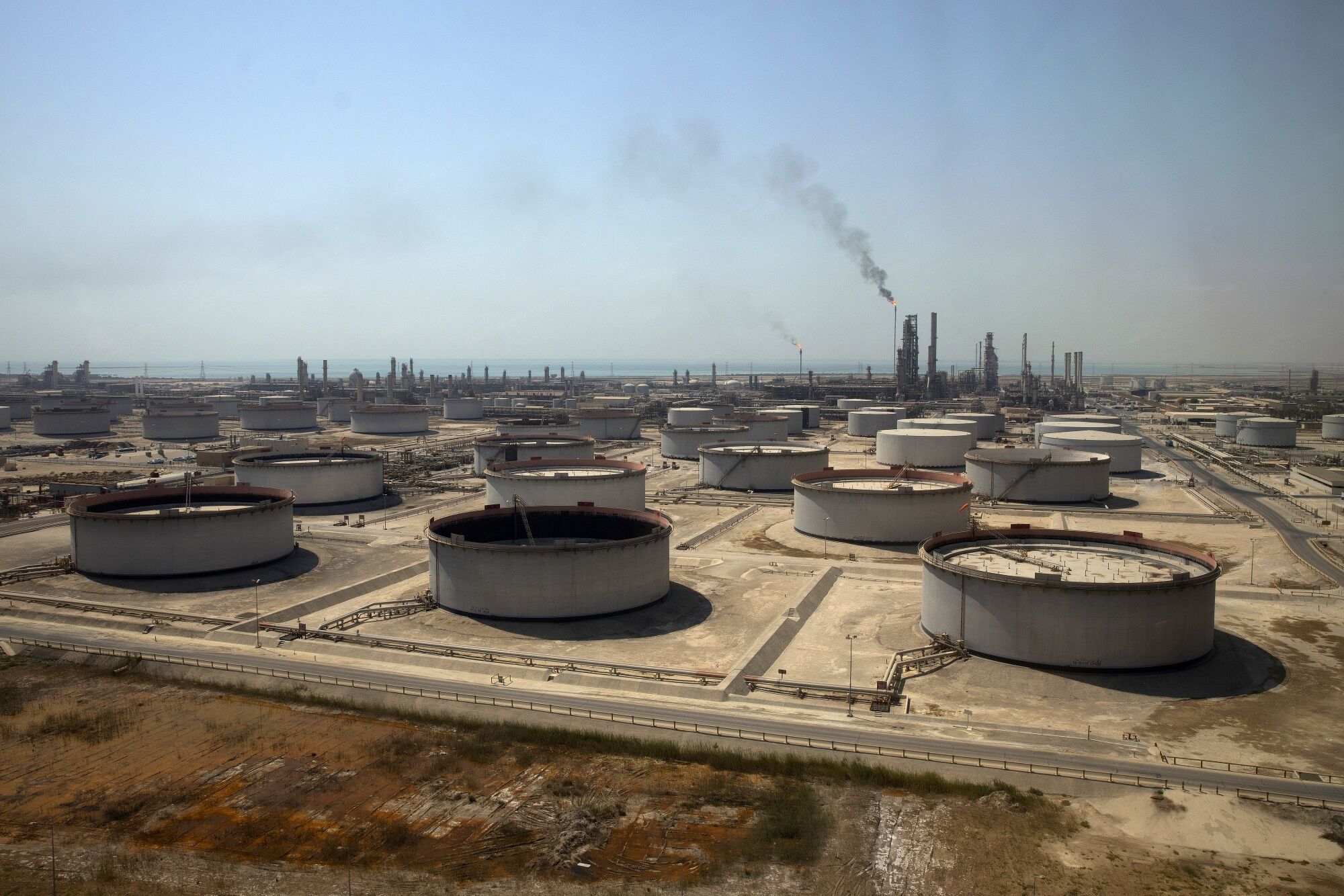
(Bloomberg) -- Saudi Arabia's biggest source of employment and corporate profits will emerge largely unscathed from the oil production cuts that threaten a contraction in the $1 trillion economy, according to the International Monetary Fund.
“There's a lot being done to de-link oil prices” from private-sector activity, Amine Mati, the IMF's mission chief for Saudi Arabia, said in an interview. “We do expect the non-oil growth momentum — at least for 2023 and 2024 — to continue.”
The strength of the non-oil sector, which contributes about 60% to gross domestic product, helps explain the willingness of Saudi officials to stick with supply curbs following a spurt in the economy last year that made it the fastest growing in the Group of 20 club of countries. The IMF expects Saudi non-oil growth at around 5% this year, according to its latest Article IV review of the kingdom published Wednesday.

Overall GDP is set to grow nearly 2% in 2023, an estimate made before Saudi Arabia's decision this week to prolong its supply cutback of 1 million barrels a day until December. The additional three-month move means the IMF will lower its latest projection for the broader economy, according to Mati.
Reductions by the world's biggest crude exporter, in cooperation with Russian export curbs, have left little scarring in the economy thanks in part to the government's generous spending on salaries and massive infrastructure projects that's kept the budget in deficit during the first half of the year. The Saudis introduced their additional supply decreases in July, deepening reductions already made with partners in the OPEC+ alliance.
Many analysts are less optimistic than the IMF, at least as far as overall growth is concerned. Factoring in the latest move, Bloomberg Economics predicts a contraction of around 0.7% in Saudi Arabia's real GDP this year.

What Bloomberg Economics Says...
“The number of barrels Riyadh pumps will fall, but non-oil activity will still grow at a healthy 4%. And that's the sector that really matters for job creation and corporate profits.”
— Ziad Daoud, chief emerging markets economist. For more click here.
Now that the production restraints are pushing up oil prices, the kingdom may have even more room to turn on the fiscal taps and keep the non-oil sector humming. Despite efforts to diversify the economy by Saudi Arabia's de facto ruler Crown Prince Mohammed bin Salman, oil is still critical to government spending and makes up around 80% of the country's exports.
“The decision to extend the production cuts supports a higher oil price environment, which in turn is critical for the government to have enough money to keep funding its growth ambitions,” said Mohamed Abu Basha, head of macroeconomic research at EFG Hermes.
Brent oil closed at the highest since November on Tuesday, rising above $90 as the International Energy Agency estimates that global crude consumption is running at a record pace.
In the IMF's view, higher oil prices should generally offset the impact of supply reductions on Saudi Arabia's external and fiscal accounts.
Read: Saudi Oil Cuts Throw Last Year's Standout Economy Into Slow Lane
The fund also expects the kingdom's net foreign assets to bounce back after oil giant Aramco's dividends come through. Foreign reserves were down by over $16 billion in July to $407 billion, in the sharpest drop since the government transferred $40 billion to its wealth fund in 2020 to invest abroad during the pandemic.
“We expect some of that trend to reverse with extra dividends coming from Aramco,” said Mati. “if you look at reserve adequacy, they are comfortably above 16-17 months of imports at this stage.”
--With assistance from Matthew Martin and Mirette Magdy.
More stories like this are available on bloomberg.com
©2023 Bloomberg L.P.

-
Navigating Energy Crossroads: S Jaishankar's Call For Diversified Supply Chains At G20 Ministerial Meeting

As geopolitical fault lines continue to test maritime trade routes and commodity flows, Jaishankar's message remains pertinent: true economic resilience requires open markets, protected transit lines, and a genuine commitment to multilateral cooperation rather than coercion.
-
Indians Are Travelling, But Not Every Journey Is A Holiday | The Week In Whys
Pilgrims, patients and working women are the real travellers, and the system hasn't quite caught up with them.
-
Getting To Work Costs Women More | The Reason Why
It is not just about women paying more than men. It is about women paying much more in cities than in villages.
-
AI Bias In Investing Cannot Be Eliminated, But It Can Be Governed
Framing is a particularly important example as identical financial information presented in terms of gains rather than losses can lead an LLM to reach a different assessment.
-
Joining The Dots | Dark Skies, Steady Diya: Why Hope Holds This Diwali
With war, a weak rupee and foreign outflows weighing on sentiment, policymakers at the NDTV World Summit and market veterans at NDTV Profit Ignite: Diwali Edition offered the same advice: stay invested and filter out the noise.
-
The Curious Case of Equitas Small Finance Bank And A CEO Who Quit For Stock
PN Vasudevan believes persistent investor concerns over a perceived conflict of interest had become a governance overhang on Equitas Small Finance Bank's stock, even as the lender improved profitability and asset quality.
-
Talking Points This Week: AI Cash Burn, A Tiger Comeback And An India That Still Finds Its Own Path
India is not immune to higher oil or tighter global liquidity, yet its earnings base is broader, its domestic policy levers are still available.
-
Foreign Investors Own Half Of HDFC Bank and ICICI Bank. An LTCG Cut Could Matter Most Here
Foreign portfolio investors have US$115 billion parked in HDFC Bank, ICICI Bank. If the government cuts long-term capital gains tax, Jefferies says returning foreign money could land here first.
-
'Never Seen This Level Of Negativity': Sandeep Tandon Says The Next Rally May Be Closer Than You Think
Veteran investor Sandeep Tandon says foreign selling is easing, large-caps are due a comeback and mid-caps are crowded, while he turns positive on gold, power and pharma this Diwali.
-
Indians Stay With Family, Not In Hotels | The Reason Why
India still lacks enough clean, reliable and affordable hotels for budget-conscious travellers.










