IMF Cuts Global Growth Outlook, Warns of Stagnation Risk in Rich Nations
Washington/Mexico City: The International Monetary Fund on Thursday chopped its 2014 forecast for global economic growth to take into account weakness early in the year in the United States and China, the world's two biggest economies.
The IMF warned that only some of the factors leading to the reduction were temporary, and richer nations in particular faced the risk of economic stagnation unless they took steps to foster sustainable growth.
In an update to its World Economic Outlook report, the IMF said the global economy should expand 3.4 per cent this year, 0.3 percentage points below what it predicted in April. Growth should still speed up to 4 per cent next year, it said, unchanged from what it predicted earlier this year.
The fund, however, said a robust global recovery from the deep financial troubles of 2007-09 was still not assured, and geopolitical risks from the crises in the Middle East and Ukraine could dent growth further.
"Robust demand momentum has not yet emerged despite continued very low interest rates and easing of brakes to the recovery, including from fiscal consolidation or tight financial conditions," the IMF said, adding that all major advanced economies would do well to keep policy rates low for now.
Central banks in the United States, Japan, the euro zone and Britain have all sharply lowered rates to boost economic growth and pledged to keep them there for longer to let the recovery take hold.
The low rates have spurred markets higher, and valuations could be a bit "optimistic," the IMF's chief economist Olivier Blanchard said.
While unemployment fell more quickly than economists had expected in the United States and Britain, wage growth and consumer confidence still linger below pre-crisis levels in many richer countries. At the same time, emerging markets are still dealing with tighter financial conditions and reduced future growth prospects.
Speaking at a news conference in Mexico City, Blanchard urged countries to do more to boost growth via structural reforms and investing in infrastructure.
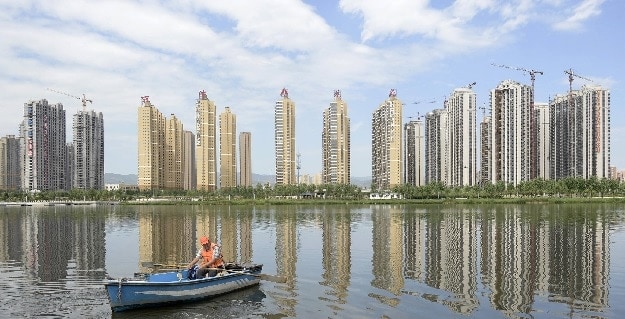
The IMF said bright spots in the global economy included growth pick-ups in Japan, Germany, Spain and the United Kingdom. But they were overshadowed by weak growth in the United States in the first half of the year, as well as a slowdown in domestic demand in China, where the government sought to tamp down lending and the housing market cooled.
Russia also dragged down the overall forecasts, as its economy is expected to grow just 0.2 per cent this year due to sanctions and other impacts of the Ukraine crisis.
In the latest volley, the United States last week slapped sanctions on two large Russian energy firms and two banks, in addition to some defense firms, moves Blanchard said could push the country into recession.
In fact, out of the BRICS countries - Brazil, Russia, India, China and South Africa - only India avoided an IMF ratings downgrade, as business sentiment recovers after the country's election.
Copyright @ Thomson Reuters 2014

-
Where You Live Shapes How You Get To Work | The Reason Why

Two-wheelers are the most popular way to get to work in India, accounting for nearly 43% of workplace commutes.
-
High US Salaries, No Green Card Certainty: The Financial Calculation Facing Indian H-1B Families
The suspension of PERM processing at eight technology employers does not cancel existing H-1B visas. What it does is force a question many Indian families have been avoiding: is the US salary worth tying your career and family plans to one employer?
-
Unhedged Position: Can India See An Indonesia-Style Time Correction?
The Nifty is trading below levels it first clocked in 2024. Is there, then, as I have suggested in the headline, potential that the current time correction drags on painfully for the next three-five, even ten years?
-
Navigating Friction And Energy Realities: An Analysis Of Marco Rubio's October Visit To India
Occurring at a critical juncture marked by stalled trade negotiations and escalating geopolitical pressures over global energy supplies, the visit offers a profound window into modern US-India relations.
-
India Exports Capital. Why Not Export Trusteeship?
The big question, then, is whether India can build an institution that global borrowers, investors, banks, and lawyers can trust, even without an Indian connection.
-
France's Economy & Politics Are In Crisis | The Reason Why
Let's look at how the French economy and politics evolved under Nicolas Sarkozy, Franois Hollande and Emmanuel Macron.
-
You May Inherit The Business. You Must Earn Its Credibility.
Succession tests the founder's ability to share authority as much as it tests the next generation's readiness to assume it.
-
Signing Deals Is One Thing; Making Them Work Is Another | The Week In Whys
Sometimes, things don't turn out as planned. Indian companies have lost some bids to rivals, some projects won't produce until 2030.
-
FOMC Wall, PERM Suspension, Hospital Stocks | Talking Points This Week
A PERM suspension would directly affect green-card sponsorship rather than H-1B visas, so the near-term earnings impact could remain relatively limited. The key question is whether this marks a new phase in US scrutiny of Indian IT.
-
Everything, Everywhere, All At Once: Dalal Street's Week To Forget | Joining The Dots
Visa curbs, a Starlink spat and cancer drug caps: what connects this week's shocks for Indian markets









