‘I’m Going Quiet’: Warren Buffett’s Farewell Letter To Shareholders As CEO
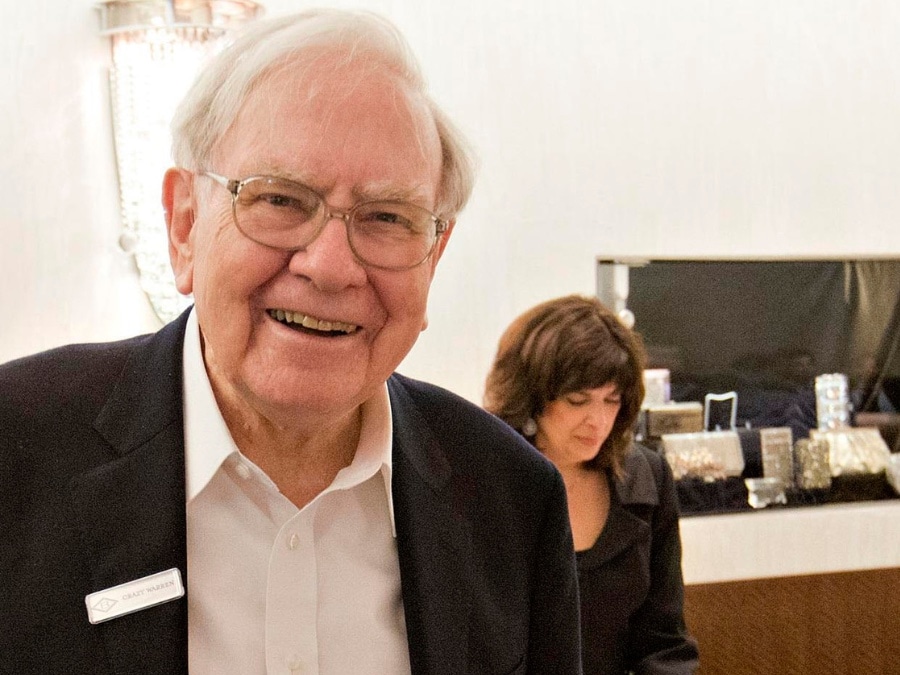
Warren Buffett, in his final letter as Chief Executive Officer of Berkshire Hathaway, on Monday told shareholders that he will be “going quiet” once he steps down at the end of this year.
After nearly six decades at the helm, Buffett will no longer pen the famed annual letter that has accompanied the company's report since 1965. His successor, Greg Abel, will take over as CEO and continue the tradition of writing to shareholders. However, Buffett said he will still send his personal Thanksgiving message each year to his children and shareholders.
Over the decades, Buffett's annual letters became legendary, offering far more than corporate updates. They wove together business insights, market wisdom, leadership lessons and anecdotes, becoming essential reading for investors worldwide.
In his parting note, released on Monday, Buffett reflected on business, philanthropy and ageing with the trademark candour and wit that have defined his writing. He confirmed plans to “step up” his charitable giving, pledging to donate the remaining $149 billion in Berkshire Hathaway stock he still holds.
He also provided a brief update on his health. “To my surprise, I generally feel good,” he wrote. “Though I move slowly and read with increasing difficulty, I am at the office five days a week where I work with wonderful people.”
Acknowledging the urgency of time, Buffett disclosed that he had converted 1,800 Class A shares, worth about $1.35 billion, into the company's lower-priced B shares and donated them to four of his family foundations.
“To improve the probability that they will dispose of what will essentially be my entire estate before alternate trustees replace them, I need to step up the pace of lifetime gifts to their three foundations,” he explained.
Despite accelerating his philanthropy, Buffett said his optimism for Berkshire Hathaway remains undimmed. He will retain a “significant amount” of Class A shares until shareholders grow comfortable with the transition in leadership. “That level of confidence shouldn't take long,” he wrote.
Buffett, 94, announced earlier this year that he would hand over leadership of Berkshire Hathaway to Gregory Abel, 63, who has been with the company since it acquired his energy business in 2000.
“He understands many of our businesses and personnel far better than I now do,” Buffett noted, describing Abel as “a great manager, a tireless worker and an honest communicator.”
“Wish him an extended tenure,” he added. “My hope is that his health remains good for several decades. With a little luck, Berkshire should require only five or six CEOs over the next century.”
Abel will take charge of a vast multinational conglomerate spanning railways, energy, retail and insurance, among other businesses. Berkshire's Class A shares closed Friday at $748,320 apiece, a fitting symbol of the empire built under Buffett's steady hand.
With his final words as CEO, Buffett signed off not with fanfare, but with characteristic humility: an enduring reminder that his greatest legacy lies not only in wealth creation, but in wisdom shared — and the quiet confidence of a life well invested.

-
High US Salaries, No Green Card Certainty: The Financial Calculation Facing Indian H-1B Families

The suspension of PERM processing at eight technology employers does not cancel existing H-1B visas. What it does is force a question many Indian families have been avoiding: is the US salary worth tying your career and family plans to one employer?
-
Swiggy vs Eternal: Food Delivery's Two Rivals Are No Longer In The Same Race
Eternal is building a private AI assistant, dark.ai. Swiggy is still working out how to make Instamart pay, with an operating loss of Rs 895 crore in the July-September quarter while Blinkit stayed profitable.
-
Where You Live Shapes How You Get To Work | The Reason Why
Two-wheelers are the most popular way to get to work in India, accounting for nearly 43% of workplace commutes.
-
Unhedged Position: Can India See An Indonesia-Style Time Correction?
The Nifty is trading below levels it first clocked in 2024. Is there, then, as I have suggested in the headline, potential that the current time correction drags on painfully for the next three-five, even ten years?
-
Navigating Friction And Energy Realities: An Analysis Of Marco Rubio's October Visit To India
Occurring at a critical juncture marked by stalled trade negotiations and escalating geopolitical pressures over global energy supplies, the visit offers a profound window into modern US-India relations.
-
India Exports Capital. Why Not Export Trusteeship?
The big question, then, is whether India can build an institution that global borrowers, investors, banks, and lawyers can trust, even without an Indian connection.
-
France's Economy & Politics Are In Crisis | The Reason Why
Let's look at how the French economy and politics evolved under Nicolas Sarkozy, Franois Hollande and Emmanuel Macron.
-
You May Inherit The Business. You Must Earn Its Credibility.
Succession tests the founder's ability to share authority as much as it tests the next generation's readiness to assume it.
-
Signing Deals Is One Thing; Making Them Work Is Another | The Week In Whys
Sometimes, things don't turn out as planned. Indian companies have lost some bids to rivals, some projects won't produce until 2030.
-
FOMC Wall, PERM Suspension, Hospital Stocks | Talking Points This Week
A PERM suspension would directly affect green-card sponsorship rather than H-1B visas, so the near-term earnings impact could remain relatively limited. The key question is whether this marks a new phase in US scrutiny of Indian IT.









