RBI Says No Liquidity Crunch In Shadow Banking, Inflation Under Control: Report
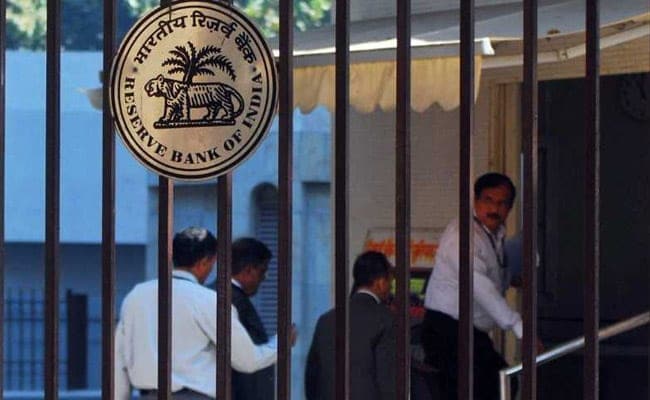
The Reserve Bank of India (RBI) on Tuesday said there was no liquidity crisis in the NBFCs or non-banking financial companies, assuaging the government's concerns that a cash crunch in the shadow banking space could have a ripple effect through the wider economy.
The central bank told the government that there was no liquidity crunch at NBFCs and that there was actually some credit growth in the sector. The RBI said inflation was under control and that it had taken no measure to tighten liquidity in the system, government sources said.
The issue came up for discussion at the Financial Stability and Development Council (FSDC) meeting chaired by Finance Minister Arun Jaitley.
Apart from senior officials of finance and corporate affairs ministries, the meeting was attended by chiefs of financial sector regulators - the RBI, Securities and Exchange Board of India, Pension Fund Regulatory and Development Authority, Insurance Regulatory and Development Authority of India and Insolvency and Bankruptcy Board of India.
"The RBI indicated that they are monitoring the situation but do not see any liquidity crunch in NBFCs in general, except in some sectors. In fact, there has been credit growth in the NBFC sector... Jaitley then asked the Financial Services Department to share data on credit issues being faced by NBFCs with the central bank," a government source said.
The Council reviewed the current global and domestic economic situation and financial sector performance. It discussed at length the issue of real interest rate, current liquidity situation, including segmental liquidity position in NBFCs and mutual fund space.
"The Council decided that the regulators and the government would keep a close watch on the developing situation and take all necessary measures," the finance ministry said in a statement.
The RBI also underlined that the $75-billion currency swap agreement with Japan announced on Monday would provide additional resources to the country.
The members took note of the progress in strengthening the cyber security in financial sector including the plans to set up a Computer Emergency Response Team in the Financial Sector (CERT-Fin) under a Statutory Framework.
"The Council also deliberated on the need for identifying and securing critical information infrastructure in financial sector," the ministry said.
The meeting also discussed the issues related to crypto assets and currency.
Economic Affairs Secretray Subhash Chandra Garg briefed on the deliberations to devise an appropriate legal framework to ban use of private crypto currencies in the country and encouraging the use of distributed ledger technology, as announced in the Budget 2018-19.
Other issues discussed include market developments and financial stability implications of the use of RegTech and SupTech by financial firms and regulatory and supervisory authorities, and implementing the recommendations of the Sumit Bose Committee Report on measures, such as, promoting appropriate disclosure regime for financial distribution costs.
The FSDC meeting was the first instance when RBI Governor Urjit Patel came face to face with Mr Jaitley following the recent criticism by the central bank's deputy governor, Viral Acharya, of government interference in the functioning of the central bank.
Mr Acharya had on October 26 pitched for autonomy in the banking regulator's functioning, warning that the market could make the government pay for eroding the central bank's independence.
On Tuesday, the finance minister held the central bank responsible for the mountain of bad loans in the nation's banking system.

-
Unhedged Position: Can India See An Indonesia-Style Time Correction?

The Nifty is trading below levels it first clocked in 2024. Is there, then, as I have suggested in the headline, potential that the current time correction drags on painfully for the next three-five, even ten years?
-
Navigating Friction And Energy Realities: An Analysis Of Marco Rubio's October Visit To India
Occurring at a critical juncture marked by stalled trade negotiations and escalating geopolitical pressures over global energy supplies, the visit offers a profound window into modern US-India relations.
-
India Exports Capital. Why Not Export Trusteeship?
The big question, then, is whether India can build an institution that global borrowers, investors, banks, and lawyers can trust, even without an Indian connection.
-
France's Economy & Politics Are In Crisis | The Reason Why
Let's look at how the French economy and politics evolved under Nicolas Sarkozy, Franois Hollande and Emmanuel Macron.
-
You May Inherit The Business. You Must Earn Its Credibility.
Succession tests the founder's ability to share authority as much as it tests the next generation's readiness to assume it.
-
Signing Deals Is One Thing; Making Them Work Is Another | The Week In Whys
Sometimes, things don't turn out as planned. Indian companies have lost some bids to rivals, some projects won't produce until 2030.
-
FOMC Wall, PERM Suspension, Hospital Stocks | Talking Points This Week
A PERM suspension would directly affect green-card sponsorship rather than H-1B visas, so the near-term earnings impact could remain relatively limited. The key question is whether this marks a new phase in US scrutiny of Indian IT.
-
Everything, Everywhere, All At Once: Dalal Street's Week To Forget | Joining The Dots
Visa curbs, a Starlink spat and cancer drug caps: what connects this week's shocks for Indian markets
-
India Is Going Abroad For Critical Minerals. But It May Take Years To Pay Off | The Reason Why
Although India's steps are in the right direction, they remain modest compared with India's growing dependence.
-
When Everyone Has AI, What Gives You An Edge?
India's young workforce is entering an uncertain world of work where powerful AI tools are becoming widely accessible. The advantage will belong to those who combine deep expertise with digital fluency, and the distinctly human capabilities that technology cannot manufacture.









