Chanda Kochhar Steps Down As ICICI Bank CEO
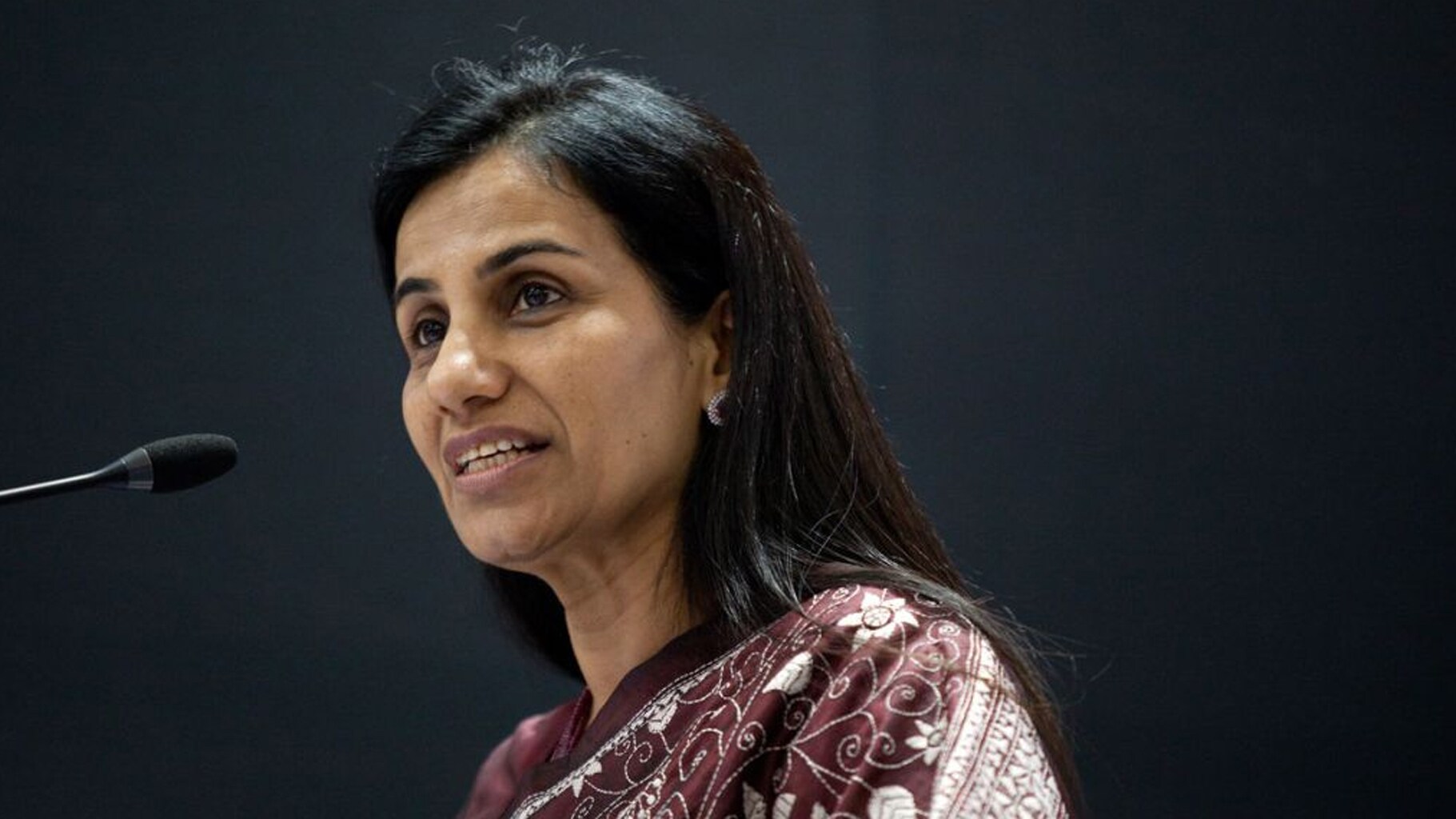
Nine years after Chanda Kochhar took over as Managing Director and Chief Executive Officer of ICICI Bank Ltd. -- then the country's largest private bank by assets -- she has stepped down. Sandeep Bakshi, who is the chief operating officer of the bank, has been appointed as CEO for a period of five years, the bank said on Thursday.
Kochhar's resignation comes even before a probe into alleged impropriety in granting of loans by the bank to the Videocon group is completed. That probe will continue, said the bank while adding that “certain benefits” would be dependent on the outcome of the investigations.
The Board of Directors of ICICI Bank Limited, accepted the request of Ms Chanda Kochhar to seek early retirement from the Bank at the earliest. The Board accepted this request with immediate effect. The enquiry instituted by the Board will remain unaffected by this and certain benefits will be subject to the outcome of the enquiry.ICICI Bank Statement
The board's decision to accept Kochhar's resignation is not surprising, N Vaghul, former chairman of ICICI Bank told BloombergQuint. “The bank's growth before this controversy was quite impressive... As for the controversy itself, I can say, right now they're allegations,” Vaghul said while adding that Bakshi is a suitable candidate for the position of CEO.
Bakshi will, however, need to reduce his holding in ICICI Lombard General Insurance before he can become director on the board of the bank, the RBI had said in July when Bakshi had been appointed COO. A copy of the letter is available on the website of the Ministry of Corporate Affairs.
A Turbulent Exit
Kochhar, once among India's most celebrated bank chiefs, found herself embroiled in controversy related to loans granted by ICICI Bank to the Videocon Group. It turns out that Videocon Group had dealings with NuPower Renewables - a company promoted by Chanda Kochhar's husband Deepak Kochhar.
The allegations had first come to light in 2016 and resurfaced in March this year when the Indian Express detailed a series of transactions between the Videocon Group and NuPower Renewables between 2008-2013.
At first, the board of ICICI Bank rubbished the allegations and backed Chanda Kochhar. In a March 28 statement, the board of ICICI Bank said that it has full faith in her. The board termed allegations of a conflict of interest in Kochhar's dealings with the Videocon Group as “malicious and unfounded rumours”. It went on to say that there is “no question or scope of any favoritism, nepotism or quid-pro-quo.”
But the allegations did not die down and investigations began.
- On March 31, the CBI said it is conducting a preliminary enquiry into the matter. It named Deepak Kochhar (Chanda Kochhar's husband), the Videocon Group and unknown others.
- On April 3, Deepak Kochhar's NuPower Renewables got a tax notice as the Income Tax Department started to look at possibilities of evasion.
- On April 16, the bank disclosed that capital market regulator SEBI had sought clarifications based on news reports alleging conflict of interest. The bank has duly responded to this, the lender said.
- Reports suggested that the RBI, which had looked into the matter in 2016, was also relooking at the case.
On June 18, ICICI Bank announced that Chanda Kochhar will go on leave and a committee headed by Justice Srikrishna would look into allegations against her. The report of the committee is yet to be finalised.
As an interim arrangement, Sandeep Bakshi, then CEO of ICICI Prudential Life Insurance, would return to the bank as chief operating officer, the bank said in June. Bakshi now takes over from Kochhar as the next CEO of ICICI Bank.
A Fresh Start?
ICICI Bank is not the only private lender seeing a shift in management at the top. Three banks - ICICI Bank, Axis Bank and Yes Bank - are in the midst of management transitions. Each of these banks have reported an increase in bad loans and a divergence in bad loan reporting over the course of last credit cycle -- something that the RBI has frowned upon.
In April, peer Axis Bank announced that MD & CEO Shikha Sharma will cut short her term and step down at the end of December 2018. Her exit came after reports that the RBI was not keen on another full three year term for Sharma.
Last month, Yes Bank informed stock exchanges that the RBI had allowed Rana Kapoor to continue at the helm of the bank only until end of January 2018. The bank is currently seeking an extension but also searching for a new CEO.
Should Kochhar have sought another term as CEO after her current term ended in March 2019, she too could have faced questions from the RBI. With Kochhar stepping down and Bakshi moving into the corner office, ICICI Bank will stave off that uncertainty.
Bakshi could bring a fresh approach to the bank, while also bringing with him the institutional memory of the group.
Like Chanda Kochhar, Bakshi is an ICICI veteran. He joined the institution in 1986 and has held various positions within the group. In his last assignment at the bank, Bakhshi was deputy managing director and head of retail and wholesale operations. In August 2010, Bakhshi was appointed MD and CEO of ICICI Prudential Life Insurance Company.
Shares of ICICI Bank closed 4 percent higher in trade on Thursday. Kochhar's decision to step down removes a major overhang for ICICI Bank, said Macquarie Research in a note.
Investors were worried about the management transition issues at ICICI Bank and were eagerly awaiting the outcome of the Srikrishna Committee, which was appointed to investigate allegations of a quid-pro-quo arrangement by Ms Kochhar. Though the board has said clearly that this move doesn't necessarily affect the enquiry instituted by the board, we believe the outcome of the report to be submitted by the committee now has less relevance from a stock perspective. Investors like certainty, and Ms Kochhar also has relinquished office from the Board of Directors of the banks' subsidiaries.Macquarie Research
What are the implications of Chanda Kochhar's exit. Watch a discussion here:

-
Why Amazon And Flipkart Are Struggling To Beat Meesho In India's Smaller Cities

With 274 million users and lowest-cost logistics, Meesho is defending its value commerce crown against giants like Amazon and Flipkart.
-
High US Salaries, No Green Card Certainty: The Financial Calculation Facing Indian H-1B Families
The suspension of PERM processing at eight technology employers does not cancel existing H-1B visas. What it does is force a question many Indian families have been avoiding: is the US salary worth tying your career and family plans to one employer?
-
Swiggy vs Eternal: Food Delivery's Two Rivals Are No Longer In The Same Race
Eternal is building a private AI assistant, dark.ai. Swiggy is still working out how to make Instamart pay, with an operating loss of Rs 895 crore in the July-September quarter while Blinkit stayed profitable.
-
Where You Live Shapes How You Get To Work | The Reason Why
Two-wheelers are the most popular way to get to work in India, accounting for nearly 43% of workplace commutes.
-
Unhedged Position: Can India See An Indonesia-Style Time Correction?
The Nifty is trading below levels it first clocked in 2024. Is there, then, as I have suggested in the headline, potential that the current time correction drags on painfully for the next three-five, even ten years?
-
Navigating Friction And Energy Realities: An Analysis Of Marco Rubio's October Visit To India
Occurring at a critical juncture marked by stalled trade negotiations and escalating geopolitical pressures over global energy supplies, the visit offers a profound window into modern US-India relations.
-
India Exports Capital. Why Not Export Trusteeship?
The big question, then, is whether India can build an institution that global borrowers, investors, banks, and lawyers can trust, even without an Indian connection.
-
France's Economy & Politics Are In Crisis | The Reason Why
Let's look at how the French economy and politics evolved under Nicolas Sarkozy, Franois Hollande and Emmanuel Macron.
-
You May Inherit The Business. You Must Earn Its Credibility.
Succession tests the founder's ability to share authority as much as it tests the next generation's readiness to assume it.
-
Signing Deals Is One Thing; Making Them Work Is Another | The Week In Whys
Sometimes, things don't turn out as planned. Indian companies have lost some bids to rivals, some projects won't produce until 2030.










