IBC Ordinance Not To Favour Any Corporate House, Says Piyush Goyal
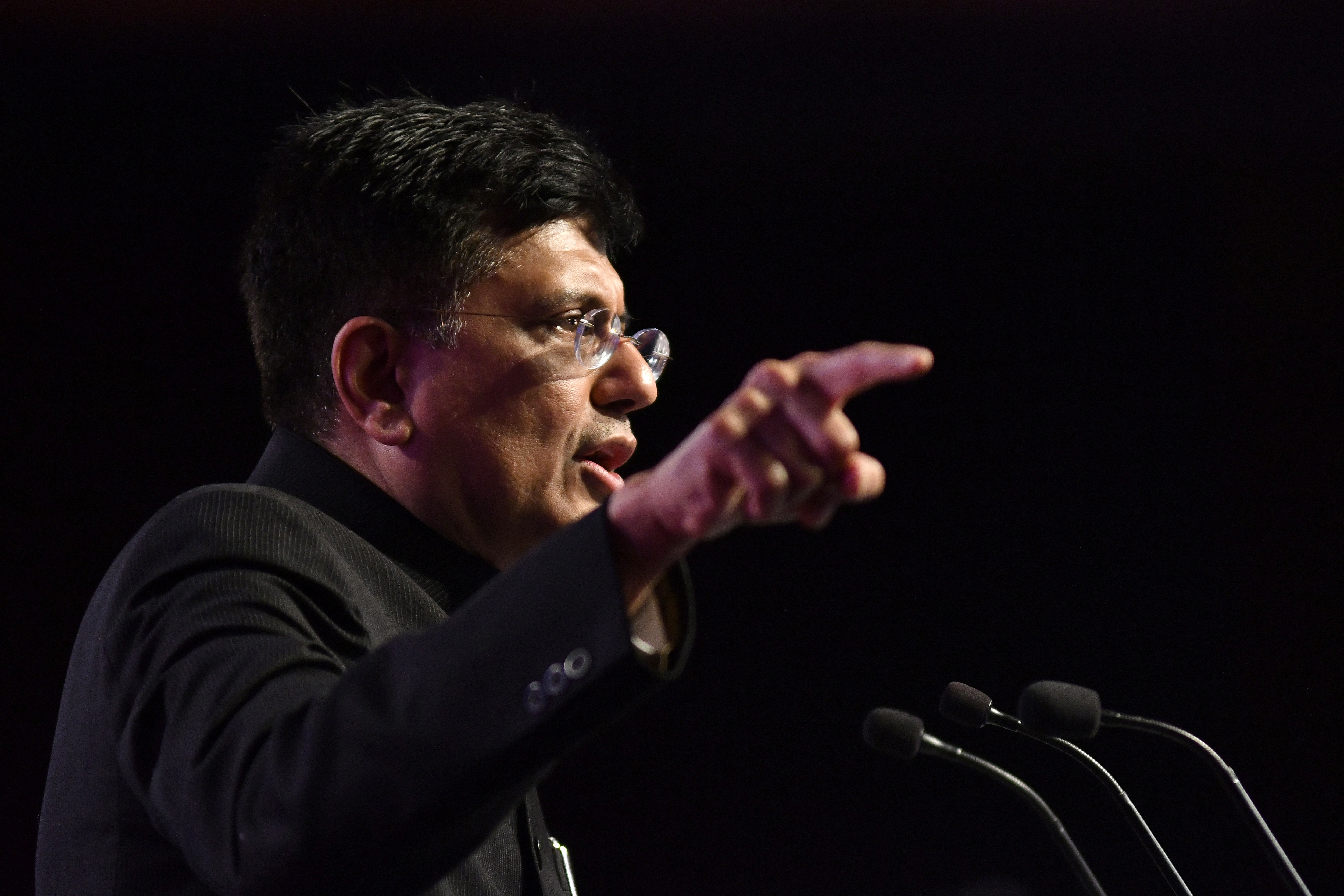
The government today rejected the opposition's charge that it has come out with an ordinance to amend the Insolvency and Bankruptcy Code to favour a big corporate house.
Replying to a debate on the Insolvency and Bankruptcy Code (Second Amendment) Bill 2018, Finance Minister Piyush Goyal said the government brought the ordinance to ensure speedy resolution of stressed assets and for the benefit of homebuyers and the MSME sector.
The bill was approved by the Lok Sabha by a voice vote, after the opposition walked out in protest alleging that the minister had not given a proper reply to the issues raised by them.
Leader of the Congress in the Lok Sabha Mallikarjun Kharge and several others alleged that the ordinance was brought to facilitate the acquisition of Alok Industries Ltd. by Reliance Industries Ltd.
“People want the government to respond immediately and that is what is appreciated,” Kharge said, adding “we want resolution and not liquidation” of ailing companies.
Goyal said all provisions of the bill were prospective and not retrospective to benefit any company and it was the NCLT, which in its wisdom, had decided to refer back the issue of acquisition to the Committee of Creditors.
The minister said that he was not competent to discuss the conduct of the NCLT.
The amendments propose to reduce the minimum voting threshold for the CoC to 66 percent, from the existing 75 percent for key decisions -- a provision which the opposition said was aimed at benefiting one corporate house.
The bill also aims at giving relief to the homebuyers by recognising their status as financial creditors, thus giving them due representation in the CoC and making them an integral part of the decision-making process.
Goyal said the government would come out with regulations and evaluation matrix which will help CoC to decide on insolvency issues.
He said that under the previous regime of SARFAESI and BIFR, the resolution cost was 9 percent and recovery was 25 percent after taking into account 4-6 years.
In the IBC regime, he said, the cost was less than one percent and the recovery was over 55 percent. Moreover, the changes brought about in the IBC were based on a parliamentary committee's recommendations.
The minister also said that certain exceptions in the code have been made to help speedier resolution of stressed assets in the MSME sector.
He assured the House that the government will not de-nationalise the public sector banks, while on the other hand, do everything to strengthen them.
Kharge alleged that the ordinance was brought by the government to help the Reliance Industries to acquire Alok Industries.
You brought this ordinance in haste. You do not respond with such alacrity during floods. The minister's reply is not proper. We protest and walk out.Mallikarjun Kharge, Leader of Congress in Lok Sabha
Earlier, several opposition members demanded that the bill may be referred to a Standing Committee.
Participating in the debate on the measure, Congress member Veerappa Moily said the National Company Law Tribunal had become “an instrument for siphoning off funds” of the treasury as banks were taking huge haircuts and corporates were buying out insolvent companies for paltry sums.
“Be fair and refer the bill to the Standing Committee. Because you got stuck up in the NCLT, you brought in the bill. The Ordinance is tainted and sending it to the Standing Committee will remove the taint,” Moily said, adding that the “greed” behind bringing the bill is to “loot the banks”.
Moily, a former Corporate Affairs Minister, said if the bill was referred to the Standing Committee, then it would submit its report within 15 days. Moily is now the Chairman of the Standing Committee on Finance.
N K Premachandran of the RSP said the promulgation of the IBC (Amendment) Ordinance was a “clear case of crony capitalism”, saying it intended to benefit a particulate industrial house.
“Alok Industries owed Rs 30,000 crores to banks, Reliance Industries bought it in Rs 5,000 crore, banks loss was Rs 25,000 crore,” he asserted, while alleging that undue haste was shown by the government in bringing the bill.
Questioning the government's urgency in bringing the IBC Ordinance when the Monsoon Session was just a month away, P Venugopal of the AIADMK said a perception was being built that the government has brought in the amendment bill to facilitate one corporate house.
The IBC is being amended in haste to allow Reliance Industries to take over Alok Industries... In the name of NPA clean-up, the government should not be seen as supporting crony capitalism.P Venugopal, AIADMK MP
Saugata Roy of the Trinamool Congress said the government was leading the country to a ‘blind alley' and the IBC should not be seen as a panacea for all illness.
“Mr Goyal, our caretaker Finance Minister, we can't see the banking sector collapse... I support the Congress demand of referring the bill to the Standing Committee,” Roy said.
He said under the resolution process, banks were taking huge haircuts and the IBC is leading to “crony capitalism”.
Citing the resolution process of the Alok Industries, Roy said Reliance Industries could not acquire the company at the first instance since the resolution plan got less than the required 75 percent vote.
The IBC amendment bill brought by the government lowers the minimum vote requirement for passing the resolution to 66 percent from 75 percent in the original act. Just for 66 percent vote, you can acquire a company. Just for Reliance Industries, Government has brought an Ordinance.Saugata Roy, Trinamool Congress MP
The TMC member said in case of Bhushan Steel takeover by Tata Steel, the banks had taken 40 percent haircut and lost Rs 21,000 crore. In the case of Vedanta buying Electrosteel, the haircut was 60 percent and the banks lost Rs 8,400 crore.
As regards Alok Industries, banks have taken a 83 percent haircut and the loss is to the tune of Rs 25,000 crore, Roy claimed in the House.

-
Opinion | India at 38: From Innovation Overperformer to Innovation Powerhouse

India now has 453 VC-backed deep science startups, 18 of them late-stage, after 117 percent growth since 2020. Laurus Labs, at USD 9.3 billion, is the most valuable deep science company in any middle-income economy outside China.
-
Navigating Energy Crossroads: S Jaishankar's Call For Diversified Supply Chains At G20 Ministerial Meeting
As geopolitical fault lines continue to test maritime trade routes and commodity flows, Jaishankar's message remains pertinent: true economic resilience requires open markets, protected transit lines, and a genuine commitment to multilateral cooperation rather than coercion.
-
Indians Are Travelling, But Not Every Journey Is A Holiday | The Week In Whys
Pilgrims, patients and working women are the real travellers, and the system hasn't quite caught up with them.
-
Getting To Work Costs Women More | The Reason Why
It is not just about women paying more than men. It is about women paying much more in cities than in villages.
-
AI Bias In Investing Cannot Be Eliminated, But It Can Be Governed
Framing is a particularly important example as identical financial information presented in terms of gains rather than losses can lead an LLM to reach a different assessment.
-
Joining The Dots | Dark Skies, Steady Diya: Why Hope Holds This Diwali
With war, a weak rupee and foreign outflows weighing on sentiment, policymakers at the NDTV World Summit and market veterans at NDTV Profit Ignite: Diwali Edition offered the same advice: stay invested and filter out the noise.
-
The Curious Case of Equitas Small Finance Bank And A CEO Who Quit For Stock
PN Vasudevan believes persistent investor concerns over a perceived conflict of interest had become a governance overhang on Equitas Small Finance Bank's stock, even as the lender improved profitability and asset quality.
-
Talking Points This Week: AI Cash Burn, A Tiger Comeback And An India That Still Finds Its Own Path
India is not immune to higher oil or tighter global liquidity, yet its earnings base is broader, its domestic policy levers are still available.
-
Foreign Investors Own Half Of HDFC Bank and ICICI Bank. An LTCG Cut Could Matter Most Here
Foreign portfolio investors have US$115 billion parked in HDFC Bank, ICICI Bank. If the government cuts long-term capital gains tax, Jefferies says returning foreign money could land here first.










