I Disagreed With Governor Raghuram Rajan – But I Salute Him!
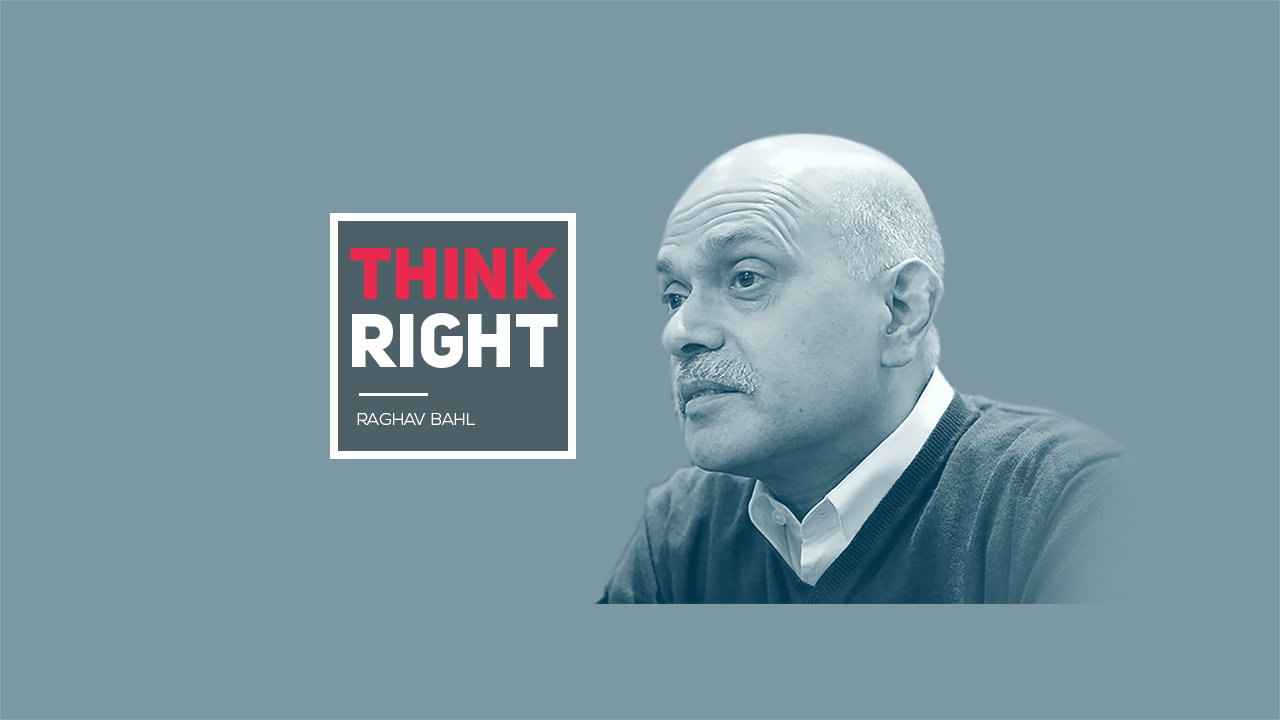
It was towards the end of 2013 or early 2014; the exact date doesn't quite matter. I had trekked across to RBI at Mumbai to greet the hugely accredited new governor, the young and strapping Raghuram Rajan. I had first encountered his awesome reputation at the Booth School of Business at the University of Chicago where I had gone to speak about my book Superpower? The Amazing Race Between China's Hare and India's Tortoise. Almost a dozen students asked if I had met their iconic professor and author of Fault Lines: How Hidden Fractures Still Threaten the World Economy, a book immortalised as the “predictor” of the 2008 Post-Lehman Crash. Of course, I had read reviews about the book but had not met its creator. Now, waiting in the efficiently redecorated RBI office, I was about to meet the man.

How Could I Question God?
Rajan entered with a warmly outstretched hand, and a charming smile. Gosh, he was even more handsome than his photographs, and a tad bigger/taller than I had expected. We got chatting. As with almost every conversation around that time, it was about Narendra Modi and whether he would become prime minister. Rajan had never met the Gujarat chief minister. That gave me a vaguely superior tone, since I had had several encounters with Modi, thanks to his energetic engagement with the media ever since he had been anointed the BJP's Chosen One. Rajan asked me probing questions about how I felt the polls would play out, what kind of a person/leader Modi was, would he be a moderniser, an instinctive reformer or an old school politician? But what happens in RBI must stay in RBI, so I shall say no more!
Raghuram Rajan has now endedhis 3-year term. He has won supreme laurels for his stint; and while I havedisagreed with his interest rate policy more often than not, I must salute himfor his professionalism and integrity. His admirers are legion. Every time Iwould question his over-arching caution, academic homilies and textbook approachto inflation, I would get howls of protest from my young journalist colleagues,most shrilly from women reporters on the Mint Street beat. How could I questionGod?
Why did I Disagree With Rajan?
So why did I disagree with Rajan, the “inflation warrior”? For one, I found his singular focus on using interest rates to tame inflation a theorem that works only in developed western economies where everything is mapped within the organised, formal sector. And even here, the concept of “blind” inflation targeting is getting discredited and out of mode – read this week's editorial in The Economist to understand how modern thinkers are now advocating Nominal GDP growth rates, instead of this “impotent” policy target.
Because a high interest rate chokes demand and kills new jobs, leading to a swelling army of unemployed people – however, in rich economies, they get social/welfare protection. But that's utterly different from low income countries where the bulk of the activity is in the unorganised, informal sectors. Where high interest rates can end up ravaging the poor by throttling jobs. That's the core of my quarrel with Rajan on inflation. Every data point showed that spiraling food prices were the root cause of India's inflation – the interest rate, therefore, was a blunt instrument, since it does precious little to put a harness on vegetable mandis. On the other hand, consumer prices of non-food products were rising at or less than 5 percent every year, which is perfectly healthy for a potentially fast-growing economy – so there wasn't a case here for pressing the alarm button. Worse, crushed by high interest rates, producers' prices were deflating for nearly fourteen months in a row, an unprecedented phenomenon in post-liberalization India. Therefore, ironically, even as Rajan thought he was battling for the poor, his uncompromising policy was actually crippling their aspirations. A struggling, deflating production sector was simply incapable of creating jobs. How I wish a star-struck media, instead of singing hosannas to Raghuram Rajan, had led him to meet Rohith Paswan somewhere in Bundelkhand.
Meet Rohith

Rohith is 24 years old. He is not a Brahmin. He sits smack in the middle of seven siblings, three brothers and sisters apiece. Last year, Rohith was married to Seema from a neighbouring village. Seema is now pregnant with their first child, who will join a growing army of six infants in the family. All the kids roll around in the courtyard of their four-room, pucca dwelling. The kids' cries mingle with high-pitched sounds from Zee soap operas and Radio Mirchi songs to keep it cheerful and convivial. Rohith's family owns some land which is quite fertile. An irrigation canal runs close by, allowing the family to grow three crops in the year. The family employs farm labour which is paid its wages largely in food and some cash. The family eats reasonably well. Rohith's eldest brother runs a tiny kirana stall near the bus stand. His other brothers, who worked at a sugar mill and cement kiln, just got laid off. Both employers had shut shop since they could not meet high interest payments. Rohith is bored stiff, despite having a hundred friends who too are bored stiff. They practice dance steps, dream of winning India's Got Talent, and desperately want to work. All of them eat reasonably well too; they can even do Michael Jackson's Moonwalk. But there is only a foundation stone where there should have been a factory. The interest rate is too high.
India is teeming with RohithPaswans. They would happily pay a thousand bucks extra for wheat and cabbage ifonly they could weld engines on a Volkswagen chassis – but the interest rate istoo high.
(Disclosure – Rohith is a fictional character I made up to make mypoint!)
Okay, so you get it. Idisagreed with Governor Rajan's inflexible, theorem dictated inflation policy.I am convinced that India would have done better with a higher level ofinflation (and therefore a higher nominal GDP, thank you The Economist), since jobs, not lower food prices, kill poverty.
But I salute Governor Rajan for the institutional reforms he pioneered. His unrelenting drive to clean up banks' bad loans will suck the jelly out of wobbly balance sheets. And perhaps he reserved the best for the last. The fact that he unveiled sweeping initiatives to finally create a thriving bond market in a $2 trillion economy speaks volumes about his unwavering focus until the very end. Usually, people spend their last week in a job packing up, clearing papers and attending farewell dinners. But Governor Rajan unsheathed a raft of bold measures to do what hand wringers had begun to say was impossible. The often opaque, crony-like dealings between big corporations and banks will be ripped open and thrown under the ruthless scrutiny of transparent debt markets. Two decades ago, a Ramakrishna-led SEBI had cleaned up India's clubby equity bourses. Now Governor Rajan has sown the seeds of a similar revolution in the debt markets.
So long Governor – my salute, my salaam! You shall be missed.
Raghav Bahl is the co-founder and chairman of Quintillion Media, including BloombergQuint. He is the author of two books, viz ‘Superpower?: The Amazing Race Between China's Hare and India's Tortoise', and ‘Super Economies: America, India, China & The Future Of The World'.

-
Opinion | India at 38: From Innovation Overperformer to Innovation Powerhouse

India now has 453 VC-backed deep science startups, 18 of them late-stage, after 117 percent growth since 2020. Laurus Labs, at USD 9.3 billion, is the most valuable deep science company in any middle-income economy outside China.
-
Navigating Energy Crossroads: S Jaishankar's Call For Diversified Supply Chains At G20 Ministerial Meeting
As geopolitical fault lines continue to test maritime trade routes and commodity flows, Jaishankar's message remains pertinent: true economic resilience requires open markets, protected transit lines, and a genuine commitment to multilateral cooperation rather than coercion.
-
Indians Are Travelling, But Not Every Journey Is A Holiday | The Week In Whys
Pilgrims, patients and working women are the real travellers, and the system hasn't quite caught up with them.
-
Getting To Work Costs Women More | The Reason Why
It is not just about women paying more than men. It is about women paying much more in cities than in villages.
-
AI Bias In Investing Cannot Be Eliminated, But It Can Be Governed
Framing is a particularly important example as identical financial information presented in terms of gains rather than losses can lead an LLM to reach a different assessment.
-
Joining The Dots | Dark Skies, Steady Diya: Why Hope Holds This Diwali
With war, a weak rupee and foreign outflows weighing on sentiment, policymakers at the NDTV World Summit and market veterans at NDTV Profit Ignite: Diwali Edition offered the same advice: stay invested and filter out the noise.
-
The Curious Case of Equitas Small Finance Bank And A CEO Who Quit For Stock
PN Vasudevan believes persistent investor concerns over a perceived conflict of interest had become a governance overhang on Equitas Small Finance Bank's stock, even as the lender improved profitability and asset quality.
-
Talking Points This Week: AI Cash Burn, A Tiger Comeback And An India That Still Finds Its Own Path
India is not immune to higher oil or tighter global liquidity, yet its earnings base is broader, its domestic policy levers are still available.
-
Foreign Investors Own Half Of HDFC Bank and ICICI Bank. An LTCG Cut Could Matter Most Here
Foreign portfolio investors have US$115 billion parked in HDFC Bank, ICICI Bank. If the government cuts long-term capital gains tax, Jefferies says returning foreign money could land here first.










