HSBC Hard Sells Growth Plan To Disgruntled Investors After Rebuffing Breakup
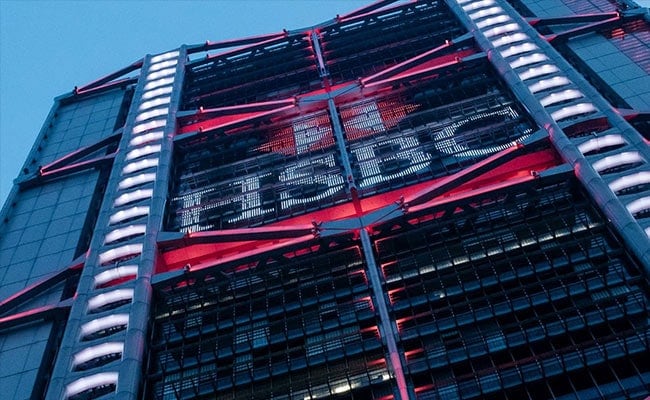
A day after rebuffing a break-up plan by its top investor, HSBC fielded questions from disgruntled retail investors on Tuesday and its executives defended their strategy to operate as a global bank at its first meeting in Hong Kong in three years.
The London-headquartered lender is under pressure from Ping An Insurance Group Co of China to explore options including spinning off its mainstay Asia business to increase shareholder returns.
HSBC Chairman Mark Tucker and CEO Noel Quinn were grilled for more than an hour by investors on the bank's strategy for dividends and growth in the meeting, attended by hundreds of shareholders in the business district.
"Resuming paying quarterly dividend in 2023 is 'too late' and the promised level of dividend is 'too low', said Jay Chong, an activist shareholder, who is in his 30s and whose family holds more than half a million shares of HSBC.
Hong Kong is HSBC Holdings' biggest market and a key investor base for the Asia-focused bank. Some investors in the city have been vocal in their support of Ping An's plan.
About 30 HSBC retail investors staged a brief protest near the conference room entrance at Tuesday's meeting just before it began, chanting "management should step down" over dividend cancellations and sluggish returns.
HSBC met the retail shareholders a day after rejecting the break-up call as it reported forecast-beating profits, raised a profitability goal and promised chunkier dividends.
The bank has argued that a spinoff would be costly, time consuming and require billions in technology spending, while also raising regulatory risks.
"Our strategy which is now two and half years into execution should put the bank on the path to deliver returns in 2023 at a level we have not achieved in the last 10 years," Tucker said on Tuesday. "This return should help drive and increase the share price and have a positive impact on the dividend."
SPECIAL DIVIDENDS
Analysts said Hong Kong's retail shareholders are unlikely to have the heft to eventually force a vote on a break-up. Big institutional investors have so far not commented on the issue.
Retail shareholders clapped when requests were made to HSBC's management to consider paying special dividends and relocate to Hong Kong.
Ping An, which has been building a stake in HSBC since 2017, when the bank's share price was about a third higher, has not called publicly for a break-up but has said it supports all reform proposals that could help increase the long-term value of the bank. The insurer owned 8.23% of HSBC as of early February.
"We note the demands expressed by a number of HSBC's small and medium-sized shareholders," a Ping An spokesperson said. "We support any proposal that is conducive to improving HSBC's operating performance and enhances shareholder value."
Hong Kong retail shareholders were particularly unhappy when HSBC scrapped its dividend in 2020 during the COVID-19 pandemic, following a request to lenders by the Bank of England.
"Retail shareholders would welcome any proposals that change the status quo, or boost confidence of investors in management," said shareholder Ken Lui, founder of an HSBC shareholder group.
"But why am I being vocal and support the spin-off proposal? Because I don't have confidence in management," he said.
A Hong Kong politician has also urged HSBC to appoint Ping An's representatives to its board, and move its headquarters back to Hong Kong.
In 2016, HSBC decided to keep its headquarters in London, rejecting the option of shifting it back to Hong Kong after a 10-month review.
(Reporting by Selena Li and Anshuman Daga; Editing by Muralikumar Anantharaman and David Holmes)
(This story has not been edited by NDTV staff and is auto-generated from a syndicated feed.)

-
High US Salaries, No Green Card Certainty: The Financial Calculation Facing Indian H-1B Families

The suspension of PERM processing at eight technology employers does not cancel existing H-1B visas. What it does is force a question many Indian families have been avoiding: is the US salary worth tying your career and family plans to one employer?
-
Unhedged Position: Can India See An Indonesia-Style Time Correction?
The Nifty is trading below levels it first clocked in 2024. Is there, then, as I have suggested in the headline, potential that the current time correction drags on painfully for the next three-five, even ten years?
-
Navigating Friction And Energy Realities: An Analysis Of Marco Rubio's October Visit To India
Occurring at a critical juncture marked by stalled trade negotiations and escalating geopolitical pressures over global energy supplies, the visit offers a profound window into modern US-India relations.
-
India Exports Capital. Why Not Export Trusteeship?
The big question, then, is whether India can build an institution that global borrowers, investors, banks, and lawyers can trust, even without an Indian connection.
-
France's Economy & Politics Are In Crisis | The Reason Why
Let's look at how the French economy and politics evolved under Nicolas Sarkozy, Franois Hollande and Emmanuel Macron.
-
You May Inherit The Business. You Must Earn Its Credibility.
Succession tests the founder's ability to share authority as much as it tests the next generation's readiness to assume it.
-
Signing Deals Is One Thing; Making Them Work Is Another | The Week In Whys
Sometimes, things don't turn out as planned. Indian companies have lost some bids to rivals, some projects won't produce until 2030.
-
FOMC Wall, PERM Suspension, Hospital Stocks | Talking Points This Week
A PERM suspension would directly affect green-card sponsorship rather than H-1B visas, so the near-term earnings impact could remain relatively limited. The key question is whether this marks a new phase in US scrutiny of Indian IT.
-
Everything, Everywhere, All At Once: Dalal Street's Week To Forget | Joining The Dots
Visa curbs, a Starlink spat and cancer drug caps: what connects this week's shocks for Indian markets
-
India Is Going Abroad For Critical Minerals. But It May Take Years To Pay Off | The Reason Why
Although India's steps are in the right direction, they remain modest compared with India's growing dependence.









