HPCL Says Consolidation With ONGC’s Refining Arm Makes Sense
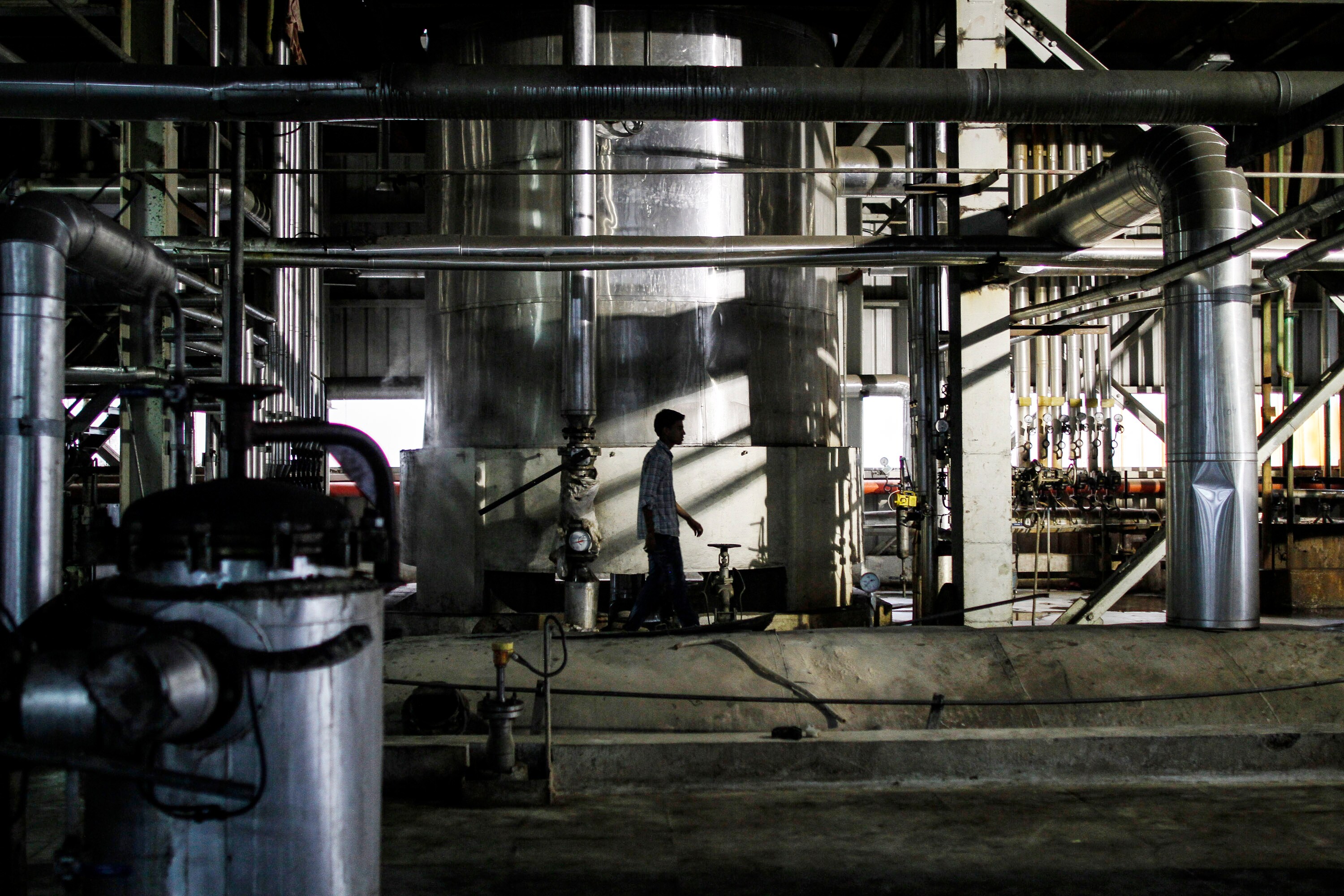
Government-owned refiner Hindustan Petroleum Corporation Ltd. is open to consolidation with the Mangalore Refinery and Petrochemicals Ltd. after it completes its merger with state-run explorer Oil and Natural Gas Corporation Ltd.
It makes sense for HPCL and MRPL to “come into one fold if integration with ONGC has to come true”, said MK Surana, Chairman and Managing Director of HPCL. MRPL is 71 percent owned by ONGC.
Both refine crude oil and natural gas. “HPCL holds around 16 percent shares in MRPL and has the right of first refusal. Then logically, the downstream items should be consolidated in HPCL, so there is a reasonable possibility of MRPL getting along with HPCL,” said Surana in a press conference held in Mumbai on September 15. There have not been any formal discussions with the government or between the company boards, he said.
ONGC will acquire the government's 51.11 percent stake in the state-run refiner as part of the plan to create a public sector oil behemoth to compete with global rivals. It will also help the government meet its divestment target.
Also Read: ONGC Will Raise Its First Ever Debt To Fund HPCL Buy
After the deal, HPCL and MRPL will become group companies and there may then be another way of acquiring the stake, he said. ONGC's stake in MRPL is worth $2.5 billion (nearly Rs 17,000 crore) at current market price.
Debt-Fuelled Rs 88,000-Crore Capex Plan
HPCL is looking to spend Rs 88,000 crore over five years, most of which will be funded by debt. About Rs 25,000 crore will be used for capacity expansion of Vizag and Mumbai refineries and pipeline distribution, another Rs 25,000 crore will cover oil marketing expenses and Rs 10,000 crore will be invested to build a petrochemical complex in Barmer, Rajasthan.
The company will invest about Rs 28,000 crore in new refineries in the west coast and Andhra Pradesh, which are also in advanced stage of approvals, said Surana.
That takes HPCL's total capex outlay over the next five years to nearly Rs 1 lakh crore, more than double of Rs 41,697 crore estimated by a Jefferies Equity Research report. And even that would result in a negative free cash flow, bringing down return on capital employed to single digits by the year to March 2021, according to the report authored by Somshankar Sinha, equity analyst at Jefferies.
The total investment outlay is nearly 1.4 times HPCL's current valuation of Rs 73,480 crore. “The market capitalisation of the company doesn't decide how much you can invest or not. It is the intrinsic strength of the company which decides that,” said Surana. “Depending on the company's profitability, its growth plans, creditworthiness and internal generation of resources, we see no problem in borrowing capital as long as we are confident that the debt is serviceable. In fact, we can borrow more if we want to,” he said.
HPCL will partially fund the capex and marketing expenses through internally generated Rs 9,000 crore a year and the rest will be borrowed. “Our long-term debt-to-equity ratio is 0.58, which means that we have a leeway,” he said.
Other projects, based on joint ventures with state governments and public-sector oil companies, will be funded on the balance sheets of those partnerships and not on HPCL. “To that extent, HPCL is required to fund only the equity part of it and that we are quite confident of meeting,” said Surana.
Care will be taken that the debt to equity ratio of both HPCL and the joint venture projects does not exceed 2:1, he said.
The company's net gearing percentage, which reflects its debt levels related to its equity capital, is at 68 percent. The increased capex, according to Jefferies, will take it to about 100 percent over the next five years. “This could rise even more if early concept projects also take off or if has to buy MRPL,” the report said.

-
High US Salaries, No Green Card Certainty: The Financial Calculation Facing Indian H-1B Families

The suspension of PERM processing at eight technology employers does not cancel existing H-1B visas. What it does is force a question many Indian families have been avoiding: is the US salary worth tying your career and family plans to one employer?
-
Unhedged Position: Can India See An Indonesia-Style Time Correction?
The Nifty is trading below levels it first clocked in 2024. Is there, then, as I have suggested in the headline, potential that the current time correction drags on painfully for the next three-five, even ten years?
-
Navigating Friction And Energy Realities: An Analysis Of Marco Rubio's October Visit To India
Occurring at a critical juncture marked by stalled trade negotiations and escalating geopolitical pressures over global energy supplies, the visit offers a profound window into modern US-India relations.
-
India Exports Capital. Why Not Export Trusteeship?
The big question, then, is whether India can build an institution that global borrowers, investors, banks, and lawyers can trust, even without an Indian connection.
-
France's Economy & Politics Are In Crisis | The Reason Why
Let's look at how the French economy and politics evolved under Nicolas Sarkozy, Franois Hollande and Emmanuel Macron.
-
You May Inherit The Business. You Must Earn Its Credibility.
Succession tests the founder's ability to share authority as much as it tests the next generation's readiness to assume it.
-
Signing Deals Is One Thing; Making Them Work Is Another | The Week In Whys
Sometimes, things don't turn out as planned. Indian companies have lost some bids to rivals, some projects won't produce until 2030.
-
FOMC Wall, PERM Suspension, Hospital Stocks | Talking Points This Week
A PERM suspension would directly affect green-card sponsorship rather than H-1B visas, so the near-term earnings impact could remain relatively limited. The key question is whether this marks a new phase in US scrutiny of Indian IT.
-
Everything, Everywhere, All At Once: Dalal Street's Week To Forget | Joining The Dots
Visa curbs, a Starlink spat and cancer drug caps: what connects this week's shocks for Indian markets
-
India Is Going Abroad For Critical Minerals. But It May Take Years To Pay Off | The Reason Why
Although India's steps are in the right direction, they remain modest compared with India's growing dependence.









