How To Invest The Extra Money In Your Bank Account After Notes Ban
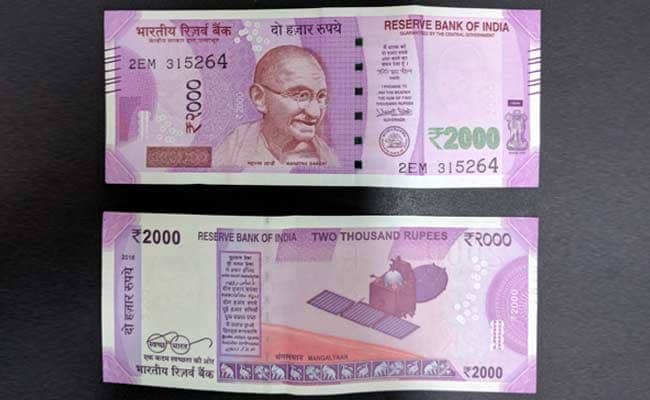
Bank deposits have swollen as people scrambled to deposit the old Rs 500 and Rs 1,000 notes in their accounts. Now, many don't require the money immediately. Should you keep the money in savings accounts?
Analysts suggest different alternatives which can help you get better returns on the idle money.
Fixed deposits
FDs are one of the most popular investment options for conservative investors due to fixed returns and the liquidity factor. However, banks have recently cut their interest rates and may lower them further as their coffers swell in wake of demonetisation. For example, the highest rate offered by SBI across different maturities is 7 per cent. Financial planners say investors should lock into higher tenure deposits as rates are likely to go down further. However, the post-tax return from bank fixed deposits is not attractive for that in higher tax brackets as interest income is added to one's income as taxed according to the respective slabs.
Financial planners say customers can also opt for a sweep-in facility, wherein surplus funds above a threshold limit from the savings bank account are transferred automatically to fixed deposits, thus helping them earn a higher return than an ordinary savings account.
Post office deposits
Post offices also offer term deposit facilities with maturity from one year to five years. Currently, the interest rate ranges from 7 per cent to 7.8 per cent.
Liquid funds
These debt mutual fund schemes hold debt instruments of extremely short maturities. Investment in these funds could be as short as a day. They offer an alternative to investors for parking their surplus cash for short periods. They have no exit loads and investors can redeem investments very easily. Traditionally, they have offered higher rates than savings accounts. Debt mutual funds also offer superior tax benefits, particularly for persons in higher tax brackets. The past one-year return in the liquid fund category has been around 8 per cent on an average, according to Value Research data.
However, analysts expect that returns from liquid funds may drop going ahead. Manoj Nagpal, CEO of Outlook Asia Capital, says that with further liquidity in the system and prospects of rate cuts from the RBI, "there could be a further contraction in the returns from liquid funds".
(Read: Know the income tax rules for mutual fund investments)
Other debt mutual funds
Investors with a timeframe of less than a year can consider ultra short-term funds, which provide liquidity and may give marginally higher returns than liquid funds, says Vidya Bala, head of mutual fund research at FundsIndia.com. Ultra short-term funds invest in very short-term debt securities with a small portion in longer-term debt securities.
"For those with 1-2 year time frame short-term debt funds are an option," says Ms Bala. "For over two years, a combination of dynamic bond funds and income accrual funds are ideal. And for those wanting a bit of equities, MIPs (monthly income plans) too can be added for over a 2-year holding period."
(Read: What are the different types of mutual funds?)
Arbitrage funds
Mr Nagpal of Outlook Asia Capital says arbitrage funds could be an option for investors with a time horizon of around one year. Arbitrage funds are categorised as equity funds but are relatively risk-free. Arbitrage funds enjoy tax superiority as compared to debt funds. An arbitrage fund is a type of equity mutual fund which tries to take advantage of the price differential (of the same asset) between two or more markets or market segments.
Government of India bonds
The 8 per cent Government of India Savings (taxable) bonds are available for purchase by retail investors with a minimum subscription amount of Rs 1,000. The rate of interest offered on the bond is 8 per cent per annum. But interest income is taxable in the hands of the investor. Since bonds are issued on behalf of the government, it is among the safest investments.
Disclaimer: Investors are advised to make their own assessment before acting on the information.

-
Blue Wave Will Derail the AI Trade but Won't Dismantle the AI Era | Unhedged Position

The Democrats' sweep of the US Congress will see politics collide with economic forces both over the long and short term.
-
It's Time To Take The GST Council's Bet On Trust Global
Payment records can prove India's services exports, and clear, proportionate rules can bring foreign digital sellers into the tax net.
-
Opinion | India at 38: From Innovation Overperformer to Innovation Powerhouse
India now has 453 VC-backed deep science startups, 18 of them late-stage, after 117 percent growth since 2020. Laurus Labs, at USD 9.3 billion, is the most valuable deep science company in any middle-income economy outside China.
-
Navigating Energy Crossroads: S Jaishankar's Call For Diversified Supply Chains At G20 Ministerial Meeting
As geopolitical fault lines continue to test maritime trade routes and commodity flows, Jaishankar's message remains pertinent: true economic resilience requires open markets, protected transit lines, and a genuine commitment to multilateral cooperation rather than coercion.
-
Indians Are Travelling, But Not Every Journey Is A Holiday | The Week In Whys
Pilgrims, patients and working women are the real travellers, and the system hasn't quite caught up with them.
-
Getting To Work Costs Women More | The Reason Why
It is not just about women paying more than men. It is about women paying much more in cities than in villages.
-
AI Bias In Investing Cannot Be Eliminated, But It Can Be Governed
Framing is a particularly important example as identical financial information presented in terms of gains rather than losses can lead an LLM to reach a different assessment.
-
Joining The Dots | Dark Skies, Steady Diya: Why Hope Holds This Diwali
With war, a weak rupee and foreign outflows weighing on sentiment, policymakers at the NDTV World Summit and market veterans at NDTV Profit Ignite: Diwali Edition offered the same advice: stay invested and filter out the noise.
-
The Curious Case of Equitas Small Finance Bank And A CEO Who Quit For Stock
PN Vasudevan believes persistent investor concerns over a perceived conflict of interest had become a governance overhang on Equitas Small Finance Bank's stock, even as the lender improved profitability and asset quality.










