How Singh Brothers’ Aviation Dream Burned A Rs 1,200-Crore Hole
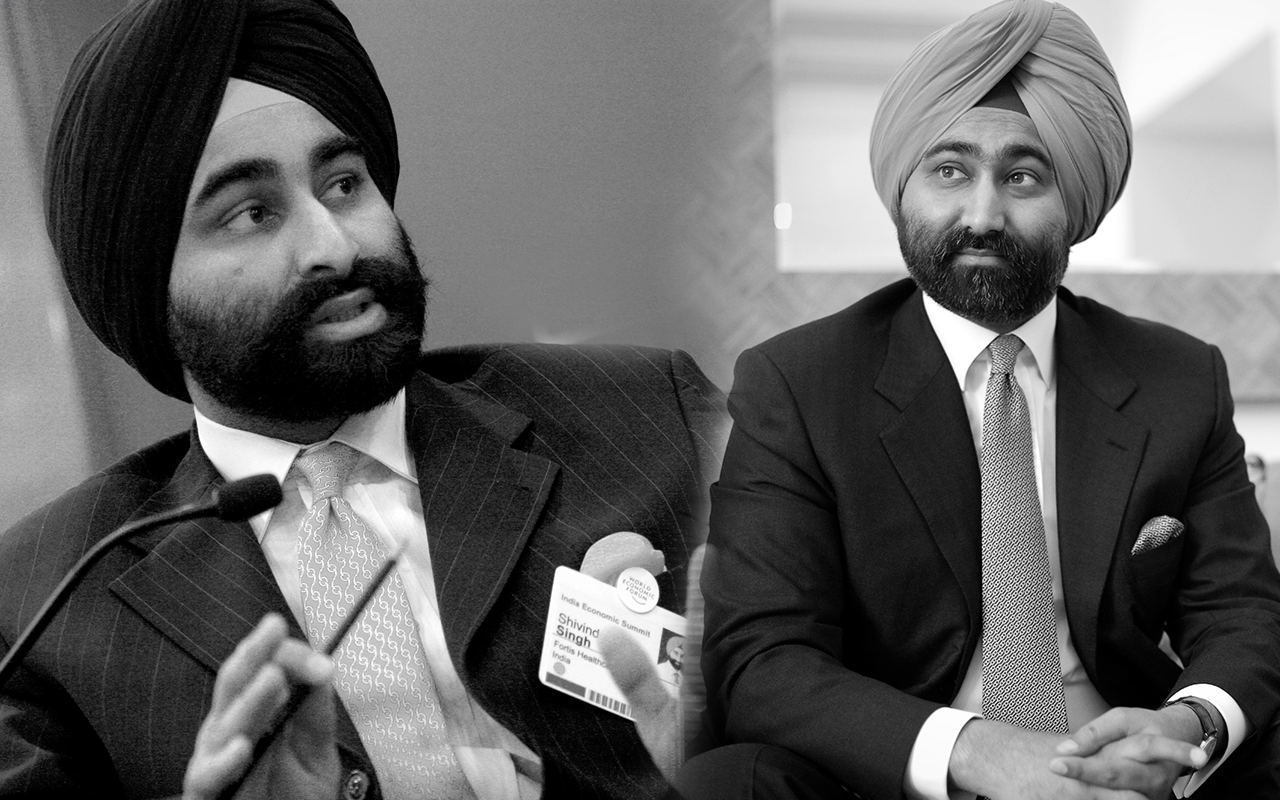
In the dramatic collapse of their empire, the Singh brothers didn't just lose control of their healthcare and financial services businesses. They have almost run a chartered airline company into the ground, burning a Rs 1,200-crore hole in their fortune.
Ligare Aviation Pvt. Ltd., which provides planes and helicopters on demand, is owned by Malvinder Singh and Shivinder Singh. Their partners, at least for five years, were Gurpreet Singh Dhillon and Gurkirat Singh Dhillon—the sons of their guru Gurinder Singh Dhillon, head of Radha Soami Satsang Beas, according to filings with the Registrar of Companies. And the carrier was at one time managed by Sanjay Godhwani, brother of the family's long-time associate Sunil Godhwani whom they now blame for their downfall.
In short, the same set of people connected with a debt-spiral behind the fall of Singh brothers' multi-billion-dollar fortune, as reported by Bloomberg citing public records and unnamed people close to the family. Lenders stripped them of control in Fortis Healthcare Ltd. and Religare Enterprises Ltd., they face allegations of siphoning funds and still owe Daiichi Sankyo Rs 3,500 crore in arbitration award.

Taking To The Skies
The brothers were still billionaires and ran a thriving business when they took control of the airline in 2006—about two years before they sold Ranbaxy for $4.6 billion. The carrier, then called Ran Air Services Pvt. Ltd., was owned by Vidyut Investment Pvt. Ltd., a subsidiary of Ranbaxy.
BloombergQuint's analysis of RoC filings revealed how the Singhs came to own the airline and why it is buried under debt.
In June 2006, they floated a joint venture called Religare Voyages Pvt. Ltd. (later rechristened Ligare Voyages) with a 74 percent holding; the Dhillons picked a 24 percent stake and Sunil Godhwani took 2 percent. Thirteen days after inception, the company bought Ran Air Services for Rs 2.6 crore and renamed it Religare Aviation (later called Ligare Aviation).
The value of its aircraft assets rose 100 times to Rs 668 crore by 2010-11 as the airline added planes in the next five years—the filings didn't disclose how many by then. The expansion was fuelled by a debt of Rs 641 crore, a large part of it comprising bank loans.
Still, the carrier hardly made money and RHC Holding Pvt. Ltd.—the investment arm of the Singh brothers—infused funds to support its operations, increasing their stake to 81.46 percent by March 2011. The Dhillons also ploughed additional investments.
The carrier paid an interest of Rs 61 crore a year on a bank debt of Rs 528 crore in 2010-11. As the revenue didn't even cover interest payments, it started selling aircraft to scale down operations.
Rescuing The Guru's Family's Investment
Then the Dhillons decided to sell their holding. And the Singhs ensured that their guru's family didn't suffer any loss.
The Dhillons' investment arm Logos Holding Pvt. Ltd. sold the stake, which had come down to 16.8 percent, to RHC Holding in 2010-11 for Rs 22.74 crore, just about managing to get their invested capital back. The selling price, however, was five times the value of their shares based on the net worth of the airline at the time. The carrier reported accumulated losses of Rs 255 crore that year.
The brothers, the Dhillon family and Godhwani have yet to respond to BloombergQuint's emailed queries.
Customs Trouble
Ligare Aviation ran into other hurdles as well. In 2015-16, seven out of its 11 aircraft were seized by the customs department for a full year. Its directors, including managing director Sanjay Godhwani, resigned mid-year.
Revenue dropped 70 percent year-on-year and the company reported a loss of Rs 187 crore in 2015-16. In the following financial year, two aircraft were still with the customs authorities.
And downsizing continued as its fortunes continued to slide. In the decade through March 2017, the carrier's expenditure was 3.5 times its sales. And operational losses mounted to Rs 1,073 crore compared with a Rs 441-crore revenue generated during the period.
The only reason it survived was additional infusions by RHC Holding to fund expenses and repay loans. The Singh brothers through their holding firm and other group companies in all invested about Rs 1,219 crore in fresh equity and by subscribing to preferential shares, according to the filings. They now own nearly 100 percent of the airline.
Yet, none of that helped. The carrier, as of March 2017, had:
- Accumulated losses of Rs 1,004 crore.
- Total debt of nearly Rs 462 crore, of which Rs 217 crore is secured against movable fixed assets.
- The net book value of 11 aircraft stood at Rs 147 crore.
- Its net worth was a negative Rs 169 crore.
- The company hasn't disclosed its numbers for 2017-18 yet.
In September last year, Sunil Godhwani, too, quit as a director.
The airline is still operational and takes bookings, according to its website. It had five flight-worthy planes and one helicopter in its fleet as of January this year, according to information on the website of Directorate General of Civil Aviation.
Yet, the carrier's ability to stay afloat—as a going concern—depends on the financial support pledged by shareholders, according to its auditor's disclosure in the financial statement for 2016-17. Those shareholders are the Singh brothers. Given their debt and arbitration dues to Daiichi Sankyo, keeping Ligare Aviation afloat will be tough.

-
It's Time To Take The GST Council's Bet On Trust Global

Payment records can prove India's services exports, and clear, proportionate rules can bring foreign digital sellers into the tax net.
-
Opinion | India at 38: From Innovation Overperformer to Innovation Powerhouse
India now has 453 VC-backed deep science startups, 18 of them late-stage, after 117 percent growth since 2020. Laurus Labs, at USD 9.3 billion, is the most valuable deep science company in any middle-income economy outside China.
-
Navigating Energy Crossroads: S Jaishankar's Call For Diversified Supply Chains At G20 Ministerial Meeting
As geopolitical fault lines continue to test maritime trade routes and commodity flows, Jaishankar's message remains pertinent: true economic resilience requires open markets, protected transit lines, and a genuine commitment to multilateral cooperation rather than coercion.
-
Indians Are Travelling, But Not Every Journey Is A Holiday | The Week In Whys
Pilgrims, patients and working women are the real travellers, and the system hasn't quite caught up with them.
-
Getting To Work Costs Women More | The Reason Why
It is not just about women paying more than men. It is about women paying much more in cities than in villages.
-
AI Bias In Investing Cannot Be Eliminated, But It Can Be Governed
Framing is a particularly important example as identical financial information presented in terms of gains rather than losses can lead an LLM to reach a different assessment.
-
Joining The Dots | Dark Skies, Steady Diya: Why Hope Holds This Diwali
With war, a weak rupee and foreign outflows weighing on sentiment, policymakers at the NDTV World Summit and market veterans at NDTV Profit Ignite: Diwali Edition offered the same advice: stay invested and filter out the noise.
-
The Curious Case of Equitas Small Finance Bank And A CEO Who Quit For Stock
PN Vasudevan believes persistent investor concerns over a perceived conflict of interest had become a governance overhang on Equitas Small Finance Bank's stock, even as the lender improved profitability and asset quality.
-
Talking Points This Week: AI Cash Burn, A Tiger Comeback And An India That Still Finds Its Own Path
India is not immune to higher oil or tighter global liquidity, yet its earnings base is broader, its domestic policy levers are still available.










