How Quikr Aspires to be India's Craigslist
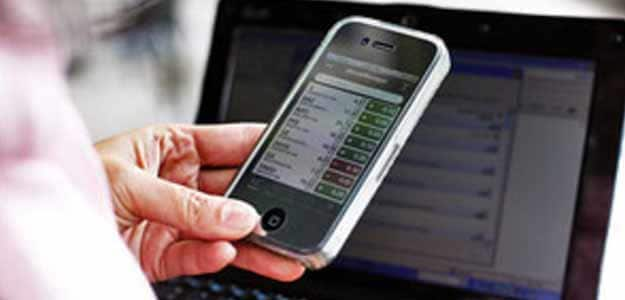
An Indian answer to Craigslist is drawing millions of monthly visitors to its website, exchanging everything from used iPads to cows, in a country where second-hand goods have traditionally been sniffed at.
Quikr, a start-up launched in 2008, has become the leading online classifieds portal in India, where the e-retail market is exploding thanks to a vast young population with growing Internet access.
Like Craigslist, Quikr allows users to post ads for free and browse for furniture, apartments, pets and even potential spouses, before closing the deal offline -- a system that chief executive and founder Pranay Chulet believes is well suited to India.
"We Indians are very price conscious. And there are peculiarities, like we love to haggle. So I thought a platform like Craigslist for India would make sense," said Chulet.
Today, Chulet says, more than half of Quikr's 3.5 to four million goods listed at any one time find buyers within 90 days -- a feat that has helped the firm to attract investments from top private equity firms such as Warburg Pincus.
The firm began life as Kijiji India, a subsidiary of US giant eBay. It was turned into the re-branded separate entity Quikr by Chulet and co-founder Jiby Thomas.
"We want to do things quickly. That is partly where the word Quikr comes from," said Chulet.
He said that leaving customers to seal their deals offline keeps costs low and avoids regulatory hurdles -- "I don't have warehouses or people running around making deliveries".
Instead the Mumbai-based firm, present across 900 cities, gets its cash by tapping small businesses to advertise on the site. So far, half a million have paid to be on Quikr, according to Chulet.
Missed Call Strategy
People who want to sell their goods on Quikr but lack Internet access can ring up the firm's call centre -- or, rather, its "missed call centre" -- where employees return calls to save the customer costs.
"India loves missed calls. Especially the low income groups like the drivers because the call from our side does not cost them anything," said Chulet.
"And we are happy because we can handle more customers' calls with less staff."
Quikr's marketing strategy has included a television and billboard advertising blitz, asking people to sell their used goods at their "MSP" -- or maximum selling price -- which they can calculate for free on Quikr's website.
Quikr has also capitalised on India's cricket craze by turning sponsor of a team in the popular Indian Premier League.
The firm is yet to turn a profit, and remains reluctant to charge customers, but Chulet is confident of the "long run" value of the firm in a country whose online retail market is exploding.
Craigslist, which started in the United States in 1996 before going global, has shown that such a business can make money, after maintaining profit margins at around 80 percent of its $166.5 million revenue this year.
E-merchandise retailing sales in India stood at $1.6 billion in 2013, according to analysts, who believe they will reach $14 billion by 2018.
The market leader is Flipkart, whose sales touched $1 billion this year, while Amazon entered India last June and is ramping up its presence among the 1.2 billion-strong population.
Despite this, not all investors are convinced by India's e-commerce story, which is "about large volumes with expectations of profits in the long run," said Paras Adenwala, head of Mumbai-based Capital Portfolio Advisors.
"Success in this model is more of an exception."
Practical Shopping
While Indians have typically looked down on second-hand goods, Chulet believes attitudes are shifting as their purchases become more practical rather than status symbols.
"I have had friends who have bought used treadmills when they could have easily brought expensive new ones. But they bought used ones saying the aim was staying fit," Chulet explained.
Pragya Singh, retail specialist at consultancy Technopak Advisors, says firms such as Quikr are capitalising on a gap in the "consumer to consumer" market and the "failure of organised retail to take-off in India", as well as increased digital penetration.
Chulet adds that his firm's popularity also lies in its personalised listings.
"Quikr is about quirkiness. Like the guy who wanted to sell Radha, his cow. All he wanted was to find a good home for her," he said.
"He posted beautiful pictures and a description of Radha, and waited till he found the person who satisfied his criteria."

-
A New Samvat Wishlist: Inclusive Prosperity And Human Development

India has strengthened its economic foundations through infrastructure, digital access and enterprise. Its next growth chapter must deepen productivity, create better livelihoods and widen participation in prosperity.
-
Love, Sex Aur Dhokha: The Audacious Plot To Spy On Jensen Huang
A Taipei dinner, a Singapore chip buyer and a suspected Chinese asset: inside the alleged spy operation that got close to NVIDIA's Jensen Huang.
-
Ten Things I Learnt This Samvat
Patience can be a trap. Cheap stocks can stay cheap. Leverage can wipe you out. What did Samvat 2082 teach us? Niraj Shah writes on 10 lessons from the year gone by.
-
Talking Points This Week: Tech Nerves, FII Buying, And A Faraway Banking Shock
The global markets are not shining this Diwali. The exception in the large markets is, India.
-
Midterm Rally Lasted A Day. The Hard Reality Of A Divided US May Last Two Years | Opinion
Between a contested AI boom, a debt ceiling that arrives in 2027 and a president with every incentive to act alone, the next two years may prove more volatile than the first day's rally suggests.
-
Blue Wave Will Derail the AI Trade but Won't Dismantle the AI Era | Unhedged Position
The Democrats' sweep of the US Congress will see politics collide with economic forces both over the long and short term.
-
It's Time To Take The GST Council's Bet On Trust Global
Payment records can prove India's services exports, and clear, proportionate rules can bring foreign digital sellers into the tax net.
-
Opinion | India at 38: From Innovation Overperformer to Innovation Powerhouse
India now has 453 VC-backed deep science startups, 18 of them late-stage, after 117 percent growth since 2020. Laurus Labs, at USD 9.3 billion, is the most valuable deep science company in any middle-income economy outside China.
-
Navigating Energy Crossroads: S Jaishankar's Call For Diversified Supply Chains At G20 Ministerial Meeting
As geopolitical fault lines continue to test maritime trade routes and commodity flows, Jaishankar's message remains pertinent: true economic resilience requires open markets, protected transit lines, and a genuine commitment to multilateral cooperation rather than coercion.









