How Infosys' US Hiring Plan Impacts Indian Techies
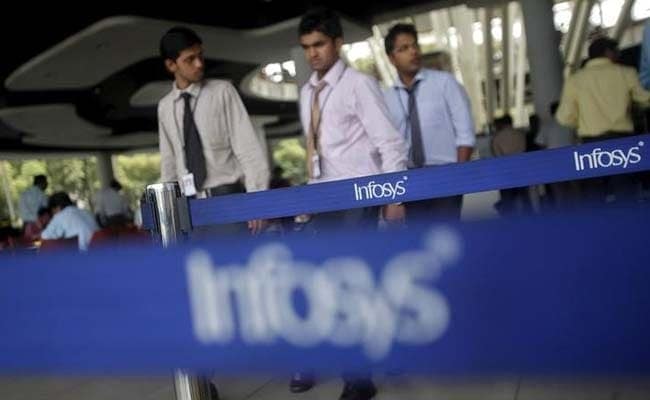
Bengaluru: Head Hunters India, an executive search firm, today termed the Infosys' move to hire 10,000 Americans as an act to 'appease' US President Donald Trump's administration which has tightened the rules of H-1B visa programme to stop its 'abuse'.
Head Hunters India Founder-Chairman and Managing Director K Lakshmikanth also said local hiring in the US was very costly and would lead to offshore job cuts in India.
The move by the Indian software major came amid US accusations that top Indian IT firms, including TCS and Infosys, were unfairly cornering the lion's share of H-1B visas by putting extra tickets in the lottery system.
Trump recently signed an executive order for tightening H-1B visa rules to stop its 'abuse' and ensure they are given to the 'most-skilled or highest paid' petitioners, a decision that would impact India's $150 billion IT industry.
Lakshmikanth said the move to hire 10,000 American workers in next two years "can be seen as an act of Infosys to appease Trump's administration, which could file legal suites against IT companies, including Infosys for 'misuse' of H-1B work visas programme."
He also said the Infosys' announcement came after Acting Assistant Attorney General of Civil Rights Division Tom Wheeler's statement that the Justice Department will not tolerate employers misusing the H-1B visa process to discriminate against US workers.
"The announcement of the US Citizenship and Immigration Services (USCIS) to deter and detect what it described as fraud and abuse of the H-1B work visas is indicative of US government's intentions to go tough and stringent in approval of H-1B visas this year," Lakshmikanth told PTI.
Infosys had on May 3 announced it will hire 10,000 Americans in the next two years and open four new centres in the US as part of efforts to mitigate the impact of H-1B visa curbs.
The move was welcomed by the Trump administration as a "political victory" which it said was achieved as a result of US government's "pro-growth economic agenda."
To a query, Lakshmikanth said it needed to be seen how soon it will take Infosys to ramp up local hiring in the US.
"All said and done, according to me, Infosys will take time to ramp up local hiring as it is very costly. The company needs to pay a minimum of $80,000 (Rs 52 lakh) per year to a skilled American techie.
For the same amount, it can hire four software engineers in India for its offshore development work, he said.
Currently, an Indian IT firm pays $60,000-65,000 per year for techies working in the US on H-1B visas and they return after three years of onsite work.
Lakshmikanth also said if Infosys hired about 500 Americans techies, it will result in a loss of 2,000 jobs in India for offshore operations.
"Automation and artificial intelligence will reduce hiring by another 30-40 per cent," he added.
On April 24, Nasscom had come out in defence of its members - TCS and Infosys - saying the two accounted for only 8.8 per cent of the approved H1B visas in 2014-15.
The H-1B is a non-immigrant visa that allows US companies to employ foreign workers in speciality occupations requiring theoretical or technical expertise in specialised fields.
Indian technology companies depend on it to hire tens of thousands of employees each year for their US operations.

-
Navigating Energy Crossroads: S Jaishankar's Call For Diversified Supply Chains At G20 Ministerial Meeting

As geopolitical fault lines continue to test maritime trade routes and commodity flows, Jaishankar's message remains pertinent: true economic resilience requires open markets, protected transit lines, and a genuine commitment to multilateral cooperation rather than coercion.
-
Indians Are Travelling, But Not Every Journey Is A Holiday | The Week In Whys
Pilgrims, patients and working women are the real travellers, and the system hasn't quite caught up with them.
-
Getting To Work Costs Women More | The Reason Why
It is not just about women paying more than men. It is about women paying much more in cities than in villages.
-
AI Bias In Investing Cannot Be Eliminated, But It Can Be Governed
Framing is a particularly important example as identical financial information presented in terms of gains rather than losses can lead an LLM to reach a different assessment.
-
Joining The Dots | Dark Skies, Steady Diya: Why Hope Holds This Diwali
With war, a weak rupee and foreign outflows weighing on sentiment, policymakers at the NDTV World Summit and market veterans at NDTV Profit Ignite: Diwali Edition offered the same advice: stay invested and filter out the noise.
-
The Curious Case of Equitas Small Finance Bank And A CEO Who Quit For Stock
PN Vasudevan believes persistent investor concerns over a perceived conflict of interest had become a governance overhang on Equitas Small Finance Bank's stock, even as the lender improved profitability and asset quality.
-
Talking Points This Week: AI Cash Burn, A Tiger Comeback And An India That Still Finds Its Own Path
India is not immune to higher oil or tighter global liquidity, yet its earnings base is broader, its domestic policy levers are still available.
-
Foreign Investors Own Half Of HDFC Bank and ICICI Bank. An LTCG Cut Could Matter Most Here
Foreign portfolio investors have US$115 billion parked in HDFC Bank, ICICI Bank. If the government cuts long-term capital gains tax, Jefferies says returning foreign money could land here first.
-
'Never Seen This Level Of Negativity': Sandeep Tandon Says The Next Rally May Be Closer Than You Think
Veteran investor Sandeep Tandon says foreign selling is easing, large-caps are due a comeback and mid-caps are crowded, while he turns positive on gold, power and pharma this Diwali.
-
Indians Stay With Family, Not In Hotels | The Reason Why
India still lacks enough clean, reliable and affordable hotels for budget-conscious travellers.










