How India’s Sanitiser Market Grew After Coronavirus Outbreak
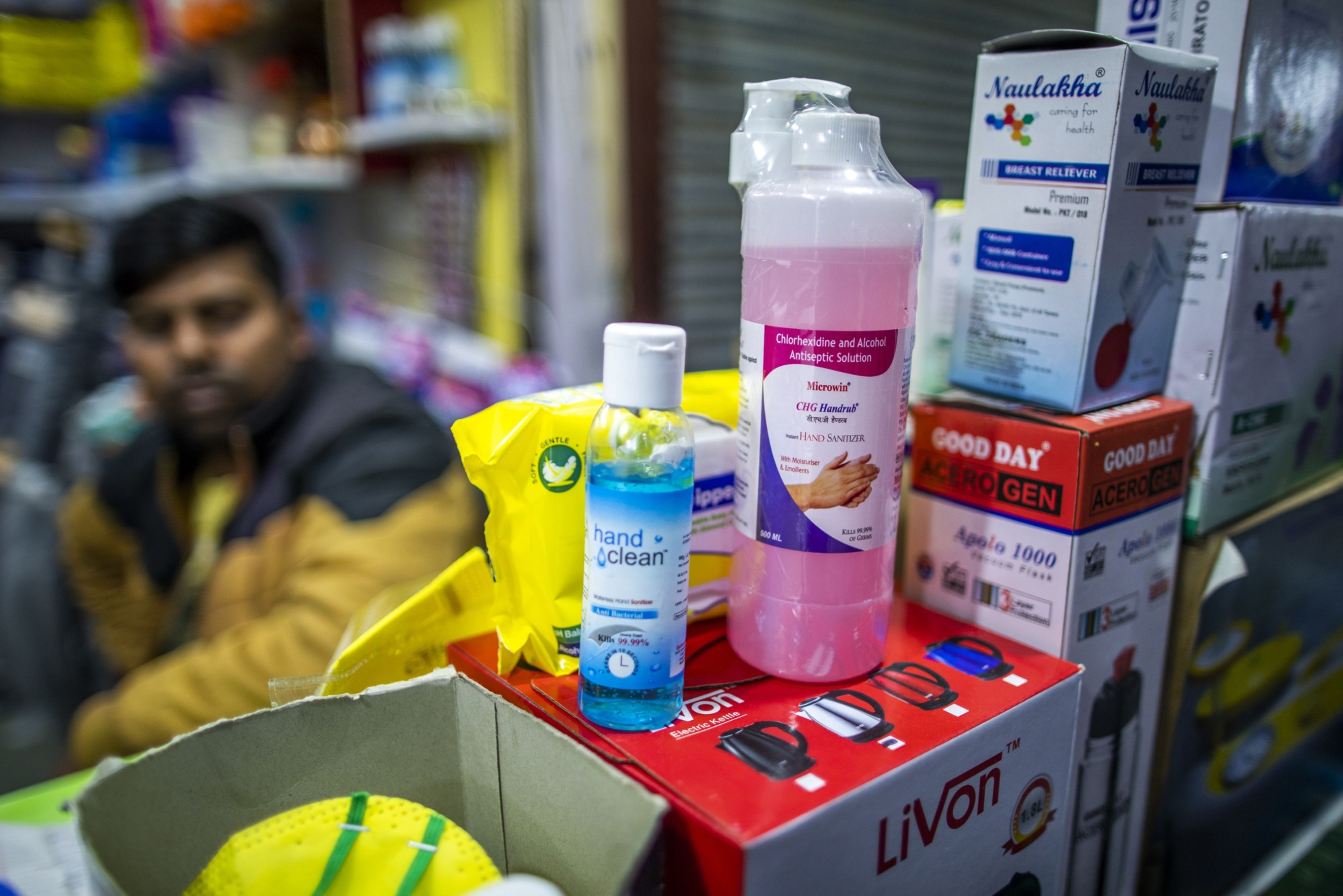
New entrants and local brands now dominate India's sanitiser market that swelled more than fourfold after the novel coronavirus outbreak.
The size of the category touched Rs 43 crore in March from Rs 10 crore a year ago, according to Nielsen India, as the highly contagious pathogen spread rapidly despite the world's strictest lockdown. A total of 152 new manufacturers started making sanitisers in March, commanding 61 percent market and 46 percent value share, the researcher said without naming the brands.
The market share of the top three brands — Dettol from Reckitt Benckiser India Ltd., Lifebuoy from Hindustan Unilever Ltd. and Pure Hands by Himalaya Drug Company Pvt. Ltd. — fell to 39 percent in March from 85 percent in January and February.
While no vaccine is available yet for the new coronavirus, cleaning hands with sanitisers containing at least 60 percent alcohol is considered an effective way to avoid the infection that has spread to more than 3 million people worldwide and over 42,000 in India. Demand for sanitisers, Nielsen said, surged to 87 percent in April 10-14 from 58 percent between March 17 and 19. The category, industry experts told BloombergQuint, is expected to grow at an annual rate of 10-15 percent over the next five years.
Fast-moving consumer goods companies such as ITC Ltd., Dabur India Ltd., Marico Ltd., Emami Ltd. and Jyothy Laboratories Ltd. have rushed to capture a portion of the market. Liquor maker Diageo India jumped in as well and ITC turned its perfume factory in Himachal Pradesh to churn out Savlon-branded. Marico launched ‘Veggie Clean', fruit and vegetable cleaner.
“The pandemic is changing consumer behaviour and needs. There is an exponential increase in demand for our health and hygiene brands, Savlon and Nimyle. Consumers are looking for both safety and supply assurance,” Sameer Satpathy, chief executive offer (personal care products business) at ITC, said in an email to BloombergQuint. The company, Satpathy said, expects the health and hygiene category to expand as several new users forayed.
Sanjiv Mehta, chairman and managing director of Hindustan Unilever, said though it's difficult to gauge if demand for sanitisers will continue at current levels, but it will be higher. The company has ramped up its production of sanitisers during the lockdown, he said in a teleconference.
Wipro Consumer Care and Asian Paints Ltd. also forayed into the hand santiser category. While the paints maker launched its product under the ‘Viroprotek' brand, Wipro sells it under the brand name ‘Hygienix', which it acquired from Philippines-based Splash Corporation in April 2019. Wipro declined to comment on BloombergQuint's query.
According to a contract manufacturer of sanitisers, companies need a drug manufacturing licence if their product claims that it kills 99.9 percent of the germs, else they can produce under a cosmetic licence. The market is currently witnessing supply of bigger stock keeping units — a distinct type of item for sale. Once the lockdown is lifted, smaller SKUs will enter, the person told BloombergQuint on the condition of anonymity. Sugar mills in Maharashtra, too, are being allowed to produce sanitisers for bulk use, he said.

-
Ten Things I Learnt This Samvat

Patience can be a trap. Cheap stocks can stay cheap. Leverage can wipe you out. What did Samvat 2082 teach us? Niraj Shah writes on 10 lessons from the year gone by.
-
Talking Points This Week: Tech Nerves, FII Buying, And A Faraway Banking Shock
The global markets are not shining this Diwali. The exception in the large markets is, India.
-
Midterm Rally Lasted A Day. The Hard Reality Of A Divided US May Last Two Years | Opinion
Between a contested AI boom, a debt ceiling that arrives in 2027 and a president with every incentive to act alone, the next two years may prove more volatile than the first day's rally suggests.
-
Blue Wave Will Derail the AI Trade but Won't Dismantle the AI Era | Unhedged Position
The Democrats' sweep of the US Congress will see politics collide with economic forces both over the long and short term.
-
It's Time To Take The GST Council's Bet On Trust Global
Payment records can prove India's services exports, and clear, proportionate rules can bring foreign digital sellers into the tax net.
-
Opinion | India at 38: From Innovation Overperformer to Innovation Powerhouse
India now has 453 VC-backed deep science startups, 18 of them late-stage, after 117 percent growth since 2020. Laurus Labs, at USD 9.3 billion, is the most valuable deep science company in any middle-income economy outside China.
-
Navigating Energy Crossroads: S Jaishankar's Call For Diversified Supply Chains At G20 Ministerial Meeting
As geopolitical fault lines continue to test maritime trade routes and commodity flows, Jaishankar's message remains pertinent: true economic resilience requires open markets, protected transit lines, and a genuine commitment to multilateral cooperation rather than coercion.
-
Indians Are Travelling, But Not Every Journey Is A Holiday | The Week In Whys
Pilgrims, patients and working women are the real travellers, and the system hasn't quite caught up with them.
-
Getting To Work Costs Women More | The Reason Why
It is not just about women paying more than men. It is about women paying much more in cities than in villages.









