How India’s Microlenders Are Weathering The Liquidity Storm
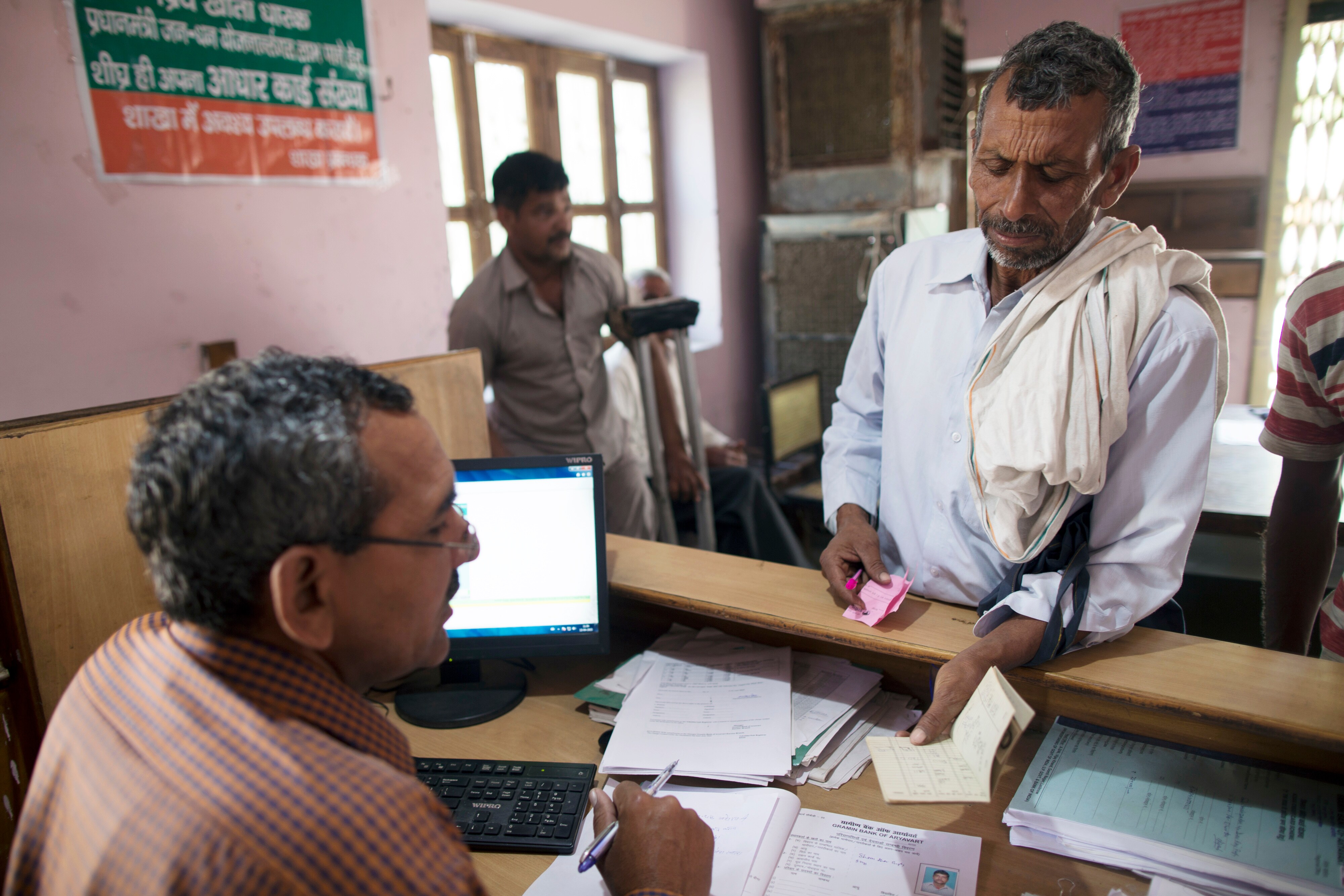
India's microlenders, who returned to strong growth after a period of uncertainty following demonetisation, are facing their second challenge in two years. This time it is the liquidity crunch facing non bank lenders, which could force microfinance institutions to slow growth.
While credit markets have rebounded from the troughs hit in late September and October, liquidity for non-bank financial companies remains tight and is coming at a higher cost. This could mean slower growth for the smaller NBFCs and microlenders in the market.
Harsh Shrivastava, CEO of MicroFinance Institutions Network, a self regulatory organisation for MFIs, said that the scenario for MFIs is similar to that being faced by the broader NBFC sector. While large MFIs have weathered the liquidity crunch well, smaller MFIs have seen some disruption.
“The top 10 to 12 MFIs have continued to raise funds through securitisation, direct assignments and continued funding from banks,” said Supreeta Nijjar, vice president for financial sector ratings at ICRA. “Even though there is no liquidity crunch for smaller MFIs, they are meeting repayments but keeping remaining funds instead of disbursing them, pulling down growth,” Nijjar added.
For MFIs and small finance banks tracked by ICRA, lending grew at 30 percent year-on-year between March and September 2018. For September alone, before the liquidity crunch hit, these institutions were growing at nearly 40 percent over year last.
The biggest drop in growth will be seen in the third quarter.
Lending in the third quarter will be about 25 to 30 percent lower in comparison to what it was in the second quarter of the year, estimated Vivek Tiwari, chief executive officer of Satya Micro Capital Ltd. Tiwari, however, added that the situation has improved in recent days.
Growth could rebound atleast partially in the fourth quarter, which is traditionally strong. As we get closer to the year-end, banks have to meet their PSL requirements which leads to a pick-up in portfolio sales and securitiesation, explained Parijat Garg, vice president at CRIF High Mark, a credit information bureau.
Securitisation Boost
Securitisation transactions have remained strong even through the period of liquidity stress and this has helped these microlenders unlock funds.
MFI loans make up the third largest pool of securitised loans. These loan pools have not thrown up any significant asset quality concerns in recent times, which has meant that investors remain willing to invest in them.
Shrivastava of MFIN said that securitisation of loan pools has also partly helped smaller MFIs tide over the liquidity crunch.
Large and small MFIs have been creating combined asset pools for securitisation. The move has helped smaller MFIs to improve credit ratings.Harsh Shrivastava, CEO, MicroFinance Institutions Network
Still, if the liquidity strains persist, there could be some shifts in business models.
There could be an increase in the share of smaller MFIs originating more portfolio through the business correspondent model, as partners to larger lenders, to conserve capital.Supreeta Nijjar, Vice President - Financial Sector Ratings, ICRA
However, the broader MFI industry may be well placed to deal with the liquidity crisis.
The fundamental characteristics of the of the MFI industry better safeguard it against a liquidity crunch in comparison to other non banks, said Krishnan Sitaraman, senior director of financial sector ratings at CRISIL. MFIs are less likely to suffer from asset-liability mismatches as their loans are of short tenures, preventing negative gaps in maturity and enabling them to meet repayment.

-
High US Salaries, No Green Card Certainty: The Financial Calculation Facing Indian H-1B Families

The suspension of PERM processing at eight technology employers does not cancel existing H-1B visas. What it does is force a question many Indian families have been avoiding: is the US salary worth tying your career and family plans to one employer?
-
Unhedged Position: Can India See An Indonesia-Style Time Correction?
The Nifty is trading below levels it first clocked in 2024. Is there, then, as I have suggested in the headline, potential that the current time correction drags on painfully for the next three-five, even ten years?
-
Navigating Friction And Energy Realities: An Analysis Of Marco Rubio's October Visit To India
Occurring at a critical juncture marked by stalled trade negotiations and escalating geopolitical pressures over global energy supplies, the visit offers a profound window into modern US-India relations.
-
India Exports Capital. Why Not Export Trusteeship?
The big question, then, is whether India can build an institution that global borrowers, investors, banks, and lawyers can trust, even without an Indian connection.
-
France's Economy & Politics Are In Crisis | The Reason Why
Let's look at how the French economy and politics evolved under Nicolas Sarkozy, Franois Hollande and Emmanuel Macron.
-
You May Inherit The Business. You Must Earn Its Credibility.
Succession tests the founder's ability to share authority as much as it tests the next generation's readiness to assume it.
-
Signing Deals Is One Thing; Making Them Work Is Another | The Week In Whys
Sometimes, things don't turn out as planned. Indian companies have lost some bids to rivals, some projects won't produce until 2030.
-
FOMC Wall, PERM Suspension, Hospital Stocks | Talking Points This Week
A PERM suspension would directly affect green-card sponsorship rather than H-1B visas, so the near-term earnings impact could remain relatively limited. The key question is whether this marks a new phase in US scrutiny of Indian IT.
-
Everything, Everywhere, All At Once: Dalal Street's Week To Forget | Joining The Dots
Visa curbs, a Starlink spat and cancer drug caps: what connects this week's shocks for Indian markets
-
India Is Going Abroad For Critical Minerals. But It May Take Years To Pay Off | The Reason Why
Although India's steps are in the right direction, they remain modest compared with India's growing dependence.









