How coaching classes are widening the class divide in India
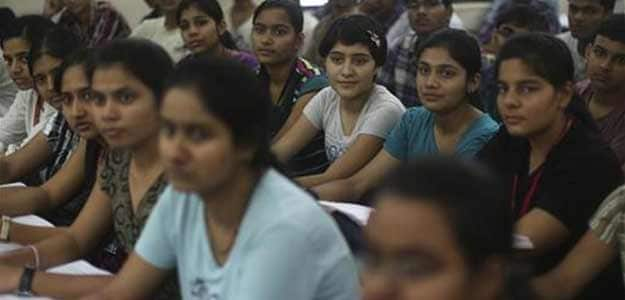
With a sprawling five-acre campus, 10,000 students and state-of-the-art LCD projectors in its lecture rooms, Bansal Classes is bigger and slicker than most schools in India.
But the institution, now a landmark in Kota, a city in Rajasthan, is neither a school nor a college. It is the jewel in the crown of India's private coaching industry, a $6.4 billion business that exacerbates the social divide.
Cram schools have become a magnet for tens of thousands of mostly middle class families in a country where two decades of rapid economic growth have failed to improve a dysfunctional state education system and a shortage of good universities.
Such cram schools coach students for fiercely competitive entrance tests to a handful of premier technical and medical colleges. Their modus operandi is rote learning. At Bansal's, hundreds of teenagers are trained intensively to solve complex multiple-choice questions on physics, chemistry or mathematics.
Yash Raj Mishra, a Kota cram student, lives in a tiny room with no television or laptop and spends almost 16 hours a day attending classes, revising or tackling question papers.
"Physics is my first and last girlfriend," said Mishra, leaning against a wall plastered with notes on Kinematics.
"I feel bad and frustrated when my friends score even slightly better than I do," added the 17-year-old, who calls his friends only to ask about their academic progress.
Two-year coaching programmes in Kota cost $3,000-$4,000, in addition to which students have to pay for their regular schools and spend at least $2,000 a year on accommodation. That makes the total expenditure a small fortune for most in a nation where the annual per capita income is around $1,250.
"A child is a stack of thousand-rupee notes," said Manoj Chauhan, a mathematics tutor in his late 20s who could have joined a software company or multinational but chose instead to teach in Kota, where many teachers' salaries top $6,000 a month.
Such cram schools compound the inequalities of an education system plagued by absentee teachers and high drop-out rates, which have left a quarter of Indians illiterate and lacking the skills to match the country's growing economic needs.
A global survey by ManpowerGroup, one of the world's largest staffing service providers, estimated India's shortage of skilled labour at 67 per cent—the second worst in the world.
The skill shortages threaten to blunt what is seen as one of India's biggest economic advantages - its demographic dividend.
With 60 per cent of India's 1.2 billion population under the age of 35, the country has an opportunity to reap the kind of demographic dividend that brought the dramatic transformation of East Asian economies towards the end of the 20th century.
The average age of an Indian in 2020 will be 29 compared with 37 in China and the United States and 48 in Japan, bringing a chance to boost productivity and the savings rate. But India may never realise its dividend if the bulk of these youths are poorly educated, stuck in low-value jobs or under-employed.
Rite of passage
Every year more than 50,000 students from across the country enroll in Kota, many of them under parental pressure. The riverside town has become the capital of the multi-billion-dollar coaching industry, thanks to the success of Bansal Classes, which was set up by a former engineer who held the first classes across the table in his own dining room.
The city of nearly one million has flourished partly because of its blandness, with parents seeing the relative lack of distractions for students a bonus. Despite housing thousands of teenagers, it has hardly any of the shopping malls and cinema complexes that sprouted across the country as the economy grew.
The goal of attending cram schools is cracking the tough exams set by top colleges such as the Indian Institutes of Technology (IITs) or the All India Institute of Medical Sciences (AIIMS), whose degrees can be a ticket to a lifetime of fat pay cheques or jobs in the United States.
"There were 50 children who committed suicide in Kota last year," said Vinod Kumar Bansal, founder of Bansal Classes. "When a child realises he can't make it to IIT, the guilt of spending his father's money on coaching can lead him to end his life."
Bansal founded the school in the 1980s, leaving his job at a nylon-making firm after being diagnosed with muscular dystrophy, and it was his success that bred Kota's coaching juggernaut.
The centre shot to fame after a string of successes in getting students admitted to India's toughest colleges - spawning a host of other institutions that were inspired by Bansal's success. Its website says 16,000 of its students have gained admission to IITs, more than any other cram school.
In 2012, more than 500,000 students took the IIT entrance exam and less than 10,000 cleared it, making admission statistically harder than getting into America's Ivy League colleges.
Today Bansal's school, whose eight storeys are connected by wheelchair ramps, has become a thriving business with annual earnings close to Rs 100 crore—and that despite a sharp slowdown in India's economic growth.
"In the long run, it has to undermine faith in the education system as a meritocratic system, where hard work and talent are rewarded," said Chad Lykins, co-author of an Asian Development Bank report on private coaching in Asia. "Instead, the reward goes to the person who can go outside the system and get exam tricks and tips."
Critics also argue that the cram schools offer false hope to many students and parents, promising results even though the candidate may not have an aptitude for engineering or medicine.
"Actually in a coaching institute you are treated like a rat," said Ashutosh Banerjee, who fled Kota within a month after getting fed up with his cram school. "Teachers have a lot of attitude and they shout at everyone and make fun of everyone."
But for most students, the teachers are above reproach and can become mini celebrities in Kota, where their pictures are plastered on city walls.
"On streets, students point at me or stare," said Chauhan, the maths tutor, who has billboards with his picture around the city. "They have made videos and uploaded on YouTube."
Rat race
Seeing the potential in the Indian market, Etoos, a South Korean coaching giant, invested Rs 30 crore to set up shop in Kota in 2011, focusing on video lectures and e-learning.
"In terms of revenue, India is going to cross over South Korea," said Etoos' business head Nitin Chaturvedi. "The Indian population is huge and geographically also it is 4-5 times of Korea."
Coaching firms have flourished in other cities too. FIITJEE, a household name for would-be engineering students, has over 60 franchises across the country. It plans an initial public offering (IPO) in the next few months.
"People are chasing us like anything," said R. Trikha, head of distance learning at FIITJEE. "Coaching is actually there because the school systems are not doing their job. Society should be grateful to us that we are fulfilling this need."
But the popularity of India's cram schools has helped make a bad situation worse in the state education system. Better pay tempts schoolteachers to moonlight as private instructors, neglecting the poorer students they are meant to be teaching.
"It is forbidden, but enforcement is another issue," said Anshu Vaish, secretary at the Ministry of Education. "Typically, what teachers do often is that they won't teach in the classroom and they will make students come to their homes later to study the same thing."
The poor quality of state teaching has resulted in a generation where about two-thirds of 10-year-olds cannot do a simple division problem, according to Wilima Wadhwa of ASER, a Delhi-based education research centre.
The experience in poorer schools can be bleak. Teacher truancy is common in most villages, while poverty can force families to pull children out of school early to find work. Pupils from lower castes face bullying and discrimination from their teachers, and are sometimes forced into doing menial jobs such as cleaning school toilets instead of attending classes.
The lack of good schools and colleges means that the quality of the average Indian degree is so low that even those students who manage to get one could find themselves without a job.
"Only 25 per cent of our engineering graduates, on average, are actually fit to fulfill the requirements of the IT industry," said Binod Khadria, a sociology professor at New Delhi's Jawaharlal Nehru University. "So you can imagine the amount of wastage. Those who are left over ... what are they going to do?"
Copyright: Thomson Reuters 2012

-
Navigating Energy Crossroads: S Jaishankar's Call For Diversified Supply Chains At G20 Ministerial Meeting

As geopolitical fault lines continue to test maritime trade routes and commodity flows, Jaishankar's message remains pertinent: true economic resilience requires open markets, protected transit lines, and a genuine commitment to multilateral cooperation rather than coercion.
-
Indians Are Travelling, But Not Every Journey Is A Holiday | The Week In Whys
Pilgrims, patients and working women are the real travellers, and the system hasn't quite caught up with them.
-
Getting To Work Costs Women More | The Reason Why
It is not just about women paying more than men. It is about women paying much more in cities than in villages.
-
AI Bias In Investing Cannot Be Eliminated, But It Can Be Governed
Framing is a particularly important example as identical financial information presented in terms of gains rather than losses can lead an LLM to reach a different assessment.
-
Joining The Dots | Dark Skies, Steady Diya: Why Hope Holds This Diwali
With war, a weak rupee and foreign outflows weighing on sentiment, policymakers at the NDTV World Summit and market veterans at NDTV Profit Ignite: Diwali Edition offered the same advice: stay invested and filter out the noise.
-
The Curious Case of Equitas Small Finance Bank And A CEO Who Quit For Stock
PN Vasudevan believes persistent investor concerns over a perceived conflict of interest had become a governance overhang on Equitas Small Finance Bank's stock, even as the lender improved profitability and asset quality.
-
Talking Points This Week: AI Cash Burn, A Tiger Comeback And An India That Still Finds Its Own Path
India is not immune to higher oil or tighter global liquidity, yet its earnings base is broader, its domestic policy levers are still available.
-
Foreign Investors Own Half Of HDFC Bank and ICICI Bank. An LTCG Cut Could Matter Most Here
Foreign portfolio investors have US$115 billion parked in HDFC Bank, ICICI Bank. If the government cuts long-term capital gains tax, Jefferies says returning foreign money could land here first.
-
'Never Seen This Level Of Negativity': Sandeep Tandon Says The Next Rally May Be Closer Than You Think
Veteran investor Sandeep Tandon says foreign selling is easing, large-caps are due a comeback and mid-caps are crowded, while he turns positive on gold, power and pharma this Diwali.
-
Indians Stay With Family, Not In Hotels | The Reason Why
India still lacks enough clean, reliable and affordable hotels for budget-conscious travellers.










