How A Deficient Monsoon Impacts Rabi Sowing — BQ Explains
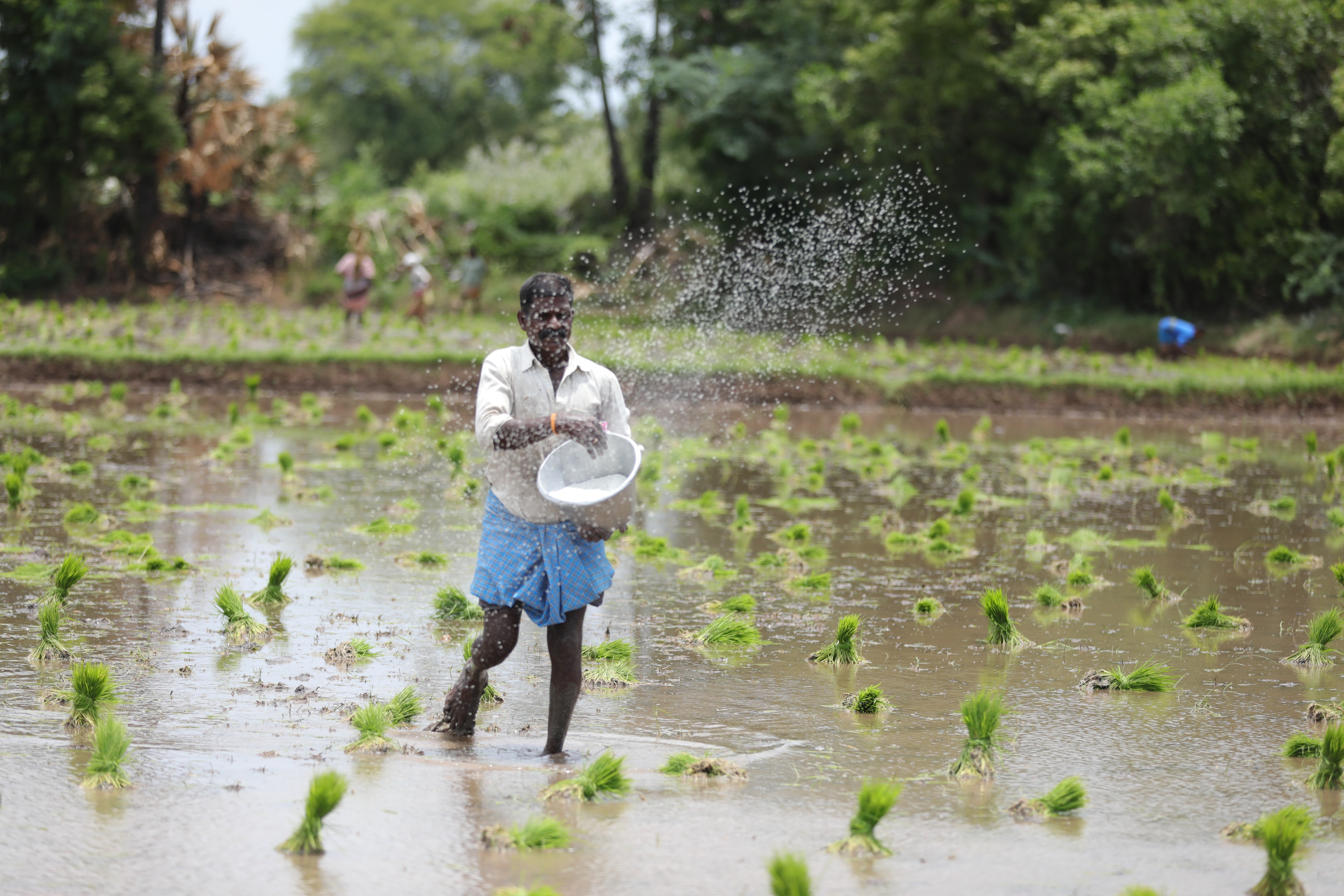
The risk to rabi sowing remains elevated due to deficient monsoon rainfall in August and water reservoir level at 10-year low.
The cumulative water levels in 150 key reservoirs across India dipped below the 10-year average as a result of slow monsoon progress over the past month.
Live storage available in 150 key reservoirs--accounting for about 70% of India's capacity—was 113.4 billion cubic metres or 63% as of Aug. 31, according to a weekly bulletin published by the Central Water Commission. It's at 77% of the corresponding period last year and 91% of the 10-year average.
The reservoir levels mirrored the spatial distribution of the monsoon.
Existing storage during the current year in the central, eastern, and southern regions is less a year earlier and is also below the average storage of the last 10 years for the period.
For the northern and western regions, storage in the ongoing year is below that of last year but better than 10-year average.
Lower rainfall and the resultant lower reservoir levels will have implications for the rabi crops that have a higher dependency on irrigation, according to CareEdge Research.
Insufficient moisture in the soil can severely impede crop growth, leading to reduced yields and compromising food security, Harshvardhan Bhagchandaka, president at biological solutions agri-company IPL Biological Ltd., said. In addition, a prolonged dry spell can increase vulnerability to pests and diseases, necessitating the use of chemical pesticides that can harm both the environment and human health, he said.
While this is not a major concern as yet, at this stage it's difficult to say what will happen, agri-economist Siraj Hussain said. Last year, the southwest monsoons saw a late retreat. As such, widespread rainfall over the coming weeks would result in moisture, while deficient rainfall would pose challenges, Hussain said.
Wheat and pulses are rabi crops reliant on irrigation facilities, for which reservoir levels are important, said IDFC First Bank in a note.
So far, ongoing kharif sowing remains in line with last year, though the area covered under pulses continues to lag.
Kharif Crops: Sowing Stable, Pulses Lag
The overall sowing area is 0.4% higher than the same period last year, covering a total of 1,077.8 lakh hectares as of Sept. 1, according to data published by the Department of Agriculture and Farmers Welfare.
However, for pulses, it's 8.5% below last year.
Urad witnessed the sharpest decline of 18.4% in sowing area among pulses. Arhar and moong, too, recorded a fall. Oil seeds led by ground nuts; jute; cotton; and mesta also saw modestly lower sowing coverage than a year ago.
While the government imports pulses, insufficient rainfall in West Bengal, east Uttar Pradesh, and Bihar is already having an impact on rice production, Hussain said. As such, it will require close monitoring, he said.
Pulses, some coarse cereals, rice, and oilseeds are vulnerable crops facing some duress due to deficient rains and a low irrigation cover, said a research note by Crisil. Among states, it identified Jharkhand, Karnataka, Maharashtra, Bihar, and West Bengal as vulnerable to deficient rainfall.
The key concern is that weak rains could hurt agriculture output when recovery in the rural economy is weak, Crisil said. Any impact on crop output could increase upside pressure on retail food inflation, which is already hovering in double digits, it said.

-
Navigating Energy Crossroads: S Jaishankar's Call For Diversified Supply Chains At G20 Ministerial Meeting

As geopolitical fault lines continue to test maritime trade routes and commodity flows, Jaishankar's message remains pertinent: true economic resilience requires open markets, protected transit lines, and a genuine commitment to multilateral cooperation rather than coercion.
-
Indians Are Travelling, But Not Every Journey Is A Holiday | The Week In Whys
Pilgrims, patients and working women are the real travellers, and the system hasn't quite caught up with them.
-
Getting To Work Costs Women More | The Reason Why
It is not just about women paying more than men. It is about women paying much more in cities than in villages.
-
AI Bias In Investing Cannot Be Eliminated, But It Can Be Governed
Framing is a particularly important example as identical financial information presented in terms of gains rather than losses can lead an LLM to reach a different assessment.
-
Joining The Dots | Dark Skies, Steady Diya: Why Hope Holds This Diwali
With war, a weak rupee and foreign outflows weighing on sentiment, policymakers at the NDTV World Summit and market veterans at NDTV Profit Ignite: Diwali Edition offered the same advice: stay invested and filter out the noise.
-
The Curious Case of Equitas Small Finance Bank And A CEO Who Quit For Stock
PN Vasudevan believes persistent investor concerns over a perceived conflict of interest had become a governance overhang on Equitas Small Finance Bank's stock, even as the lender improved profitability and asset quality.
-
Talking Points This Week: AI Cash Burn, A Tiger Comeback And An India That Still Finds Its Own Path
India is not immune to higher oil or tighter global liquidity, yet its earnings base is broader, its domestic policy levers are still available.
-
Foreign Investors Own Half Of HDFC Bank and ICICI Bank. An LTCG Cut Could Matter Most Here
Foreign portfolio investors have US$115 billion parked in HDFC Bank, ICICI Bank. If the government cuts long-term capital gains tax, Jefferies says returning foreign money could land here first.
-
'Never Seen This Level Of Negativity': Sandeep Tandon Says The Next Rally May Be Closer Than You Think
Veteran investor Sandeep Tandon says foreign selling is easing, large-caps are due a comeback and mid-caps are crowded, while he turns positive on gold, power and pharma this Diwali.
-
Indians Stay With Family, Not In Hotels | The Reason Why
India still lacks enough clean, reliable and affordable hotels for budget-conscious travellers.










