How A Deficient Monsoon Impacts Rabi Sowing — BQ Explains
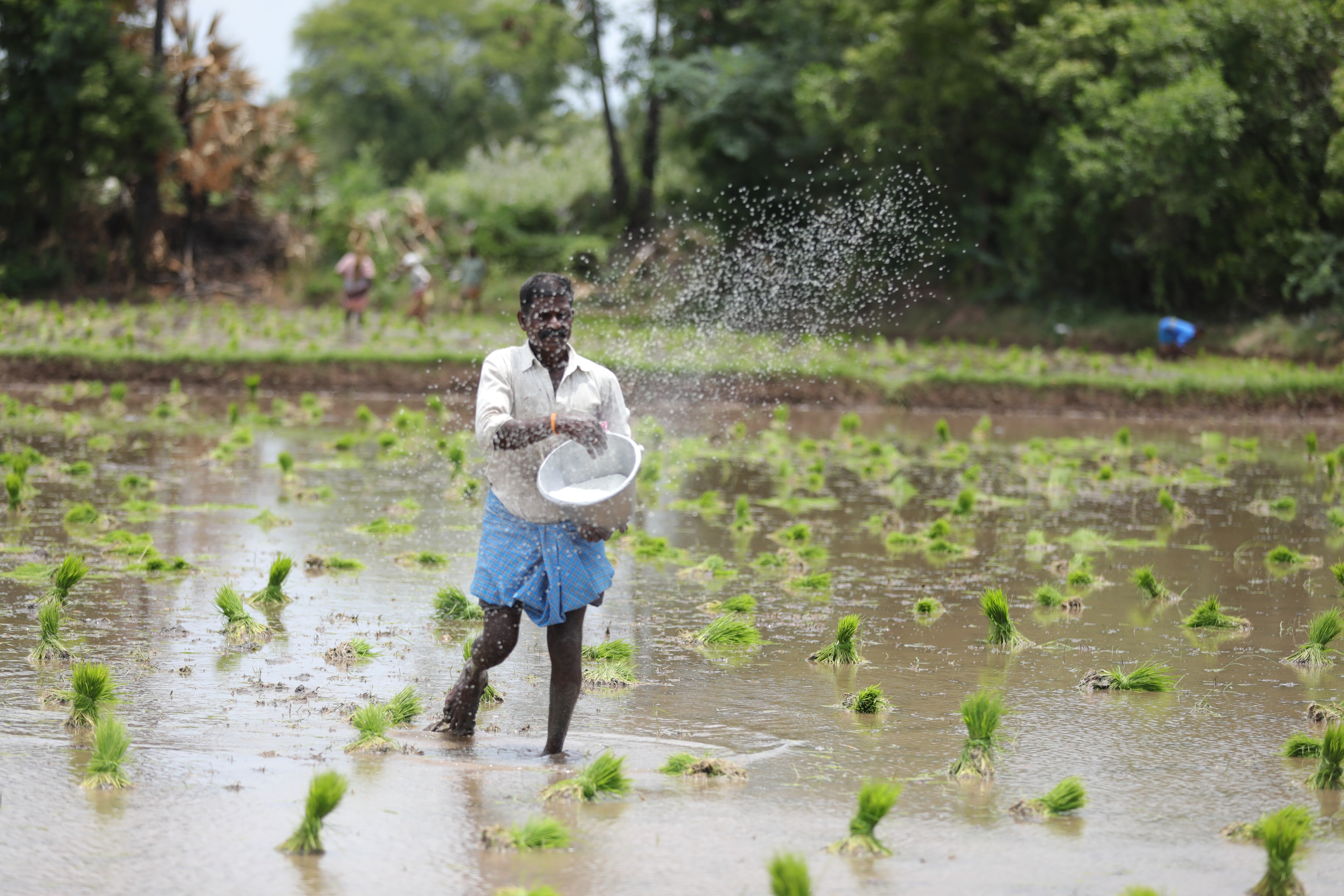
The risk to rabi sowing remains elevated due to deficient monsoon rainfall in August and water reservoir level at 10-year low.
The cumulative water levels in 150 key reservoirs across India dipped below the 10-year average as a result of slow monsoon progress over the past month.
Live storage available in 150 key reservoirs--accounting for about 70% of India's capacity—was 113.4 billion cubic metres or 63% as of Aug. 31, according to a weekly bulletin published by the Central Water Commission. It's at 77% of the corresponding period last year and 91% of the 10-year average.
The reservoir levels mirrored the spatial distribution of the monsoon.
Existing storage during the current year in the central, eastern, and southern regions is less a year earlier and is also below the average storage of the last 10 years for the period.
For the northern and western regions, storage in the ongoing year is below that of last year but better than 10-year average.
Lower rainfall and the resultant lower reservoir levels will have implications for the rabi crops that have a higher dependency on irrigation, according to CareEdge Research.
Insufficient moisture in the soil can severely impede crop growth, leading to reduced yields and compromising food security, Harshvardhan Bhagchandaka, president at biological solutions agri-company IPL Biological Ltd., said. In addition, a prolonged dry spell can increase vulnerability to pests and diseases, necessitating the use of chemical pesticides that can harm both the environment and human health, he said.
While this is not a major concern as yet, at this stage it's difficult to say what will happen, agri-economist Siraj Hussain said. Last year, the southwest monsoons saw a late retreat. As such, widespread rainfall over the coming weeks would result in moisture, while deficient rainfall would pose challenges, Hussain said.
Wheat and pulses are rabi crops reliant on irrigation facilities, for which reservoir levels are important, said IDFC First Bank in a note.
So far, ongoing kharif sowing remains in line with last year, though the area covered under pulses continues to lag.
Kharif Crops: Sowing Stable, Pulses Lag
The overall sowing area is 0.4% higher than the same period last year, covering a total of 1,077.8 lakh hectares as of Sept. 1, according to data published by the Department of Agriculture and Farmers Welfare.
However, for pulses, it's 8.5% below last year.
Urad witnessed the sharpest decline of 18.4% in sowing area among pulses. Arhar and moong, too, recorded a fall. Oil seeds led by ground nuts; jute; cotton; and mesta also saw modestly lower sowing coverage than a year ago.
While the government imports pulses, insufficient rainfall in West Bengal, east Uttar Pradesh, and Bihar is already having an impact on rice production, Hussain said. As such, it will require close monitoring, he said.
Pulses, some coarse cereals, rice, and oilseeds are vulnerable crops facing some duress due to deficient rains and a low irrigation cover, said a research note by Crisil. Among states, it identified Jharkhand, Karnataka, Maharashtra, Bihar, and West Bengal as vulnerable to deficient rainfall.
The key concern is that weak rains could hurt agriculture output when recovery in the rural economy is weak, Crisil said. Any impact on crop output could increase upside pressure on retail food inflation, which is already hovering in double digits, it said.

-
Why Amazon And Flipkart Are Struggling To Beat Meesho In India's Smaller Cities

With 274 million users and lowest-cost logistics, Meesho is defending its value commerce crown against giants like Amazon and Flipkart.
-
High US Salaries, No Green Card Certainty: The Financial Calculation Facing Indian H-1B Families
The suspension of PERM processing at eight technology employers does not cancel existing H-1B visas. What it does is force a question many Indian families have been avoiding: is the US salary worth tying your career and family plans to one employer?
-
Swiggy vs Eternal: Food Delivery's Two Rivals Are No Longer In The Same Race
Eternal is building a private AI assistant, dark.ai. Swiggy is still working out how to make Instamart pay, with an operating loss of Rs 895 crore in the July-September quarter while Blinkit stayed profitable.
-
Where You Live Shapes How You Get To Work | The Reason Why
Two-wheelers are the most popular way to get to work in India, accounting for nearly 43% of workplace commutes.
-
Unhedged Position: Can India See An Indonesia-Style Time Correction?
The Nifty is trading below levels it first clocked in 2024. Is there, then, as I have suggested in the headline, potential that the current time correction drags on painfully for the next three-five, even ten years?
-
Navigating Friction And Energy Realities: An Analysis Of Marco Rubio's October Visit To India
Occurring at a critical juncture marked by stalled trade negotiations and escalating geopolitical pressures over global energy supplies, the visit offers a profound window into modern US-India relations.
-
India Exports Capital. Why Not Export Trusteeship?
The big question, then, is whether India can build an institution that global borrowers, investors, banks, and lawyers can trust, even without an Indian connection.
-
France's Economy & Politics Are In Crisis | The Reason Why
Let's look at how the French economy and politics evolved under Nicolas Sarkozy, Franois Hollande and Emmanuel Macron.
-
You May Inherit The Business. You Must Earn Its Credibility.
Succession tests the founder's ability to share authority as much as it tests the next generation's readiness to assume it.
-
Signing Deals Is One Thing; Making Them Work Is Another | The Week In Whys
Sometimes, things don't turn out as planned. Indian companies have lost some bids to rivals, some projects won't produce until 2030.










