Hong Kong-Based Airline Cathay Pacific Unveils $5-Billion Bailout Plan
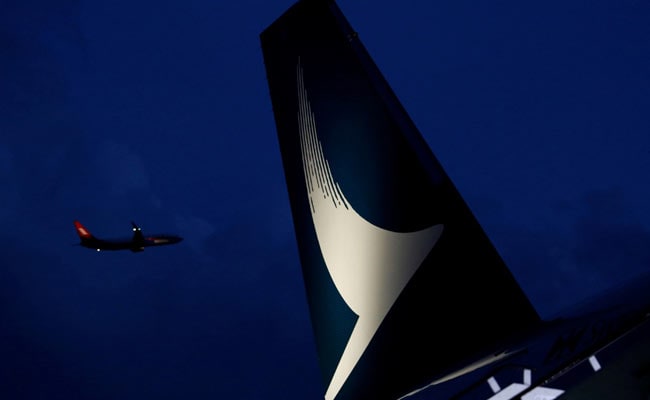
Troubled Hong Kong airline Cathay Pacific announced a HK$39 billion ($5 billion) government-led bailout plan on Tuesday as it battles a crippling downturn caused by the coronavirus. Like many carriers hammered by the crisis, the company has seen passenger numbers evaporate in recent months, leaving most of its fleet sitting on the tarmac and the firm haemorrhaging cash. The airline was already under pressure after taking a hit from months of sometimes violent protests in Hong Kong last year that saw tourism battered.
On Tuesday, the carrier announced a sweeping proposal to inject liquidity and keep it afloat with the help of Hong Kong's government, which will take a small stake in the firm. "Quite frankly, without this plan the alternative would have been a collapse of the company," Cathay chairman Patrick Healy told reporters.
The bulk of the capital will come from new shares issued to Aviation 2020, a company owned by the government, as well as a HK$7.8 billion bridge loan also from the government.
Under the proposal, Cathay will raise about HK$11.7 billion in a rights issue on the basis of seven rights shares for every 11 existing shares held, while preference shares will be sold to the government for HK$19.5 billion and warrants for HK$1.95 billion, subject to adjustment.
Share trading in Cathay Pacific -- and its two biggest shareholders Air China and Swire -- was suspended in Hong Kong on Tuesday morning ahead of the announcement. They will resume trading on Wednesday, Cathay said.
Swire, a Hong Kong and British conglomerate with colonial-era roots, has a 45 percent stake in Cathay while Air China owns 30 percent. Once the recapitalisation plan is complete, Aviation 2020 will take a six percent stake, while Swire's shares will be reduced to 42 percent and Air China's to 28 percent.
Aviation 2020 will also be allowed to send two "observers" to attend board meetings.
The South China Morning Post newspaper reported it is the first time Hong Kong's government has directly injected money into a private company. Finance Secretary Paul Chan said the government acted to protect Hong Kong's status as an international transport hub after Cathay approached them for help.
"We expect the investment to last three or more years as we at least need to wait for the pandemic to pass," he told reporters, adding he expected a reasonable return for taxpayers.
"The government will not take part in the company's daily operations," he said, with the two observer board members having no voting rights.
Cathay said it executives had also agreed to pay cuts, while all staff would be asked to take three weeks unpaid leave over the next six months -- a second time they have been asked to do so.
Before the pandemic struck, Cathay was one of Asia's largest international airlines and the fifth largest air cargo carrier globally. The virus has caused a collapse in passenger numbers, and while its cargo business has kept going, Cathay has no domestic demand to fall back on -- unlike many other big airlines.
Healy said Cathay went into the year with some $20 billion in reserves, but the company was now burning through $2.5-3 billion a month. Cathay also found itself punished by Beijing last year when some of its 33,000 employees expressed support for Hong Kong's pro-democracy protests.
The crisis led to the replacement of both the airline's CEO and chairman as Cathay scrambled to placate Beijing, while unions complained some staff were sacked for their political views.
Many other major airlines have scrambled to secure loans, raise capital or seek bailouts in recent weeks including Singapore Airlines, Korean Air, the three big US airlines and Lufthansa.

-
Navigating Energy Crossroads: S Jaishankar's Call For Diversified Supply Chains At G20 Ministerial Meeting

As geopolitical fault lines continue to test maritime trade routes and commodity flows, Jaishankar's message remains pertinent: true economic resilience requires open markets, protected transit lines, and a genuine commitment to multilateral cooperation rather than coercion.
-
Indians Are Travelling, But Not Every Journey Is A Holiday | The Week In Whys
Pilgrims, patients and working women are the real travellers, and the system hasn't quite caught up with them.
-
Getting To Work Costs Women More | The Reason Why
It is not just about women paying more than men. It is about women paying much more in cities than in villages.
-
AI Bias In Investing Cannot Be Eliminated, But It Can Be Governed
Framing is a particularly important example as identical financial information presented in terms of gains rather than losses can lead an LLM to reach a different assessment.
-
Joining The Dots | Dark Skies, Steady Diya: Why Hope Holds This Diwali
With war, a weak rupee and foreign outflows weighing on sentiment, policymakers at the NDTV World Summit and market veterans at NDTV Profit Ignite: Diwali Edition offered the same advice: stay invested and filter out the noise.
-
The Curious Case of Equitas Small Finance Bank And A CEO Who Quit For Stock
PN Vasudevan believes persistent investor concerns over a perceived conflict of interest had become a governance overhang on Equitas Small Finance Bank's stock, even as the lender improved profitability and asset quality.
-
Talking Points This Week: AI Cash Burn, A Tiger Comeback And An India That Still Finds Its Own Path
India is not immune to higher oil or tighter global liquidity, yet its earnings base is broader, its domestic policy levers are still available.
-
Foreign Investors Own Half Of HDFC Bank and ICICI Bank. An LTCG Cut Could Matter Most Here
Foreign portfolio investors have US$115 billion parked in HDFC Bank, ICICI Bank. If the government cuts long-term capital gains tax, Jefferies says returning foreign money could land here first.
-
'Never Seen This Level Of Negativity': Sandeep Tandon Says The Next Rally May Be Closer Than You Think
Veteran investor Sandeep Tandon says foreign selling is easing, large-caps are due a comeback and mid-caps are crowded, while he turns positive on gold, power and pharma this Diwali.
-
Indians Stay With Family, Not In Hotels | The Reason Why
India still lacks enough clean, reliable and affordable hotels for budget-conscious travellers.










