Hindustan Unilever Chief Unveils Five-Pronged Strategy
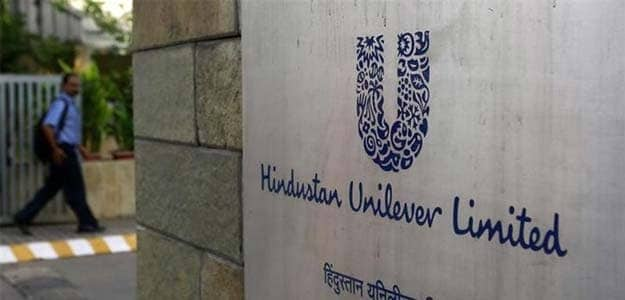
Consumer goods major Hindustan Unilever on Monday unveiled a five-pronged strategy to meet the rising demands of the tech-savvy market and keep itself future-ready.
Admitting that even rural consumers are increasingly being driven by Internet and mobiles, Hindustan Unilever Ltd (HUL) chairman Harish Manwani said rising penetration levels of Net and smartphones will help the country leapfrog on the one hand and make the company like HUL future ready on the other.
"Being future-ready means having the vision and capabilities to compete in the world of tomorrow and having a larger purpose to remain relevant to the society," he said.
"At Unilever, we have a five-pronged strategy to remain future-ready. First, embracing technology and inclusive innovation that meet the needs of the consumers across the socio-economic pyramid," he said.
"Second is committing ourselves to sustainable and responsible growth. Third, building future-ready talent and capabilities. Fourth is value-led and purpose-driven leadership and finally creating an agile and inclusive work culture," Manwani told the shareholders at the 81st annual general meeting of the company here.
He said while technology and innovation will be the hardware that drives future-ready organisations, it is a value-led and purpose-driven leadership, which is the software, that must drive sustainable and responsible growth.
"It is this combination of hardware and software that will shape the corporate winners of tomorrow," he said.
Noting that the world is extremely volatile and changing faster than ever, he said products and services are becoming more accessible with increasing connectivity and better infrastructure.
"For HUL, the rising middle-class and aspiring low-income group offers huge opportunities and the use of technology will help to anticipate their needs, but to do so it has to be future-ready," he said.
Manwani said about 25 years ago, only 3 per cent of our 6 lakh villages had telephone services. But today, there are over 875 million mobile phone subscribers.
In fact, today penetration of mobile phone is higher than any traditional media in many rural areas. This connectivity is allowing the country to leapfrog.
"Mobile is increasing the productivity of our farmers by providing easy access to agriculture-related information, eliminating intermediaries and opening opportunities for micro-enterprises, thus fundamentally improving everyday life for millions. It is therefore not surprising that the country's digital and e-commerce market is booming," he said.
Noting that India is a vast nation with widespread socio-economic diversities, he said technology and innovation allow us to anticipate and better serve the needs of many different Indians.
There are huge opportunities in meeting the needs of the rising middle-class as well as the aspiring low-income consumers.
"The urban middle-class consumers are changing the way we shop and buy. These consumers are researching brands and products, comparing pieces across multiple locations and are open to ordering from anywhere, anytime. These consumers are ready to try new products and services and are willing to spend on brands that match their aspirations," he added.

-
High US Salaries, No Green Card Certainty: The Financial Calculation Facing Indian H-1B Families

The suspension of PERM processing at eight technology employers does not cancel existing H-1B visas. What it does is force a question many Indian families have been avoiding: is the US salary worth tying your career and family plans to one employer?
-
Unhedged Position: Can India See An Indonesia-Style Time Correction?
The Nifty is trading below levels it first clocked in 2024. Is there, then, as I have suggested in the headline, potential that the current time correction drags on painfully for the next three-five, even ten years?
-
Navigating Friction And Energy Realities: An Analysis Of Marco Rubio's October Visit To India
Occurring at a critical juncture marked by stalled trade negotiations and escalating geopolitical pressures over global energy supplies, the visit offers a profound window into modern US-India relations.
-
India Exports Capital. Why Not Export Trusteeship?
The big question, then, is whether India can build an institution that global borrowers, investors, banks, and lawyers can trust, even without an Indian connection.
-
France's Economy & Politics Are In Crisis | The Reason Why
Let's look at how the French economy and politics evolved under Nicolas Sarkozy, Franois Hollande and Emmanuel Macron.
-
You May Inherit The Business. You Must Earn Its Credibility.
Succession tests the founder's ability to share authority as much as it tests the next generation's readiness to assume it.
-
Signing Deals Is One Thing; Making Them Work Is Another | The Week In Whys
Sometimes, things don't turn out as planned. Indian companies have lost some bids to rivals, some projects won't produce until 2030.
-
FOMC Wall, PERM Suspension, Hospital Stocks | Talking Points This Week
A PERM suspension would directly affect green-card sponsorship rather than H-1B visas, so the near-term earnings impact could remain relatively limited. The key question is whether this marks a new phase in US scrutiny of Indian IT.
-
Everything, Everywhere, All At Once: Dalal Street's Week To Forget | Joining The Dots
Visa curbs, a Starlink spat and cancer drug caps: what connects this week's shocks for Indian markets
-
India Is Going Abroad For Critical Minerals. But It May Take Years To Pay Off | The Reason Why
Although India's steps are in the right direction, they remain modest compared with India's growing dependence.









