HDFC Bank Plans To Sell Rs 10,000 Crore Of Loans To Plug Funds Gap
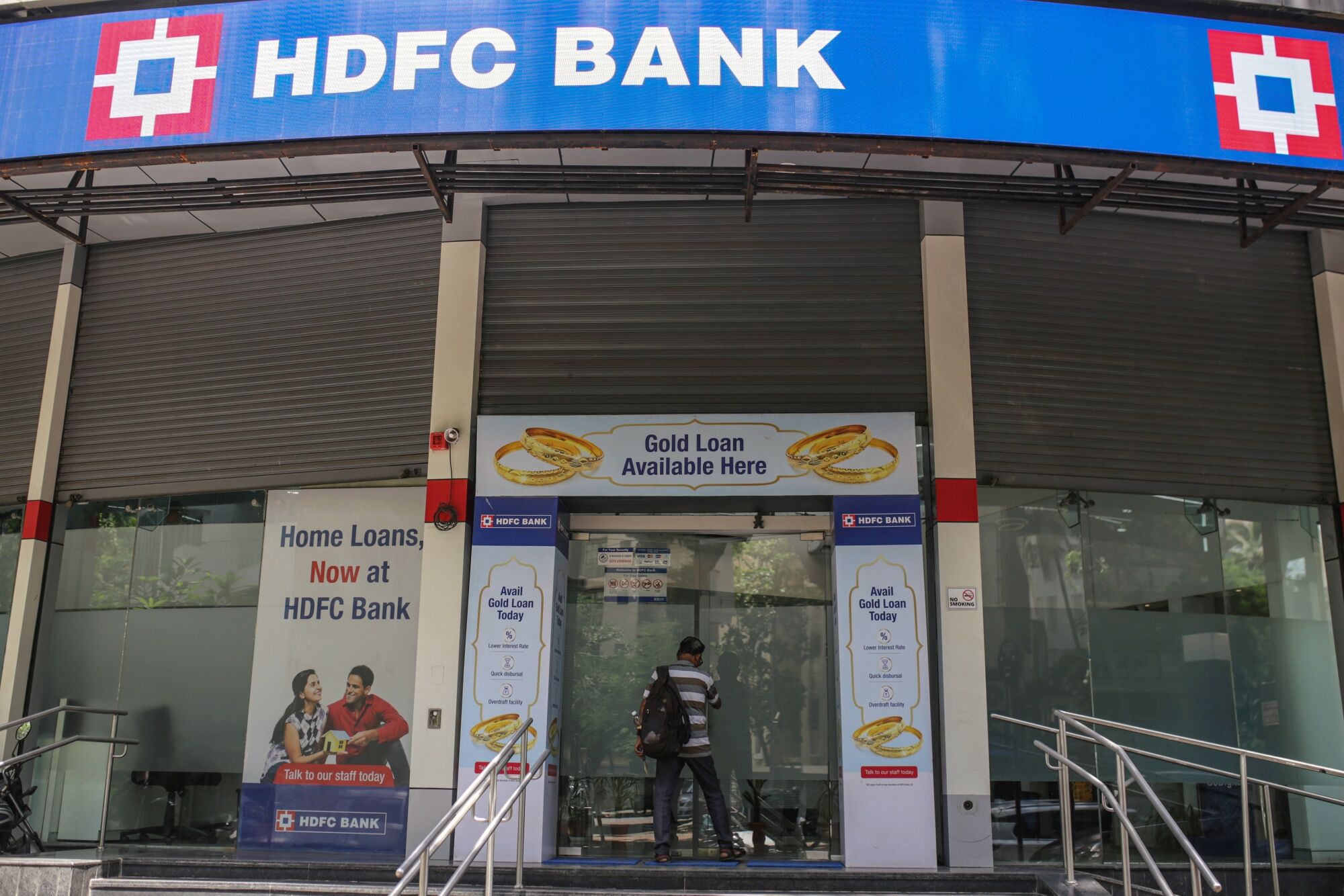
(Bloomberg) -- India's largest private lender HDFC Bank Ltd. plans to sell as much as Rs 10,000 crore, or $1.2 billion, of loan portfolios using a debt instrument it rarely used, as the nation's banks devise ways to overcome challenges in raising deposits essential to maintaining healthy margins.
The bank is in talks with local asset managers including ICICI Prudential AMC, Nippon Life India Asset Management Ltd. and SBI Funds Management Pvt. to issue so-called pass through certificates, a route that has not been used in a decade by it, people familiar with the matter said, asking not to be identified as the discussions are private.
The certificates, to be backed by a pool of the bank's car loans, will likely be issued in multiple tranches in the next few weeks, the people said. The securities are expected to offer interest rate in the range of 8.3-8.5% to investors, they said.
HDFC Bank's shares rose as much as 1.4% Friday to the highest in nearly three weeks.
The bank is trying to shrink its retail loan portfolio under heightened regulatory pressure in the banking industry to improve credit-deposit ratios — a measure of how much of a bank's deposits are being lent out. The sale, if materialized, will help HDFC Bank improve its CD ratio which has worsened in recent years as credit growth outpaces deposit growth in the nation.
HDFC's credit-deposit ratio stood at 104% at the end of March, higher than the level of 85%-88% seen in the previous three financial years, according to a report by ICRA Ltd., the local arm of Moody's Ratings.
Kotak Mahindra Asset Management Co. is also talking to the bank on possible subscription of those securities, the people said.
HDFC Bank, SBI Funds, Nippon Life India, ICICI Prudential and Kotak did not reply to emails from Bloomberg News seeking comments.
HDFC Bank sold a 50 billion rupees loan portfolio to an undisclosed buyer in June. The bank had last done such a transaction more than a decade ago, Chief Financial Officer Srinivasan Vaidyanathan said last month.
The “gap between credit and deposit growth rates warrants a rethink by the boards of banks to re-strategize their business plans,” the Reserve Bank of India said in June. Indian banks' deposits grew 10.9% annually through Aug. 9, slower than loan growth of 13.6%, according to latest RBI data.
Finance Minister Nirmala Sitharaman and RBI Governor Shaktikanta Das have urged banks to find ways to increase their deposits. The RBI in particular has warned banks of potential liquidity issues and has called on them to use their vast networks to attract more savings.
--With assistance from Anirban Nag.
(Updates with stock move in the fourth paragraph.)
More stories like this are available on bloomberg.com
©2024 Bloomberg L.P.

-
Talking Points This Week: Tech Nerves, FII Buying, And A Faraway Banking Shock

The global markets are not shining this Diwali. The exception in the large markets is, India.
-
Midterm Rally Lasted A Day. The Hard Reality Of A Divided US May Last Two Years | Opinion
Between a contested AI boom, a debt ceiling that arrives in 2027 and a president with every incentive to act alone, the next two years may prove more volatile than the first day's rally suggests.
-
Blue Wave Will Derail the AI Trade but Won't Dismantle the AI Era | Unhedged Position
The Democrats' sweep of the US Congress will see politics collide with economic forces both over the long and short term.
-
It's Time To Take The GST Council's Bet On Trust Global
Payment records can prove India's services exports, and clear, proportionate rules can bring foreign digital sellers into the tax net.
-
Opinion | India at 38: From Innovation Overperformer to Innovation Powerhouse
India now has 453 VC-backed deep science startups, 18 of them late-stage, after 117 percent growth since 2020. Laurus Labs, at USD 9.3 billion, is the most valuable deep science company in any middle-income economy outside China.
-
Navigating Energy Crossroads: S Jaishankar's Call For Diversified Supply Chains At G20 Ministerial Meeting
As geopolitical fault lines continue to test maritime trade routes and commodity flows, Jaishankar's message remains pertinent: true economic resilience requires open markets, protected transit lines, and a genuine commitment to multilateral cooperation rather than coercion.
-
Indians Are Travelling, But Not Every Journey Is A Holiday | The Week In Whys
Pilgrims, patients and working women are the real travellers, and the system hasn't quite caught up with them.
-
Getting To Work Costs Women More | The Reason Why
It is not just about women paying more than men. It is about women paying much more in cities than in villages.
-
AI Bias In Investing Cannot Be Eliminated, But It Can Be Governed
Framing is a particularly important example as identical financial information presented in terms of gains rather than losses can lead an LLM to reach a different assessment.









