Harley Creates Buzz with Electric Bike, 'Hog' Fans Snort
Howie Barokas had just ridden his Harley-Davidson Ultra Limited on Highway 50 across the searing Nevada desert when he heard about the company's new electric motorcycle.
He wasn't impressed.
Then again, Harley-Davidson Inc was looking beyond loyal baby boomers like 49-year-old Barokas when it unveiled its first electric prototype bike last Thursday.
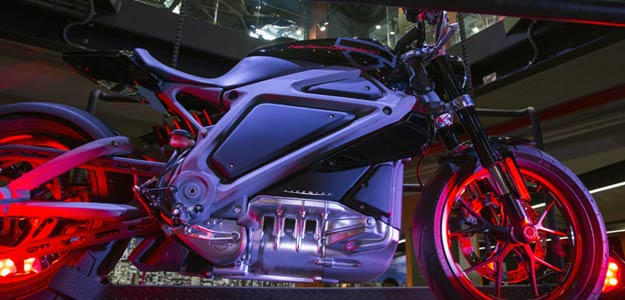
More panther than hog, the all-black electric prototype is a far cry from the bulky cruising bikes the Milwaukee-based company has cranked out since 1903.
It is, of course, also missing an exhaust pipe that emits the Harley's distinctive "potato-potato-potato" rumble, but does have a high-pitched sound like a jet plane.
"The guys I'm riding with and I talked about it and none of us would want the bike," Barokas, who runs a Seattle PR firm, said a day after the unveiling of Harley's "Project LiveWire".
The prototype is part of Harley-Davidson's strategy to appeal to younger buyers as well as women.
Earlier this year, the company launched "Street", its most affordable small bike in decades.
John Schaller, owner of the largest Harley-Davidson dealership in Milwaukee, said the electric motorcycle was another move in the right direction for the company.
"The electric bike has created a significant buzz already and (younger) people are excited," he said.
Harley-Davidson's Facebook posting about "Project LiveWire" had attracted nearly 42,000 "likes" as of Tuesday.
Comments were decidedly mixed, ranging from variations of "Booooooooooo..." to "finally, something really different".
Rajesh Sharma, a 31-year-old Harley enthusiast in Bangalore, India, liked the idea, even though no plans have been announced to sell the bike in India - or anywhere else, for that matter.
"If you're giving me the same look, the same performance, why won't I switch to it?" asked the architect, a member of the Bangalore Harley Owners Group. "Looking at the way fuel consumption is going, it's a good move."
Sharma said he wouldn't trade in his Harley Sportster SuperLow for an electric bike. But he might buy one as a second vehicle - provided it looks like a cruiser.
Other companies have electric motorcycles in production or in the planning stage. But none have created the buzz of the new Harley, which is not yet in dealerships.
Harley-Davidson started touring the prototype around US dealerships this week, offering rides to potential customers to gather feedback before deciding on production plans. The tour is scheduled to move to Europe and Canada next year.
One task is to convince riders about the range of the bike's lithium-ion battery. Will they still be able to ride into the desert sunset without getting stranded?
"We rode on a highway on Thursday and almost ran out of gas," said Barokas, who's road trip included a stretch of road known as 'America's loneliest highway'.
"When we pulled into a small town, a shopkeeper brought up the electric Harley and said 'what are you going to do when you're on a road like this, stop and plug the bike into a cow?'"
Other riders see potential for the bike, even if its range is limited.
"The electric bike (is) geared more for people that are going to be urban and commuting and having some fun at the same time," said John Kerecz, a 52-year-old Harley enthusiast in Harrisburg, Pennsylvania.
Kerecz, whose 1984 Iron Head is the oldest of his three Harleys, said he would consider buying the electric motorcycle as a "retirement toy".
Harley-Davidson has not disclosed a price for the bike, but Kerecz said he would be willing to pay as much as $16,000.
The costs of current models range from $8,700 to $39,000, according to the company's website.
Copyright: Thomson Reuters 2014

-
Why Amazon And Flipkart Are Struggling To Beat Meesho In India's Smaller Cities

With 274 million users and lowest-cost logistics, Meesho is defending its value commerce crown against giants like Amazon and Flipkart.
-
High US Salaries, No Green Card Certainty: The Financial Calculation Facing Indian H-1B Families
The suspension of PERM processing at eight technology employers does not cancel existing H-1B visas. What it does is force a question many Indian families have been avoiding: is the US salary worth tying your career and family plans to one employer?
-
Swiggy vs Eternal: Food Delivery's Two Rivals Are No Longer In The Same Race
Eternal is building a private AI assistant, dark.ai. Swiggy is still working out how to make Instamart pay, with an operating loss of Rs 895 crore in the July-September quarter while Blinkit stayed profitable.
-
Where You Live Shapes How You Get To Work | The Reason Why
Two-wheelers are the most popular way to get to work in India, accounting for nearly 43% of workplace commutes.
-
Unhedged Position: Can India See An Indonesia-Style Time Correction?
The Nifty is trading below levels it first clocked in 2024. Is there, then, as I have suggested in the headline, potential that the current time correction drags on painfully for the next three-five, even ten years?
-
Navigating Friction And Energy Realities: An Analysis Of Marco Rubio's October Visit To India
Occurring at a critical juncture marked by stalled trade negotiations and escalating geopolitical pressures over global energy supplies, the visit offers a profound window into modern US-India relations.
-
India Exports Capital. Why Not Export Trusteeship?
The big question, then, is whether India can build an institution that global borrowers, investors, banks, and lawyers can trust, even without an Indian connection.
-
France's Economy & Politics Are In Crisis | The Reason Why
Let's look at how the French economy and politics evolved under Nicolas Sarkozy, Franois Hollande and Emmanuel Macron.
-
You May Inherit The Business. You Must Earn Its Credibility.
Succession tests the founder's ability to share authority as much as it tests the next generation's readiness to assume it.
-
Signing Deals Is One Thing; Making Them Work Is Another | The Week In Whys
Sometimes, things don't turn out as planned. Indian companies have lost some bids to rivals, some projects won't produce until 2030.










