Happy That NSE Has Been Exonerated Of Charges Of Fraud, Says CEO Vikram Limaye
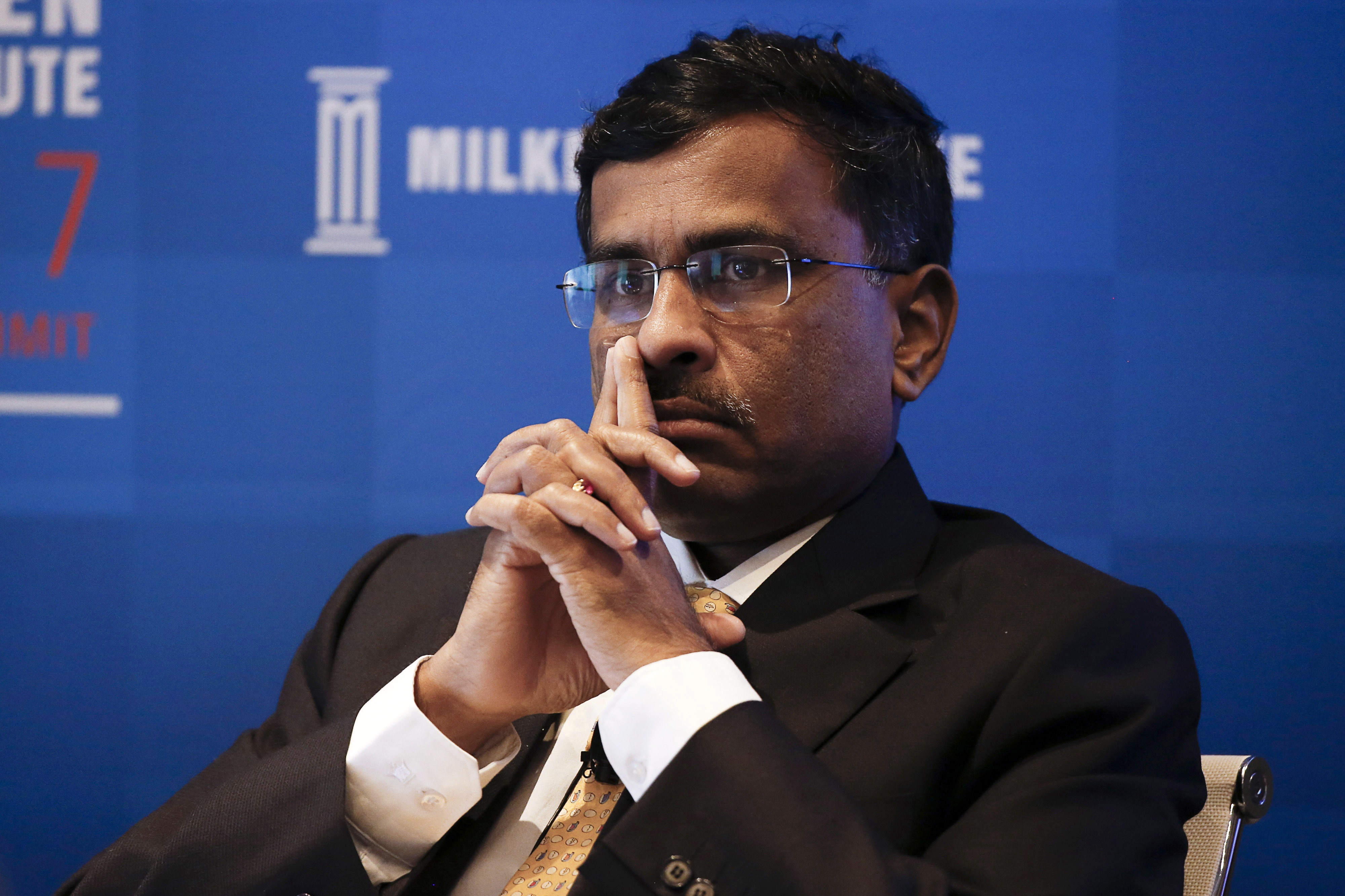
The head of National Stock Exchange of India Ltd. is happy that the bourse was exonerated of allegations of fraud even as the regulator imposed a penalty and barred it from the securities market for six months for allowing preferential access to some high-frequency traders.
“The matter was pending for some time and it's important to at least have the understanding of what are the boundaries of the investigation, and its results,” Vikram Limaye, managing director and chief executive officer of NSE, said in an interview with BloombergQuint. “I'm happy that there is finality and conclusion.”
In the probe that stemmed from whistle-blower allegations, the Securities and Exchange Board of India didn't find sufficient evidence to conclude that NSE committed fraudulent and unfair trade practices. But it found that India's largest bourse didn't conduct enough diligence to ensure fair and equal access through its co-location service.
NSE's governing board will decide what to do next based on legal advice, Limaye said. The board, which meets this week, will discuss the order, he said. “We need to have more than one conversations, we have 45 days to decide on the future course of strategy, we don't have to take a decision in two days.”
‘Stiff' Penalty
The market regulator ordered it to pay close to Rs 1,100 crore, in two separate orders, within 45 days to SEBI's Investor Protection and Education Fund.
- Over Rs 1,000 crore in the co-location case—Rs 625-crore profit earned from the service between 2010-11 and 2013-14 along with interest.
- Rs 90 crore for allowing an unauthorised vendor to lay dark fibre for brokers.
“It is a stiff number I must admit and certainly much higher than one would have anticipated,” Limaye said. More so because SEBI's order does not say “we are guilty of any unfair and fraudulent trade practices in the colo situation”.
The regulator had earlier asked the exchange to transfer revenue it earns from co-location into a separate escrow till the probe was completed. “We have been transferring the amount on an ongoing basis,” Limaye said. “This was not restricted to the revenues from co-location between 2010 and 2014, it is still going on. We have so far transferred Rs 2,300-2,400 crore to this escrow account.”
Limaye said the NSE is waiting for legal advice to decide whether to continue with the segregation. The obvious assumption is that since there is an amount that needs to be paid, there is no reason to set aside anything beyond that needs to be paid, he said.
Derivatives Setback
One of the biggest setbacks for the exchange is that it has been barred from introducing new derivatives for six months. The NSE started offering commodity contracts since October, and the order would prevent it from expanding its portfolio in the segment.
“If we were to comply with this order, we will have to wait for six months before we introduce any products,” said Limaye. The exchange was in the process of introducing agricultural and non-agricultural products contracts.
But the SEBI order will not have any impact on the NSE-IFSC exchange at GIFT City in Gujarat, he said. “It [new exchange] relates to transitioning liquidity from existing Nifty Futures contract from SGX to GIFT City, which is a separate regulated exchange,” he said. “This order relates to the NSE and not the GIFT City Exchange.”
IPO Hopes Alive
There is reason to be optimistic. The order brings clarity on the pending initial public offer of the stock exchange. While it can't come out with the IPO for six months, the NSE can plan it after that since the order removes the uncertainty.
“Anyways the prospectus and preparations for the IPO will take six months or little longer. From that perspective, six months will not come in the way of any preparation plan for going public,” said Limaye. “It is a positive as six months is a very reasonable period to prepare for an IPO.”
Watch the full interview with Vikram Limaye here:

-
Talking Points This Week: Tech Nerves, FII Buying, And A Faraway Banking Shock

The global markets are not shining this Diwali. The exception in the large markets is, India.
-
Midterm Rally Lasted A Day. The Hard Reality Of A Divided US May Last Two Years | Opinion
Between a contested AI boom, a debt ceiling that arrives in 2027 and a president with every incentive to act alone, the next two years may prove more volatile than the first day's rally suggests.
-
Blue Wave Will Derail the AI Trade but Won't Dismantle the AI Era | Unhedged Position
The Democrats' sweep of the US Congress will see politics collide with economic forces both over the long and short term.
-
It's Time To Take The GST Council's Bet On Trust Global
Payment records can prove India's services exports, and clear, proportionate rules can bring foreign digital sellers into the tax net.
-
Opinion | India at 38: From Innovation Overperformer to Innovation Powerhouse
India now has 453 VC-backed deep science startups, 18 of them late-stage, after 117 percent growth since 2020. Laurus Labs, at USD 9.3 billion, is the most valuable deep science company in any middle-income economy outside China.
-
Navigating Energy Crossroads: S Jaishankar's Call For Diversified Supply Chains At G20 Ministerial Meeting
As geopolitical fault lines continue to test maritime trade routes and commodity flows, Jaishankar's message remains pertinent: true economic resilience requires open markets, protected transit lines, and a genuine commitment to multilateral cooperation rather than coercion.
-
Indians Are Travelling, But Not Every Journey Is A Holiday | The Week In Whys
Pilgrims, patients and working women are the real travellers, and the system hasn't quite caught up with them.
-
Getting To Work Costs Women More | The Reason Why
It is not just about women paying more than men. It is about women paying much more in cities than in villages.
-
AI Bias In Investing Cannot Be Eliminated, But It Can Be Governed
Framing is a particularly important example as identical financial information presented in terms of gains rather than losses can lead an LLM to reach a different assessment.









