Half Of India’s Listed Government Banks Now Under RBI’s Watch
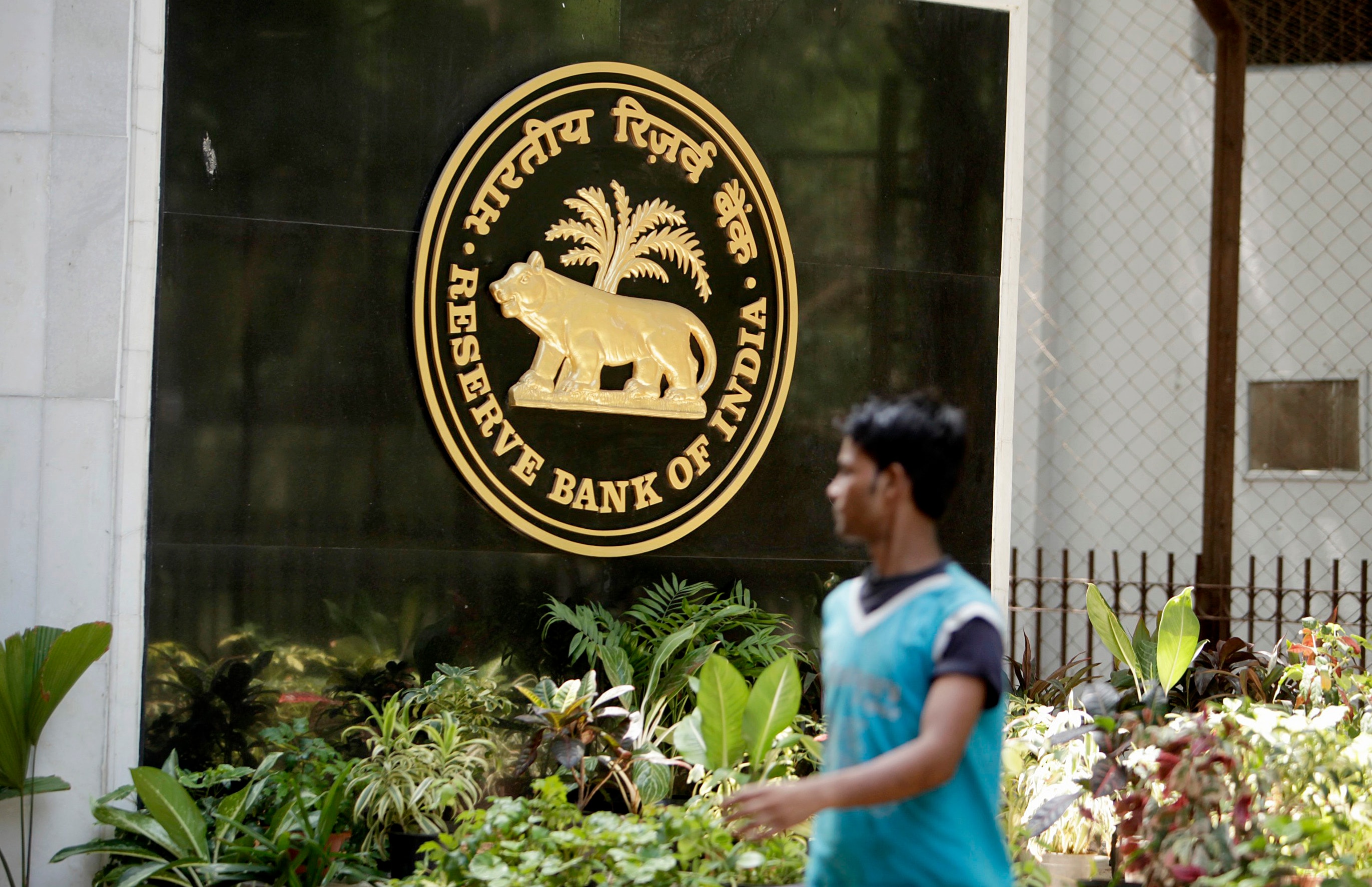
Eleven of India's 21 listed government-owned banks are now under the Reserve Bank of India's watch due to large bad loans, weak capital levels and low return on assets. Together these banks account for over Rs 3 lakh crore in bad loans of the total Rs 8.4 lakh crore across India's listed banks.
In April, the RBI tightened the rules under its ‘Prompt Corrective Action Framework' which aims to rein in lenders whose operational and financial metrics are looking weak. The new framework laid down three risk thresholds based on gross non-performing assets, net NPAs, capital adequacy ratio and return on assets. Once under the framework, restrictions are placed on dividends, branch expansion and, in some cases, lending based on the discretion of the regulator.
Since April, 11 banks have been put under the corrective action framework. The latest is Allahabad Bank which informed exchanges on Wednesday that it was now subject to the RBI's corrective action. Other banks under the corrective framework include Bank of India, Central Bank of India, IDBI Bank, UCO Bank, Dena Bank, Oriental Bank of Commerce, Indian Overseas Bank, Bank of Maharashtra and Corporation Bank. United Bank of India, which was among the first lenders to be put under corrective action in 2014, is also back on the watch list.

Will The Corrective Action Work?
Since the new corrective action framework was introduced only in April 2017, it may be too early to judge whether it will prove to be effective. The examples of United Bank of India and Indian Overseas Bank don't offer much hope.
United Bank of India was first put under the regulator's watch in 2014. The bank, however, has seen its gross NPA ratio go from 9.5 percent in March 2015 to 18.8 percent now. Financial results prior to 2015 are not available on the bank's website.
In the case of Indian Overseas Bank, where corrective action was initiated in October 2015, the gross NPA ratio has gone from 12.64 percent in the December 2015 ended quarter to nearly 23 percent now.
To be sure, this time around the government and the regulator are being much tougher. The government has said that infusion of growth capital will be linked to performance. Reserve Bank of India governor Urjit Patel, too, has adopted a tough stance. Speaking at a press conference in December, Patel said that recapitalisation funds would be linked not only to capital requirements, but also reforms undertaken by banks to ensure “the seeds of next boom and bust cycle of lending” are not sown.
In October, the government announced a Rs 2.11-lakh-crore bank recapitalisation plan for state-owned banks. The details of how much capital will be infused into which banks have not been announced. “The capital infusion will help public sector banks build their provisioning coverage ratios as they will be able to allocate much of their operating profits towards loan-loss provisioning without having to worry about the impact on their capital positions,” said Alka Anbarasu, senior analyst at Moody's Investors Service, in a note on Thursday. Anbarasu added that the pending recapitalisation plan “will strengthen the government's bargaining position for pushing through some of its more fundamental reforms, such as those targeting corporate governance and industry consolidation”.

Don't Panic, Says RBI
Separately, the RBI has been trying to quell rumours on the implications of prompt corrective action on a bank. In response to “misinformed communication” doing the rounds on social media, the RBI, in a Dec. 22 release, said that “the PCA framework is not intended to constrain normal operations of the banks for the general public”.
“Its objective is to facilitate the banks to take corrective measures including those prescribed by the Reserve Bank, in a timely manner, in order to restore their financial health,” said the RBI.
Also Read: Do India's Weak Banks Need A Stronger Dose Of Corrective Action?

-
Why Amazon And Flipkart Are Struggling To Beat Meesho In India's Smaller Cities

With 274 million users and lowest-cost logistics, Meesho is defending its value commerce crown against giants like Amazon and Flipkart.
-
High US Salaries, No Green Card Certainty: The Financial Calculation Facing Indian H-1B Families
The suspension of PERM processing at eight technology employers does not cancel existing H-1B visas. What it does is force a question many Indian families have been avoiding: is the US salary worth tying your career and family plans to one employer?
-
Swiggy vs Eternal: Food Delivery's Two Rivals Are No Longer In The Same Race
Eternal is building a private AI assistant, dark.ai. Swiggy is still working out how to make Instamart pay, with an operating loss of Rs 895 crore in the July-September quarter while Blinkit stayed profitable.
-
Where You Live Shapes How You Get To Work | The Reason Why
Two-wheelers are the most popular way to get to work in India, accounting for nearly 43% of workplace commutes.
-
Unhedged Position: Can India See An Indonesia-Style Time Correction?
The Nifty is trading below levels it first clocked in 2024. Is there, then, as I have suggested in the headline, potential that the current time correction drags on painfully for the next three-five, even ten years?
-
Navigating Friction And Energy Realities: An Analysis Of Marco Rubio's October Visit To India
Occurring at a critical juncture marked by stalled trade negotiations and escalating geopolitical pressures over global energy supplies, the visit offers a profound window into modern US-India relations.
-
India Exports Capital. Why Not Export Trusteeship?
The big question, then, is whether India can build an institution that global borrowers, investors, banks, and lawyers can trust, even without an Indian connection.
-
France's Economy & Politics Are In Crisis | The Reason Why
Let's look at how the French economy and politics evolved under Nicolas Sarkozy, Franois Hollande and Emmanuel Macron.
-
You May Inherit The Business. You Must Earn Its Credibility.
Succession tests the founder's ability to share authority as much as it tests the next generation's readiness to assume it.
-
Signing Deals Is One Thing; Making Them Work Is Another | The Week In Whys
Sometimes, things don't turn out as planned. Indian companies have lost some bids to rivals, some projects won't produce until 2030.










