H-1B Visa Fallout: Infosys Looks To Hire 10,000 American Workers
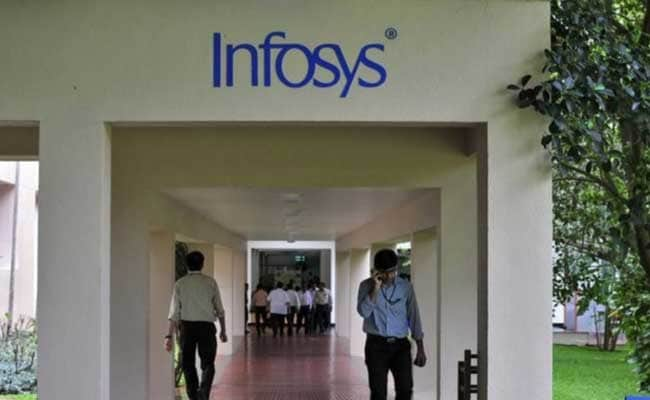
Amid concerns over H-1B visas, India's second biggest outsourcer Infosys has said it will hire 10,000 American workers over the next two years and open four technology centres in the United States as part of a plan to ramp up local hiring in that country. The first centre is planned by August this year in Indiana, the home state of US Vice President Mike Pence. The move comes at a time when Infosys and some of its peers such as TCS or Tata Consultancy Services have become political targets in the United States for allegedly displacing jobs of American workers by flying in foreign workers on temporary visas to service their clients in the country. The 10,000 new US jobs would be a small part of Infosys's overall workforce of more than 200,000.
Infosys will hire 10,000 American workers, build 4 new technology and innovation hubs in the U.S. over next 2 years https://t.co/NGWdpjxuwU— Infosys (@Infosys) May 2, 2017
The IT service firms rely heavily on the H-1B visa programme, which US President Donald Trump has ordered federal agencies to review, and are now hiring more locals and setting up delivery centres in the US in anticipation of a tighter visa regime. "Infosys is committed to hiring 10,000 American technology workers over the next two years to help invent and deliver the digital futures for our clients in the United States," said Infosys CEO Vishal Sikka. Over the past few months, other countries like New Zealand, Australia and Singapore have tightened their visa systems.
Proud that 10k+ Americans will become Infoscions in the next 2 yrs! Thx @GovHolcomb for a warm Hoosier welcome... https://t.co/yYxB7VY33W— Vishal Sikka (@vsikka) May 2, 2017
Last month, a Trump administration official accused top Indian outsourcers of unfairly cornering the lion's share of H-1B visas by flooding the system with applications which naturally ups their chances of success in the lottery draw. President Trump had in an executive order last month asked American agencies to review the H-1B visa system to make it more merit-based.
Indian IT industry body Nasscom has defended its members TCS and Infosys, saying the two accounted for only 7,504 - or 8.8 per cent - of the approved H-1B visas in 2014-15. Indian technology firms use H-1B visas to send their employees to work at customer sites in the US, which is the largest export market for the $150 billion Indian IT industry.
For the 10,000 jobs in the US, Infosys said, it will hire experienced technology professionals and recent graduates from major universities, and local and community colleges. The company plans to institute training programs in the US in areas such as user experience, cloud, artificial intelligence, big data and digital offerings, as well as core technology and computer science skills.
The four tech hubs in the US will not only have technology and innovation focus areas, but will also closely serve clients in key industries such as financial services, manufacturing, healthcare, retail, energy and more, the Bengaluru-headquartered company said.
Mr Sikka told news agency Reuters that Infosys has already hired 2,000 American workers as part of a previous effort started in 2014. "When you think about it from a US point of view, obviously creating more American jobs and opportunities is a good thing," he said.
Shares of Infosys were flat in Mumbai market following news of the US hiring plans. Analysts say that a ramp-up of US hiring entails higher cost for Indian outsourcers, thus impacting their margins.

-
High US Salaries, No Green Card Certainty: The Financial Calculation Facing Indian H-1B Families

The suspension of PERM processing at eight technology employers does not cancel existing H-1B visas. What it does is force a question many Indian families have been avoiding: is the US salary worth tying your career and family plans to one employer?
-
Unhedged Position: Can India See An Indonesia-Style Time Correction?
The Nifty is trading below levels it first clocked in 2024. Is there, then, as I have suggested in the headline, potential that the current time correction drags on painfully for the next three-five, even ten years?
-
Navigating Friction And Energy Realities: An Analysis Of Marco Rubio's October Visit To India
Occurring at a critical juncture marked by stalled trade negotiations and escalating geopolitical pressures over global energy supplies, the visit offers a profound window into modern US-India relations.
-
India Exports Capital. Why Not Export Trusteeship?
The big question, then, is whether India can build an institution that global borrowers, investors, banks, and lawyers can trust, even without an Indian connection.
-
France's Economy & Politics Are In Crisis | The Reason Why
Let's look at how the French economy and politics evolved under Nicolas Sarkozy, Franois Hollande and Emmanuel Macron.
-
You May Inherit The Business. You Must Earn Its Credibility.
Succession tests the founder's ability to share authority as much as it tests the next generation's readiness to assume it.
-
Signing Deals Is One Thing; Making Them Work Is Another | The Week In Whys
Sometimes, things don't turn out as planned. Indian companies have lost some bids to rivals, some projects won't produce until 2030.
-
FOMC Wall, PERM Suspension, Hospital Stocks | Talking Points This Week
A PERM suspension would directly affect green-card sponsorship rather than H-1B visas, so the near-term earnings impact could remain relatively limited. The key question is whether this marks a new phase in US scrutiny of Indian IT.
-
Everything, Everywhere, All At Once: Dalal Street's Week To Forget | Joining The Dots
Visa curbs, a Starlink spat and cancer drug caps: what connects this week's shocks for Indian markets
-
India Is Going Abroad For Critical Minerals. But It May Take Years To Pay Off | The Reason Why
Although India's steps are in the right direction, they remain modest compared with India's growing dependence.









