H-1B Alternative? What China's K Visa Means For Indians
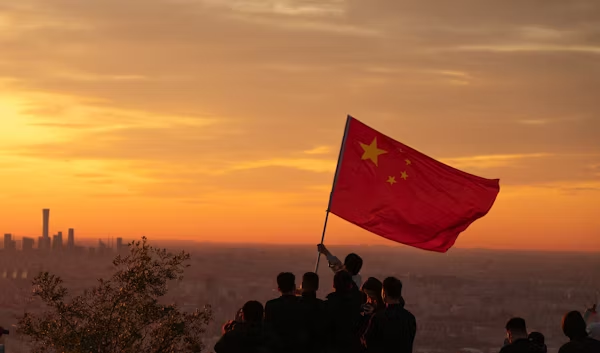
A "new talent battle" is emerging as China launched its K visa on October 1, 2025, which contrasts sharply with the increasingly expensive and restrictive US H-1B visa program. China's new visa is designed to attract young, foreign talent in STEM fields (Science, Technology, Engineering Math) by offering an easier pathway into the country.
China is capitalising on new US policies that have alienated many international professionals. The K visa could become particularly appealing to STEM graduates from countries like India, the largest beneficiary of H-1B visas, who are now exploring alternatives due to the rising costs and restrictions in the US.
Unlike most global work visas, it places the individual — not the employer — at the center of migration. Applicants can enter China first and then decide whether to study, conduct research, launch a startup, or join a lab. Crucially, the visa does not require employer sponsorship, a sharp contrast with the United States' H-1B visa. The contrasting visa policies are a powerful symbol in the US-China rivalry for technological dominance. China is portraying itself as open and welcoming, while the US appears to be closing its doors.
While the US remains a top destination, the rise of flexible alternatives like China's K visa is shaking up the landscape for early-career scientists and engineers.The introduction of the K visa intensifies the global competition for skilled workers. Other countries like Germany, South Korea, and New Zealand, are also loosening visa regulations to attract talent that might otherwise have gone to the US.
Significant hurdles remain for China, including a smaller immigrant population, potential language barriers, cultural differences, and a limited path to permanent residency compared to the U.S. However, China's move is less about a large-scale immigration shift and more about a targeted effort to attract niche tech talent to boost its innovation in sectors like AI, quantum computing, and green tech.
Some Indian STEM students will perhaps find China's new K visa appealing, especially given the increased difficulty and cost of the US H-1B visa. The K visa offers a path to China for young STEM professionals without requiring a prior job offer and includes benefits like longer stays and multiple entries. However, the prospect of Indians "rushing" for China's new K Visa is unlikely, though a moderate increase in applications from Indian STEM professionals is expected.
China has long offered extensive incentives to attract high-end talent, particularly ethnic Chinese returnees, through programs like the Thousand Talents Plan. While specific details for K-visa holders are still being finalised, it is expected that the program will extend similar, though potentially scaled-down, versions of these incentives to young international STEM graduates to make the country a competitive and appealing destination.
The prospect of Indians "rushing" for China's new K Visa is unlikely, though a moderate increase in applications from Indian STEM professionals is expected. China is deliberately timing the K Visa rollout to coincide with tightening US visa policies, such as the increase in H-1B fees, to position itself as a welcoming hub for tech talent. While Indian STEM students will show increased interest in China's new K visa due to rising barriers in the US, a mass shift is unlikely in the short term. Several significant barriers make a mass rush improbable for now. Persistent challenges like language, culture, and limited pathways to permanent settlement will limit the appeal for many.
A closer look at these challenges would be useful for understanding the potential hurdles for Indian STEM students. Firstly, details on the exact eligibility criteria, financial incentives, and pathways to long-term settlement or citizenship are still unclear, creating uncertainty for potential applicants. Secondly, most Chinese tech firms operate in Mandarin, which can limit opportunities for non-Chinese speakers and may deter talent. Thirdly, ongoing political tensions between India and China could influence how willing China is to offer opportunities to Indian professionals, and vice-versa. Fourthly, unlike the US, China does not typically offer citizenship to foreigners, and it remains to be seen whether the K visa leads to permanent residency pathways, which are a significant draw for many.
Summing up, while Indian STEM students will show increased interest in China's new K visa due to rising barriers in the U.S., a mass shift is unlikely in the short term. China's K visa will attract a small but notable number of Indian STEM students, particularly those who are discouraged by the expensive and restrictive U.S. H-1B process. It provides a compelling alternative for those seeking research opportunities or entrepreneurial ventures without employer ties. However, factors like language barriers, limited paths to long-term settlement, and strong existing connections to Western markets will prevent a major redirection of Indian STEM talent away from Western countries.

-
The Economic Imperative: Analysing The Material Driving Force Behind India-Canada Strategic Reset

This economic complementarity is further reinforced by deep institutional investment ties and talent mobility, which form the bedrock of the bilateral framework.
-
Medicine Pricing: Where Must Profit Stop?
India must confront excessive margins, hidden incentives and regulatory gaps that threaten the integrity of medicine.
-
Why Amazon And Flipkart Are Struggling To Beat Meesho In India's Smaller Cities
With 274 million users and lowest-cost logistics, Meesho is defending its value commerce crown against giants like Amazon and Flipkart.
-
High US Salaries, No Green Card Certainty: The Financial Calculation Facing Indian H-1B Families
The suspension of PERM processing at eight technology employers does not cancel existing H-1B visas. What it does is force a question many Indian families have been avoiding: is the US salary worth tying your career and family plans to one employer?
-
Swiggy vs Eternal: Food Delivery's Two Rivals Are No Longer In The Same Race
Eternal is building a private AI assistant, dark.ai. Swiggy is still working out how to make Instamart pay, with an operating loss of Rs 895 crore in the July-September quarter while Blinkit stayed profitable.
-
Where You Live Shapes How You Get To Work | The Reason Why
Two-wheelers are the most popular way to get to work in India, accounting for nearly 43% of workplace commutes.
-
Unhedged Position: Can India See An Indonesia-Style Time Correction?
The Nifty is trading below levels it first clocked in 2024. Is there, then, as I have suggested in the headline, potential that the current time correction drags on painfully for the next three-five, even ten years?
-
Navigating Friction And Energy Realities: An Analysis Of Marco Rubio's October Visit To India
Occurring at a critical juncture marked by stalled trade negotiations and escalating geopolitical pressures over global energy supplies, the visit offers a profound window into modern US-India relations.
-
India Exports Capital. Why Not Export Trusteeship?
The big question, then, is whether India can build an institution that global borrowers, investors, banks, and lawyers can trust, even without an Indian connection.
-
France's Economy & Politics Are In Crisis | The Reason Why
Let's look at how the French economy and politics evolved under Nicolas Sarkozy, Franois Hollande and Emmanuel Macron.










