Gujarat A Bright Spot In India's Slow-Moving Residential Rooftop Story
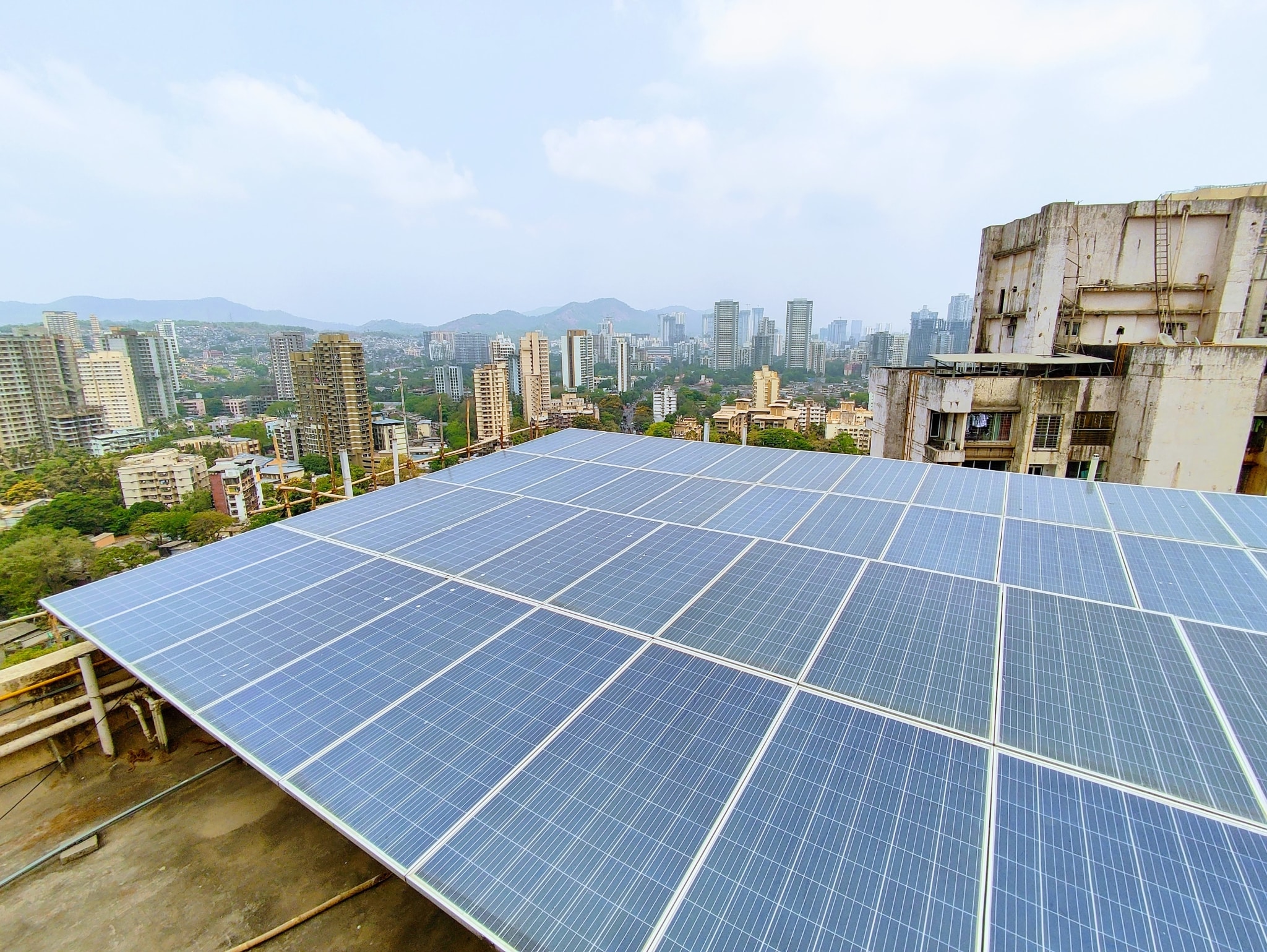
The western state of Gujarat accounts for nearly two-thirds of residential rooftop solar installations in India, even as the country's pace of adoption continues to lag.
As of FY22, India had just 2 gigawatt of residential rooftop solar installations across the country, according to an analysis by JMK Research and IEEFA India. Gujarat had the lion's share with 61% of the installed capacity.
Rooftop solar's massive potential in India—that has an average of 300 sunny days—has remained unfulfilled due to a myriad of issues. The country had less than 12 GW of rooftop installations as of March 2022, much lower than the 40 GW target it had set for itself by 2022-end. Residential installations are even a smaller fraction of that at 17%.
BQ Prime had earlier reported how low consumer awareness and policy flip flops have hampered the pace of adoption. Neither government subsidies, nor rebates by city and state administrations have helped. The high upfront cost of installing panels and lack of financing options has also kept consumers away.
What Gujarat Did Different
Gujarat, however, stands apart. The state's SURYA scheme has increased adoption and helped the state add 1.1 GW capacity in just 18 months. According to JMK and IEEFA, they used a four-pronged strategy to make that happen.
First was to ensure adequate supply by building a large base of empaneled vendors and contractors. Those seeking a subsidy could get installations done from these selected vendors.
The state government also ran massive awareness campaign and disseminated information through SMS, radio spots, banner advertisements, flyers, social media and door-to-door programmes.
It created a single unified portal for rooftop solar that allowed users a one-stop shop for every process of installation from registration to availing subsidies. The state ensured timely disbursal of subsidies, the report said.
"Aggregating demand through strong public outreach initiatives has significantly contributed to Gujarat's success in residential solar development," the report said. "The proactive participation of state government agencies, especially the discoms, enhanced the market's demand and supply aspects."
The state also benefitted from the second phase of the Ministry of New and Renewable Energy's grid-connected rooftop solar programme. About 63% of the allocated capacity under the programme has been earmarked for Gujarat. Of these, the state has already installed 60%.
Countrywide Adoption To Improve
JMK Research said growth of residential rooftop solar is expected to accelerate in the near term due to a policy push and resurgence in demand. By FY23, it expects India to have 3.2 GW of installed capacity. States like Gujarat, Maharashtra and Haryana are among those that are likely to drive the growth.
In June, the World Bank approved a $165-million credit line exclusively for India's residential solar segment. It could directly finance 450 MW of solar systems by incentivising power distributors to engage directly with residential consumers and build capacity. This will help make rooftop solar more affordable for end consumers, the report said.
"The key drivers of the demand side of the market, apart from government subsidies, are the brightening prospect of savings on electricity costs and heightened consumer awareness," the report said.
"To augment the demand of the residential market in the future, it will be critical to promote the communication of relevant and simplified information through digital media."

-
Love, Sex Aur Dhokha: The Audacious Plot To Spy On Jensen Huang

A Taipei dinner, a Singapore chip buyer and a suspected Chinese asset: inside the alleged spy operation that got close to NVIDIA's Jensen Huang.
-
Ten Things I Learnt This Samvat
Patience can be a trap. Cheap stocks can stay cheap. Leverage can wipe you out. What did Samvat 2082 teach us? Niraj Shah writes on 10 lessons from the year gone by.
-
Talking Points This Week: Tech Nerves, FII Buying, And A Faraway Banking Shock
The global markets are not shining this Diwali. The exception in the large markets is, India.
-
Midterm Rally Lasted A Day. The Hard Reality Of A Divided US May Last Two Years | Opinion
Between a contested AI boom, a debt ceiling that arrives in 2027 and a president with every incentive to act alone, the next two years may prove more volatile than the first day's rally suggests.
-
Blue Wave Will Derail the AI Trade but Won't Dismantle the AI Era | Unhedged Position
The Democrats' sweep of the US Congress will see politics collide with economic forces both over the long and short term.
-
It's Time To Take The GST Council's Bet On Trust Global
Payment records can prove India's services exports, and clear, proportionate rules can bring foreign digital sellers into the tax net.
-
Opinion | India at 38: From Innovation Overperformer to Innovation Powerhouse
India now has 453 VC-backed deep science startups, 18 of them late-stage, after 117 percent growth since 2020. Laurus Labs, at USD 9.3 billion, is the most valuable deep science company in any middle-income economy outside China.
-
Navigating Energy Crossroads: S Jaishankar's Call For Diversified Supply Chains At G20 Ministerial Meeting
As geopolitical fault lines continue to test maritime trade routes and commodity flows, Jaishankar's message remains pertinent: true economic resilience requires open markets, protected transit lines, and a genuine commitment to multilateral cooperation rather than coercion.
-
Indians Are Travelling, But Not Every Journey Is A Holiday | The Week In Whys
Pilgrims, patients and working women are the real travellers, and the system hasn't quite caught up with them.









