GST On Pre-Packaged Staples: Private Labels Lose Edge Over Big Brands
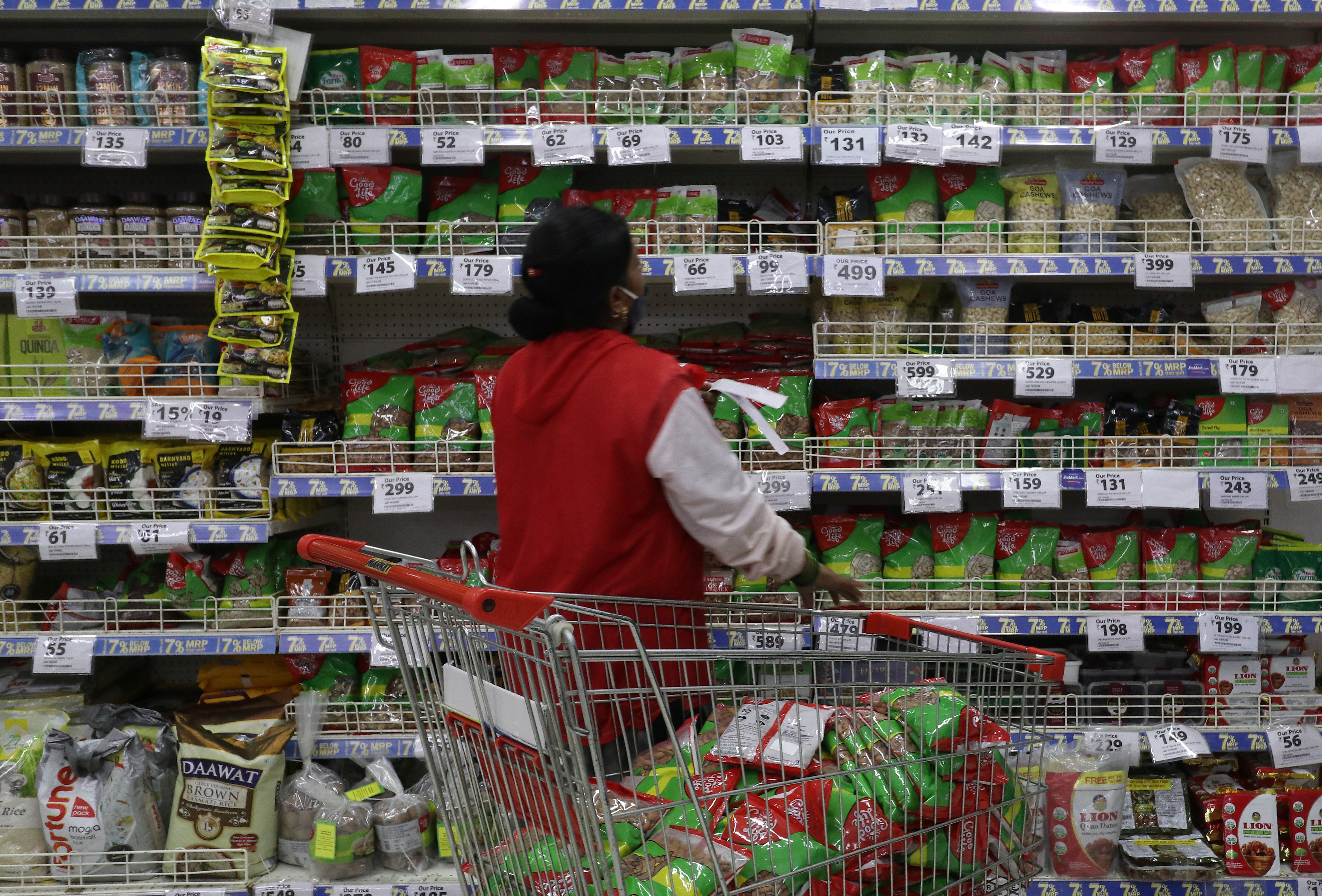
The goods and services tax on unbranded pre-packaged food will bring parity between private labels and established brands, intensifying competition and accelerating the pace of formalisation.
Branded packaged items attracted GST, while the non-branded store-owned packaged food packs—also referred to as private labels—did not. Effective July 18, pre-packaged and labeled meat (except frozen), fish, curd, paneer, honey, dried leguminous vegetables, dried makhana, wheat and other cereals, organic food, jaggery and puffed rice will attract a 5% GST.
The move to bring them in the tax net nullifies the advantage private labels had over established, costlier brands. More so when rising fuel and food prices, coupled with prolonged economic uncertainty, prompted consumers to downtrade or look for cheaper alternatives.
Branded players will gain with the latest move as the price gap with non-branded packaged food items will fall, according to Abneesh Roy, executive director (institutional equities), Edelweiss Securities. “Consumers would prefer to pay a little more to get a better brand.”
According to Shammi Aggarwal, managing director of Pansari Group, the maker of packaged wheat flour, rice, the latest move will formalise the sector further leading to "healthy competition". “There were many prominent FMCG firms which started claiming 0% [GST] by saying their products across multiple categories are unbranded while keeping their prices slightly lower than or even same as branded, but now they can't.”.
The Confederation of All-India Traders' Association, however, opposed 5% GST on pre-packed and unbranded food items, saying it will hurt small businesses across the country and increase prices of everyday essentials.
"The decision will empower big brands to capture the market at the cost of small manufacturers and traders… it will cause huge damage to the business of food grains traders in more than 6,500 grain markets across the country," said Praveen Khandelwal, general secretary of the association. The country's largest traders' body, representing 40,000 associations, said it would appeal to the union as well as state finance ministers to re-consider the decision.

Private labels share supermarket shelves with products of large consumer goods makers such as Hindustan Unilever Ltd. or Nestle India Ltd., and compete online.
“Taking advantage of nil GST, the retailers were able to charge a price higher than the unpackaged/loose staples and lower than the branded products,” said Rajat Wahi, partner at Deloitte India. Levying GST on pre-packaged products will bring them on a par with large consumer goods companies, said Wahi.
From large chains including Metro Cash & Carry India Pvt., Spencer's Retail and Reliance Retail Ltd. to online platforms like BigBasket, all churned out private labels aiming to tap the booming grocery market—that, according to Forrester Research, is pegged at $608 billion (about Rs 48 lakh crore) and is set to grow more than 20% by 2024.
According to a joint report by Retailers Association of India and KPMG, private labels offer margins of 10-14% when compared with 7-10% for multinational brands. That's also why introducing private label remains a critical strategy for retailers to drive sales in the usually low-margin staple business.
Wahi told BQ Prime that pre-packaged unbranded goods will still have some advantage. “Lower cost of production and packaging expenses, as they produce in small scale with generally lower quality packaging, as well as lower cost of advertising will help save costs and hence, these labels could still be priced lower than regular brands.”
A higher GST in a high inflation era, however, is expected to hit demand in the short term, said retailers.
“Pre-packaged atta or food grain offers wafer-thin margins and there is no scope to absorb costs, so price will have to passed to the consumers,” Arvind Mediratta, managing director and chief executive officer at Metro Cash & Carry India, told BQ Prime. In the short-term, he expects demand to take a hit as the “price advantage goes away” at a time budgets are quite stretched in the face of inflation.
ICICI Securities said in a note, “Considering the rising milk procurement prices and new levy of 5%, dairy companies need to pass on additional costs to end consumers via price hikes.” Most dairy companies will be able to avail input tax credit on the costs incurred such as packaging material, freight and transportation and ad-spend, the brokerage said in a note. “As a result of this, the net impact of GST levy would be in the range of 2-3%.”
Companies already have planned price hikes to counter the pressure of higher commodity costs on margins, resulting in dwindling demand. The latest move, Deloitte's Wahi said, could push consumers who were downtrading to private labels to shift to loose or smaller pack sizes.

-
A New Samvat Wishlist: Inclusive Prosperity And Human Development

India has strengthened its economic foundations through infrastructure, digital access and enterprise. Its next growth chapter must deepen productivity, create better livelihoods and widen participation in prosperity.
-
Love, Sex Aur Dhokha: The Audacious Plot To Spy On Jensen Huang
A Taipei dinner, a Singapore chip buyer and a suspected Chinese asset: inside the alleged spy operation that got close to NVIDIA's Jensen Huang.
-
Ten Things I Learnt This Samvat
Patience can be a trap. Cheap stocks can stay cheap. Leverage can wipe you out. What did Samvat 2082 teach us? Niraj Shah writes on 10 lessons from the year gone by.
-
Talking Points This Week: Tech Nerves, FII Buying, And A Faraway Banking Shock
The global markets are not shining this Diwali. The exception in the large markets is, India.
-
Midterm Rally Lasted A Day. The Hard Reality Of A Divided US May Last Two Years | Opinion
Between a contested AI boom, a debt ceiling that arrives in 2027 and a president with every incentive to act alone, the next two years may prove more volatile than the first day's rally suggests.
-
Blue Wave Will Derail the AI Trade but Won't Dismantle the AI Era | Unhedged Position
The Democrats' sweep of the US Congress will see politics collide with economic forces both over the long and short term.
-
It's Time To Take The GST Council's Bet On Trust Global
Payment records can prove India's services exports, and clear, proportionate rules can bring foreign digital sellers into the tax net.
-
Opinion | India at 38: From Innovation Overperformer to Innovation Powerhouse
India now has 453 VC-backed deep science startups, 18 of them late-stage, after 117 percent growth since 2020. Laurus Labs, at USD 9.3 billion, is the most valuable deep science company in any middle-income economy outside China.
-
Navigating Energy Crossroads: S Jaishankar's Call For Diversified Supply Chains At G20 Ministerial Meeting
As geopolitical fault lines continue to test maritime trade routes and commodity flows, Jaishankar's message remains pertinent: true economic resilience requires open markets, protected transit lines, and a genuine commitment to multilateral cooperation rather than coercion.









