GST Hike On Textiles From 5% To 12% Deferred Amid Objections
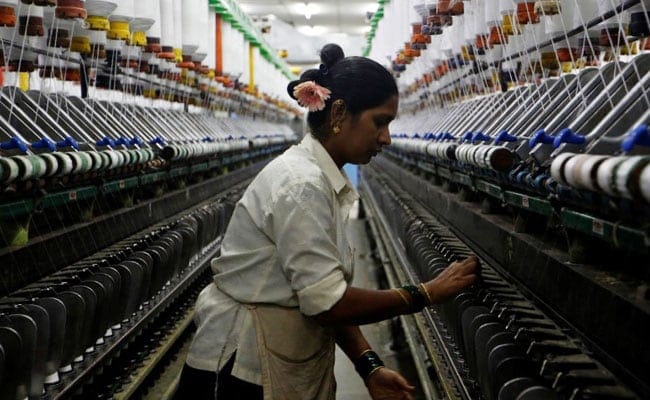
The goods and services tax (GST) Council meeting, chaired by Finance Minister Nirmala Sitharaman, today decided that the rate hike on textiles from five per cent to 12 per cent will be deferred, amid objections from states and the industry, sources told NDTV.
While addressing a press conference after the meeting, the Finance Minister said that the meeting was called on an emergency basis, triggered by a letter from the Gujarat Chief Minister - which sought reconsideration of the September 2021 decision on the inversion duty structure for textiles.
Ms Sitharaman added that the GoM or group of ministers has been given time till February 2022 to consider the rate rationalisation for textiles. The committee will submit a report in the same month, after which the GST Council will meet in March 2022 and take the final call.
Many states had objected to the higher tax rate on textile products and demanded that the rate hike be put on hold. The matter was raised by states like Gujarat, West Bengal, Delhi, Rajasthan, and Tamil Nadu - which were against the hike in GST rate on textiles to 12 per cent, from five per cent. The issue came up for discussion during finance minister Nirmala Sitharaman's pre-budget consultations with her counterparts from the states.
Delhi Deputy Chief Minister Manish Sisodia said the Delhi Government will protest against the proposed tax hike on textiles. The minister stated that the textile traders are opposing the increase in GST rates and their demands are justified, so the Aam Aadmi Party (AAP) Government shall take them forward.
West Bengal's former finance minister Amit Mitra had urged the Union finance minister to roll back the proposed hike in textile saying that it would lead to the closure of around one lakh textile units and 15 lakh job losses.
Industry bodies had also opposed the rise in tax from five per cent, citing higher compliance costs especially for the unorganised sector and micro small and medium enterprises (MSMEs) besides making the poor man's clothing expensive.
Earlier in the year, the Central Board of Indirect Taxes and Customs (CBIC), on the recommendations of the GST Council, had announced that the GST rate on garments, textiles, and footwear would be raised from five per cent to 12 per cent with effect from January 1, 2022.
The 46th meeting of the GST Council was held in the national capital today, where finance ministers of States and Union Territories and senior officials attended the meeting.
The meeting holds significance as it is taking place ahead of the Union Budget for 2022-23, which is scheduled to be presented in Parliament on February 1, 2022.

-
Navigating Friction And Energy Realities: An Analysis Of Marco Rubio's October Visit To India

Occurring at a critical juncture marked by stalled trade negotiations and escalating geopolitical pressures over global energy supplies, the visit offers a profound window into modern US-India relations.
-
India Exports Capital. Why Not Export Trusteeship?
The big question, then, is whether India can build an institution that global borrowers, investors, banks, and lawyers can trust, even without an Indian connection.
-
France's Economy & Politics Are In Crisis | The Reason Why
Let's look at how the French economy and politics evolved under Nicolas Sarkozy, Franois Hollande and Emmanuel Macron.
-
You May Inherit The Business. You Must Earn Its Credibility.
Succession tests the founder's ability to share authority as much as it tests the next generation's readiness to assume it.
-
Signing Deals Is One Thing; Making Them Work Is Another | The Week In Whys
Sometimes, things don't turn out as planned. Indian companies have lost some bids to rivals, some projects won't produce until 2030.
-
FOMC Wall, PERM Suspension, Hospital Stocks | Talking Points This Week
A PERM suspension would directly affect green-card sponsorship rather than H-1B visas, so the near-term earnings impact could remain relatively limited. The key question is whether this marks a new phase in US scrutiny of Indian IT.
-
Everything, Everywhere, All At Once: Dalal Street's Week To Forget | Joining The Dots
Visa curbs, a Starlink spat and cancer drug caps: what connects this week's shocks for Indian markets
-
India Is Going Abroad For Critical Minerals. But It May Take Years To Pay Off | The Reason Why
Although India's steps are in the right direction, they remain modest compared with India's growing dependence.
-
When Everyone Has AI, What Gives You An Edge?
India's young workforce is entering an uncertain world of work where powerful AI tools are becoming widely accessible. The advantage will belong to those who combine deep expertise with digital fluency, and the distinctly human capabilities that technology cannot manufacture.
-
Wrong Labels, High Pesticide Residues Holding Back Agri Exports | The Reason Why
India needs stronger domestic food-safety and labelling standards, with best practices becoming part of everyday business for farmers, traders and food companies.










