GST Council Finalises Tax Rates On 80-90% Goods, Services, Says Report
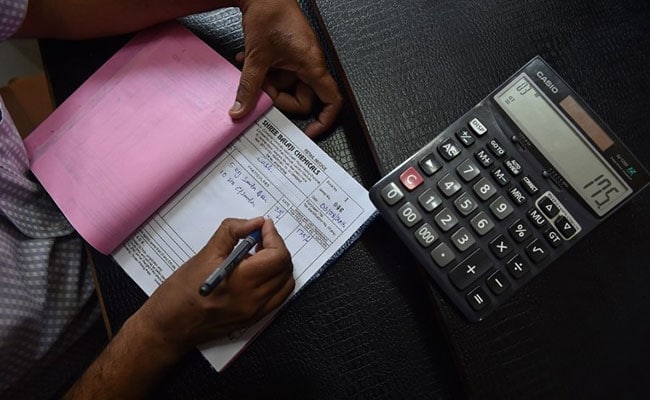
Srinagar: The GST Council today finalized tax rates on 80-90 per cent of goods and services under the four-slab structure with essential items of daily use being kept in the lowest bracket of 5 per cent. The Council, headed by Union Finance Minister Arun Jaitley and comprising representatives of all states, in the opening session of the two-day meeting also approved rules for the Goods and Services Tax (GST) regime that is scheduled to kick in from July 1.
Official sources said that 80-90 per cent of the items have been fitted in 5, 12, 18 or 28 per cent brackets. The fitments, they said, have been done in a way that there is no increase in tax incidence.
So rates close to the present incidence of excise duty plus VAT or service tax has been considered to be the rate under the GST.
The complete details of the rates decided are likely to be available once the meeting gets over tomorrow. Various state finance ministers separately sought exemption on items like silk yarn, puja material and handicraft items.
Jaitley was of the view that there should be minimum exemptions under the GST and should be provided for only if it is essential, a government official said. Before the start of the meeting, Kerala Finance Minister Thomas Isaac made a case for 5 per cent tax on gold under the GST regime instead of 1 per cent being demanded by some quarters as he felt that the precious metal is not an essential commodity.
Yogi Adityanath-led Uttar Pradesh sought zero levy on 'puja samagri' instead of the proposed 18 per cent. A few others are keen on only two rates for service tax -- 12 per cent and 18 per cent.
The GST will be a national sales tax that will be levied on consumption of goods or use of services.
It will replace 16 current levies -- seven central taxes like excise duty and service tax and nine state taxes like VAT and entertainment tax -- thereby creating India as one market with one tax rate.
With the GST, India will join select league of nations with a goods and service tax.
France was the first country to implement the GST in 1954.
Since then, Germany, Italy, the UK, South Korea, Japan, Canada and Australia have been among the over a dozen nations which have implemented the GST.
China implemented GST in 1994 while Russia did it in 1991. Saudi Arabia plans to do it in 2018. Last week, the Reserve Bank called the GST a "game changer" and said given the cross-country experience and empirical evidence on efficiency gains from the Value Added Tax (VAT) in the Indian context, the implementation of this comprehensive indirect tax is likely to ensure higher tax buoyancy and an improvement in government finances over the medium term.
The GST is a destination-based single tax on the supply of goods and services from the manufacturer to the consumer and is one indirect tax for the entire country.
(This story has not been edited by NDTV staff and is auto-generated from a syndicated feed.)

-
High US Salaries, No Green Card Certainty: The Financial Calculation Facing Indian H-1B Families

The suspension of PERM processing at eight technology employers does not cancel existing H-1B visas. What it does is force a question many Indian families have been avoiding: is the US salary worth tying your career and family plans to one employer?
-
Unhedged Position: Can India See An Indonesia-Style Time Correction?
The Nifty is trading below levels it first clocked in 2024. Is there, then, as I have suggested in the headline, potential that the current time correction drags on painfully for the next three-five, even ten years?
-
Navigating Friction And Energy Realities: An Analysis Of Marco Rubio's October Visit To India
Occurring at a critical juncture marked by stalled trade negotiations and escalating geopolitical pressures over global energy supplies, the visit offers a profound window into modern US-India relations.
-
India Exports Capital. Why Not Export Trusteeship?
The big question, then, is whether India can build an institution that global borrowers, investors, banks, and lawyers can trust, even without an Indian connection.
-
France's Economy & Politics Are In Crisis | The Reason Why
Let's look at how the French economy and politics evolved under Nicolas Sarkozy, Franois Hollande and Emmanuel Macron.
-
You May Inherit The Business. You Must Earn Its Credibility.
Succession tests the founder's ability to share authority as much as it tests the next generation's readiness to assume it.
-
Signing Deals Is One Thing; Making Them Work Is Another | The Week In Whys
Sometimes, things don't turn out as planned. Indian companies have lost some bids to rivals, some projects won't produce until 2030.
-
FOMC Wall, PERM Suspension, Hospital Stocks | Talking Points This Week
A PERM suspension would directly affect green-card sponsorship rather than H-1B visas, so the near-term earnings impact could remain relatively limited. The key question is whether this marks a new phase in US scrutiny of Indian IT.
-
Everything, Everywhere, All At Once: Dalal Street's Week To Forget | Joining The Dots
Visa curbs, a Starlink spat and cancer drug caps: what connects this week's shocks for Indian markets
-
India Is Going Abroad For Critical Minerals. But It May Take Years To Pay Off | The Reason Why
Although India's steps are in the right direction, they remain modest compared with India's growing dependence.









