Grocery Tycoon Kishore Biyani's Battle To Keep His Company Afloat
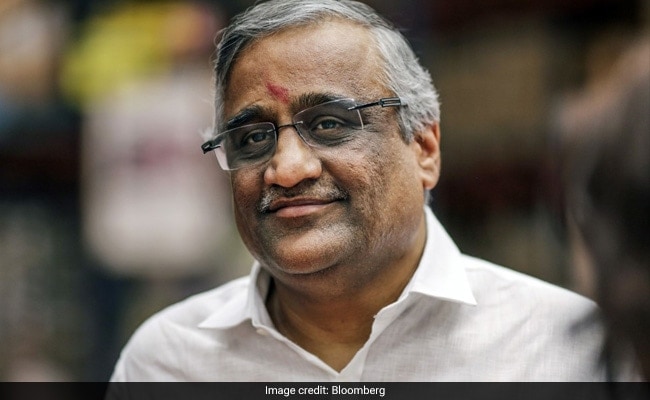
Confined to his home in an upscale corner of Mumbai, Kishore Biyani is scrambling to maintain control of his supermarket empire in more ways than one.
The founder of Future Group -- which is backed by both Amazon.com Inc. and Blackstone Group Inc. -- has set up a virtual war room practically overnight to ensure his vast chain of grocery stores has enough food and essentials for a nation under lockdown, according to a person familiar with the matter.
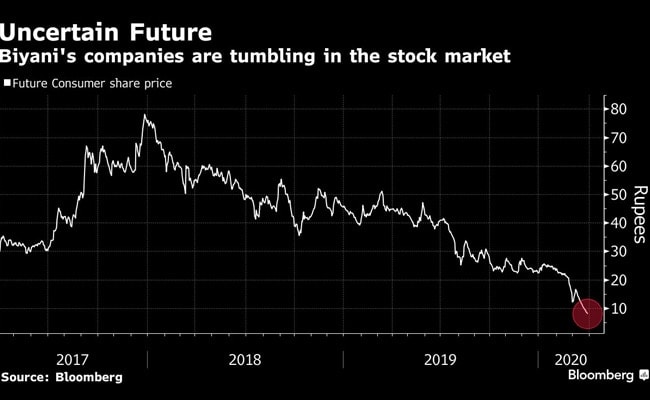
At the same time, Mr Biyani has held more than two dozen calls with investors as he tries to prevent shares of his companies from tumbling to levels that would allow lenders to seize control of his holdings. He hopes to find a solution over the weekend, which may include capital injections or asset sales, the person said. Future Consumer Ltd., one of Mr Biyani's biggest listed companies, has tumbled 65 per cent this year and touched a more than five-year low on Friday.
The tycoon's two-front battle illustrates the challenges faced by many companies after Prime Minister Narendra Modi announced a 21-day lockdown to fight the coronavirus. With operations upended by the restrictions, businesses are grappling with official appeals to aid in the world's biggest isolation effort while attempting to stall what PM Modi's own adviser has called "waves of default" as cash flows dry up.
Their predicament is one reason why the Reserve Bank of India cut interest rates and announced steps to boost liquidity in an unscheduled move on Friday. All banks and shadow lenders were allowed a three-month moratorium on repayment of term loans outstanding on March 1, RBI Governor Shaktikanta Das said.
Future Group, set up in 1996, runs India's second-largest retail chain by revenue, with more 1,300 stores across the country. Mr Biyani bet big on India's consumption story by piling on debt backed by shares of his companies, and kept margins thin to cater to the nation's cost-conscious population and lure them away from smaller mom-and-pop stores.
He also partnered with Amazon, which invested $193 million in Future Group between April and December through a mix of debt, equity and other assets, according to REDD Intelligence. Blackstone, the world's largest alternative asset manager, invested about $236 million during the same period. Future Group had $1.6 billion debt as of March 2019, 80 per cent of which was held by private equity firms, 13 per cent by Indian shadow lenders, and the rest by banks, REDD estimates.
The Biyani family's shareholding has lost more than half its value over the past year, and almost 80 per cent of their stake is pledged, REDD analyst Janvi Sanghvi wrote in a March 19 report, citing company filings.
Crisil, the local unit of S&P Global Ratings, on Tuesday placed Future Consumer's Rs 100 crore ($13 million) of commercial paper on review for downgrade, saying the Covid-19 pandemic will disrupt operations and increase the financial risk profiles of retail outlets. While Crisil noted that shares have been under pressure, it said a majority of the equity-backed loans were held by "large foreign institutional investors, which continue to be associated and aligned with the management and the group's growth strategy."
Mr Biyani, whose net worth was valued at $1.8 billion by Forbes in 2019, is counting on these creditors to help structure a deal, said the person familiar with the talks.
Representatives for Future Group, Amazon and Blackstone didn't immediately reply to requests for comment.
Future Group's stores and warehouses are operating with only half their usual staff as employees struggle to reach their workplaces, the person said, adding that inventories could run perilously low if supply chain issues aren't resolved. Essential services, like food supplies, are exempt from the lockdown.
Share declines in Mr Biyani's companies on Friday underscored the urgency of the situation. Future Consumer tumbled for the 15th straight day, losing as much as 8.3 per cent. Future Retail Ltd. and Future Lifestyle Fashions Ltd. both sank 5 per cent.
The virus outbreak "is a big blow for highly leveraged groups and those that have pledged shares," said Chokkalingam G, head of investment advisory at Equinomics Research & Advisory Pvt. in Mumbai, without naming any specific business. "It will be a tough task to manage liabilities in the current crisis."

-
High US Salaries, No Green Card Certainty: The Financial Calculation Facing Indian H-1B Families

The suspension of PERM processing at eight technology employers does not cancel existing H-1B visas. What it does is force a question many Indian families have been avoiding: is the US salary worth tying your career and family plans to one employer?
-
Swiggy vs Eternal: Food Delivery's Two Rivals Are No Longer In The Same Race
Eternal is building a private AI assistant, dark.ai. Swiggy is still working out how to make Instamart pay, with an operating loss of Rs 895 crore in the July-September quarter while Blinkit stayed profitable.
-
Where You Live Shapes How You Get To Work | The Reason Why
Two-wheelers are the most popular way to get to work in India, accounting for nearly 43% of workplace commutes.
-
Unhedged Position: Can India See An Indonesia-Style Time Correction?
The Nifty is trading below levels it first clocked in 2024. Is there, then, as I have suggested in the headline, potential that the current time correction drags on painfully for the next three-five, even ten years?
-
Navigating Friction And Energy Realities: An Analysis Of Marco Rubio's October Visit To India
Occurring at a critical juncture marked by stalled trade negotiations and escalating geopolitical pressures over global energy supplies, the visit offers a profound window into modern US-India relations.
-
India Exports Capital. Why Not Export Trusteeship?
The big question, then, is whether India can build an institution that global borrowers, investors, banks, and lawyers can trust, even without an Indian connection.
-
France's Economy & Politics Are In Crisis | The Reason Why
Let's look at how the French economy and politics evolved under Nicolas Sarkozy, Franois Hollande and Emmanuel Macron.
-
You May Inherit The Business. You Must Earn Its Credibility.
Succession tests the founder's ability to share authority as much as it tests the next generation's readiness to assume it.
-
Signing Deals Is One Thing; Making Them Work Is Another | The Week In Whys
Sometimes, things don't turn out as planned. Indian companies have lost some bids to rivals, some projects won't produce until 2030.
-
FOMC Wall, PERM Suspension, Hospital Stocks | Talking Points This Week
A PERM suspension would directly affect green-card sponsorship rather than H-1B visas, so the near-term earnings impact could remain relatively limited. The key question is whether this marks a new phase in US scrutiny of Indian IT.









