Green Tribunal Orders Older Diesel Vehicles Off New Delhi Roads
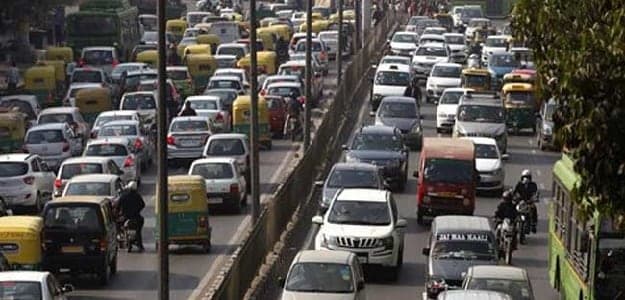
New Delhi: The National Green Tribunal, India's top environmental court, on Monday ordered authorities to remove all diesel vehicles at least 10 years old off the capital city's streets in a bid to help clean New Delhi's polluted air.
The ruling is the latest in a series of court-issued orders targeting the automotive industry's role in polluting Delhi's air, which the World Health Organisation said in May was the world's 11th dirtiest.
Under the order, effective immediately, the National Green Tribunal (NGT) directed the Delhi transport authority to cancel the registration of all diesel-powered vehicles produced at least 10 years ago.
New Delhi's transport office must also provide the court with a list of vehicles losing their registration, Indian media reported, citing the tribunal's ruling. The court was not immediately available for comment.
Experts are divided on the extent to which vehicles are responsible for Indian urban pollution, but several have called for a ban on diesel vehicles because they pollute more than petrol-fuelled cars and motorcycles.
Last year, the Supreme Court temporarily banned the sale of large diesel cars in New Delhi. The court also has indicated that it could levy an additional tax on the sale of diesel cars, potentially hitting sales of carmakers such as Toyota Motor Corp, Mahindra & Mahindra and Tata Motors.
Previous court bans on older diesel vehicles in New Delhi have been poorly enforced, and Deepesh Rathore, a director at Emerging Markets Automotive Advisors, said Monday's ruling was "quite unplanned and arbitrary in nature".
"While we are all concerned about badly maintained vehicles causing pollution, the solution to that is to make annual vehicle health checks mandatory," he said. "If today the NGT can do this thing without any warning, any planning or any heads-up then in five years the same can be done for petrol vehicles as well."
Mr Rathore estimates that nearly 20 per cent of future diesel vehicle sales could switch to petrol in response to the bans.
Air pollution has rocketed up the list of public concerns among India's urban middle class.
The Delhi government this year restricted cars from travelling on the roads to alternate days for a two-week period while India's federal government introduced an additional 'green' tax on car sales in February.

-
Talking Points This Week: Tech Nerves, FII Buying, And A Faraway Banking Shock

The global markets are not shining this Diwali. The exception in the large markets is, India.
-
Midterm Rally Lasted A Day. The Hard Reality Of A Divided US May Last Two Years | Opinion
Between a contested AI boom, a debt ceiling that arrives in 2027 and a president with every incentive to act alone, the next two years may prove more volatile than the first day's rally suggests.
-
Blue Wave Will Derail the AI Trade but Won't Dismantle the AI Era | Unhedged Position
The Democrats' sweep of the US Congress will see politics collide with economic forces both over the long and short term.
-
It's Time To Take The GST Council's Bet On Trust Global
Payment records can prove India's services exports, and clear, proportionate rules can bring foreign digital sellers into the tax net.
-
Opinion | India at 38: From Innovation Overperformer to Innovation Powerhouse
India now has 453 VC-backed deep science startups, 18 of them late-stage, after 117 percent growth since 2020. Laurus Labs, at USD 9.3 billion, is the most valuable deep science company in any middle-income economy outside China.
-
Navigating Energy Crossroads: S Jaishankar's Call For Diversified Supply Chains At G20 Ministerial Meeting
As geopolitical fault lines continue to test maritime trade routes and commodity flows, Jaishankar's message remains pertinent: true economic resilience requires open markets, protected transit lines, and a genuine commitment to multilateral cooperation rather than coercion.
-
Indians Are Travelling, But Not Every Journey Is A Holiday | The Week In Whys
Pilgrims, patients and working women are the real travellers, and the system hasn't quite caught up with them.
-
Getting To Work Costs Women More | The Reason Why
It is not just about women paying more than men. It is about women paying much more in cities than in villages.
-
AI Bias In Investing Cannot Be Eliminated, But It Can Be Governed
Framing is a particularly important example as identical financial information presented in terms of gains rather than losses can lead an LLM to reach a different assessment.









