Govts Must Gap Fund $4.5 Trillion A Year In Green Transition, Says Uday Kotak At B20 Summit
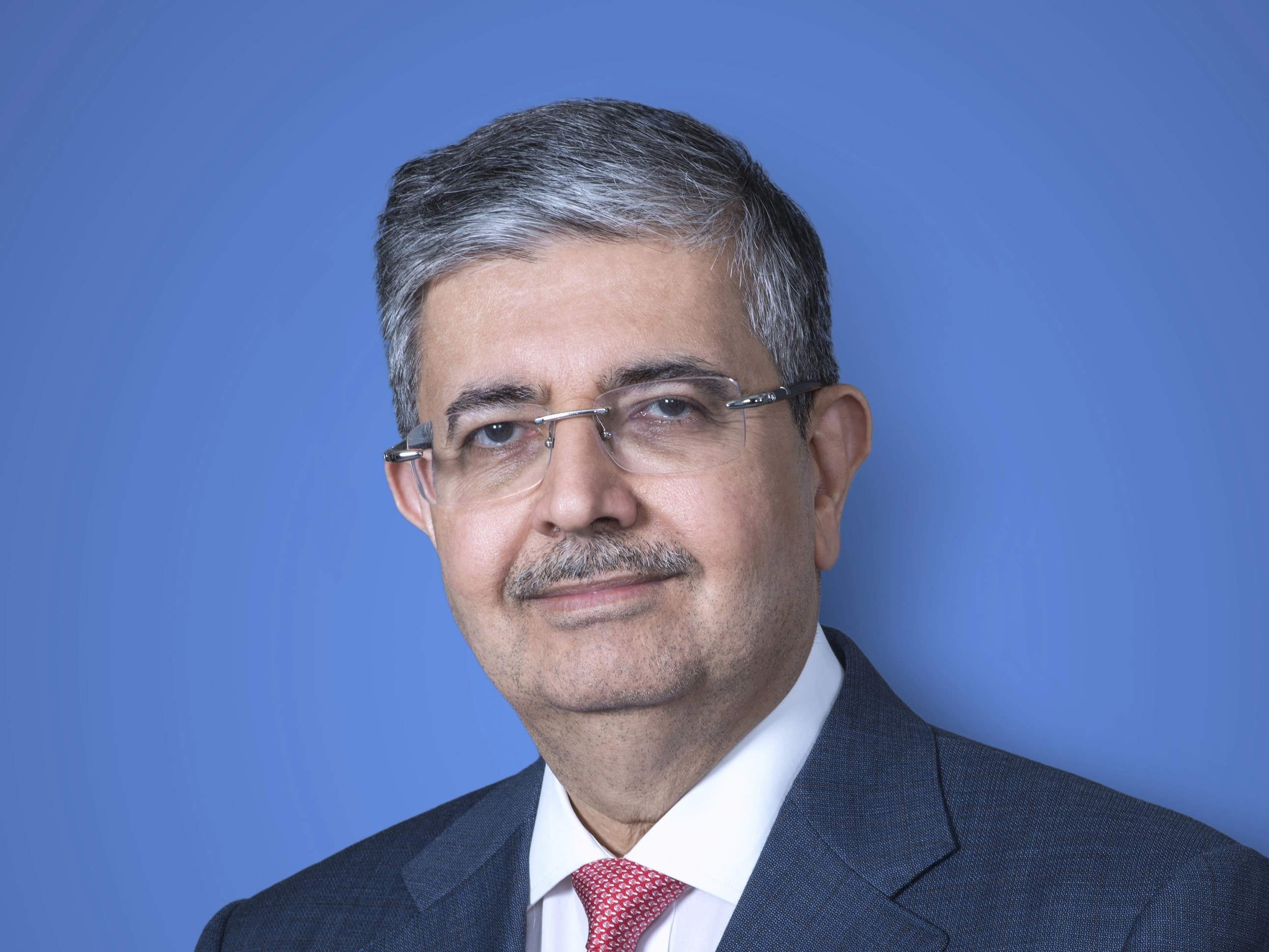
The world must prioritise the existential viability of the earth over economic and business viability as it looks to fund the green transition, said Uday Kotak, chairman of Kotak Mahindra Bank Ltd.
Profitable companies around the world will have to take the initiative to fund the capped and loss-making projects in partnership with governments that will guarantee the loss-bearing capital, Kotak said at a panel discussion on financing the climate transition at the B20 Summit India 2023.
The world will need $4.5 trillion a year in investment by 2030 if it is to meet the net zero objectives. While the entire focus is on financing the transition, Kotak asked, "Do we have the time to wait for the economic viability to play out versus the existential viability of the planet Earth?"
"The gap funding from the government and the private capital should then be handed over to the large multi-lateral institutions, who can leverage it over six to seven times to create a large pool of global funds that can then fund businesses on a gap," Kotak said.
The sooner the world implements the model, the better it is for the existential viability of the planet Earth. Economic viability cannot precede existential viability, he said.
Green Transition Has To Be Rapid and Orderly
We must ensure that the energy transition is both rapid and orderly, according to Bernard Looney, chief executive officer at BP Plc.
Rapid, because every year since Cop-26 in Paris, the emissions have risen around the world, he said. The pandemic was an exception, when it dropped 5.6%.
The transition must be orderly because the world lost 3% of its natural gas after the Russia-Ukraine war. That resulted in a 700% increase in natural gas prices and impacted the world, Looney said.
"The world is now spending more of its disposable reserves on energies. That is not good," the CEO said. Normally, governments spend between 10 and 12% of their GDP on energy. Last year, that number was 20%.
Governments also turned to other forms of cheaper energy, like coal. So last year, it was the highest record in the world. And if that number is that high, it's going to leave very little for investment in the green transition, Looney said.
Transition A Complex Challenge
Transitioning from coal to gas to hydrogen is going to be a complex challenge, according to T. V. Narendran, chief executive officer and managing director of Tata Steel Ltd.
The cost and complexity of this journey are going to be significant, and we should not underestimate that, the top executive said.
"Industries can support part of the cost, but the cash flow of industries in mature markets cannot underwrite the cost of the green transition in (emerging economies), so you need government support, and you also need customers willing to pay more," Narendran said.
All these need to converge for the transition to happen, and not just from the environmental perspective but also from the financial point of view, he said.
"The transition has started in the U.S. and Europe through the IRA (Inflation Reduction Act). In India, too, we have put in some mechanisms. But a lot needs to be done since a lot of the world's steel capacity is going to come from India, and we need to put a process in place," he said.

-
High US Salaries, No Green Card Certainty: The Financial Calculation Facing Indian H-1B Families

The suspension of PERM processing at eight technology employers does not cancel existing H-1B visas. What it does is force a question many Indian families have been avoiding: is the US salary worth tying your career and family plans to one employer?
-
Unhedged Position: Can India See An Indonesia-Style Time Correction?
The Nifty is trading below levels it first clocked in 2024. Is there, then, as I have suggested in the headline, potential that the current time correction drags on painfully for the next three-five, even ten years?
-
Navigating Friction And Energy Realities: An Analysis Of Marco Rubio's October Visit To India
Occurring at a critical juncture marked by stalled trade negotiations and escalating geopolitical pressures over global energy supplies, the visit offers a profound window into modern US-India relations.
-
India Exports Capital. Why Not Export Trusteeship?
The big question, then, is whether India can build an institution that global borrowers, investors, banks, and lawyers can trust, even without an Indian connection.
-
France's Economy & Politics Are In Crisis | The Reason Why
Let's look at how the French economy and politics evolved under Nicolas Sarkozy, Franois Hollande and Emmanuel Macron.
-
You May Inherit The Business. You Must Earn Its Credibility.
Succession tests the founder's ability to share authority as much as it tests the next generation's readiness to assume it.
-
Signing Deals Is One Thing; Making Them Work Is Another | The Week In Whys
Sometimes, things don't turn out as planned. Indian companies have lost some bids to rivals, some projects won't produce until 2030.
-
FOMC Wall, PERM Suspension, Hospital Stocks | Talking Points This Week
A PERM suspension would directly affect green-card sponsorship rather than H-1B visas, so the near-term earnings impact could remain relatively limited. The key question is whether this marks a new phase in US scrutiny of Indian IT.
-
Everything, Everywhere, All At Once: Dalal Street's Week To Forget | Joining The Dots
Visa curbs, a Starlink spat and cancer drug caps: what connects this week's shocks for Indian markets
-
India Is Going Abroad For Critical Minerals. But It May Take Years To Pay Off | The Reason Why
Although India's steps are in the right direction, they remain modest compared with India's growing dependence.









