Government's Once-In-A-Century Budget Runs Into Trouble As Virus Strikes Back
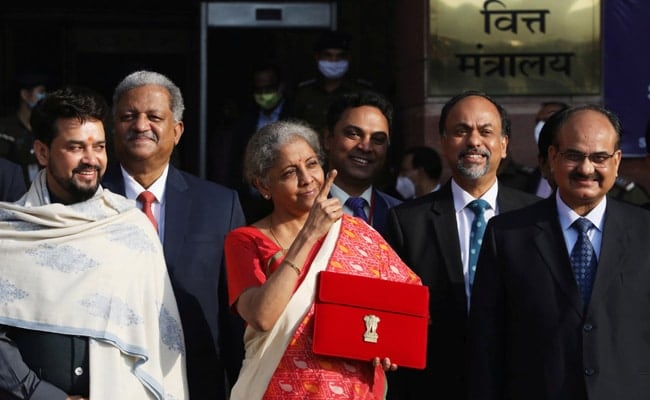
Government's annual budget in February was lauded by many and raised hopes it would drive a sharp economic revival, but there are now fears that its promise may fall flat as it did not account for a crippling second wave of COVID-19 infections.
The budget aimed to revive Asia's third-largest economy via investing in infrastructure and health care, while relying on an aggressive privatisation strategy and robust tax collections - on the back of projected growth of 10.5 per cent - to fund its spending in the fiscal year.
Finance Minister Nirmala Sitharaman said India would not see such a budget in "100 years". At the time, a massive COVID-19 vaccination drive and a rebound in consumer demand and investments had put the economy on track to recover from its deepest recorded slump.
The South Asian country is battling the world's second highest coronavirus case load after the United States, recording some 300,000 cases and about 4,000 deaths a day. With many parts of the country under varying degrees of lockdown, most of the growth projections that the budget was built around are now mired in uncertainty.
The extent of the crisis is even making investors question whether after years of debt accumulation, India once expected to become an economic superpower, still deserves to cling on to its 'investment grade' status.
Earlier this week, Moody's said India's severe second wave will slow the near-term economic recovery and it could weigh on longer-term growth dynamics. It cut its GDP forecast to 9.3 per cent from 13.7 per cent.
While the government maintains it is too early to revise its own numbers, officials privately concede growth will be much more muted that previously anticipated if social distancing measures continue.
Besides providing Rs 35,000 crore in the budget for vaccination costs, the government did not specifically dedicate any funds toward contingencies arising from a second wave and now may have to cut back on some expenses, officials said.
Finance ministry did not respond to a request for comment.
Delays In Privatisation
The health crisis has also hit the bureaucracy badly with many key officials infected by the coronavirus, slowing decisions on privatisations, among other proposed reforms.
Two senior officials said the privatisation of assets such as oil refiner Bharat Petroleum Corp and Air India, where processes are well advanced, may now be pushed into early 2022 - some three months later than previously planned.
"The virtual data room for BPCL has been opened for initial bidders but given the lockdown, physical verification of assets is unlikely right now," one of the officials said.
The delays will affect a series of other privatisation plans including two banks, insurance and energy companies, that are at the centre of reforms proposed by the budget and that are key to achieving the roughly $24 billion target from privatisations and asset sales, the officials said.
The crisis is also likely to delay the listing of the country's largest insurer Life Insurance Corp, which was expected to raise $8-$10 billion, they said.
Another official said the lockdowns will start affecting tax collections by June, potentially lowering revenues 15 per cent-20 per cent from what was estimated for the quarter.
With the projected fiscal deficit target pegged at 6.8 per cent of gross domestic product and a soaring borrowing programme, delays in the privatisation plan and the anticipated shortfalls in tax revenues are already prompting cuts to some of the government's previously earmarked expenses, two officials said.
"We are looking to press a pause button on some of our non-priority spending," one of the officials said.
The government is renewing its focus on relief measures and higher spending toward immediate health care needs like oxygen plants, and temporary COVID-19 centres, one of the officials said, adding that the government's plans to provide relief on fuel prices by cutting some taxes have also been deferred.

-
High US Salaries, No Green Card Certainty: The Financial Calculation Facing Indian H-1B Families

The suspension of PERM processing at eight technology employers does not cancel existing H-1B visas. What it does is force a question many Indian families have been avoiding: is the US salary worth tying your career and family plans to one employer?
-
Swiggy vs Eternal: Food Delivery's Two Rivals Are No Longer In The Same Race
Eternal is building a private AI assistant, dark.ai. Swiggy is still working out how to make Instamart pay, with an operating loss of Rs 895 crore in the July-September quarter while Blinkit stayed profitable.
-
Where You Live Shapes How You Get To Work | The Reason Why
Two-wheelers are the most popular way to get to work in India, accounting for nearly 43% of workplace commutes.
-
Unhedged Position: Can India See An Indonesia-Style Time Correction?
The Nifty is trading below levels it first clocked in 2024. Is there, then, as I have suggested in the headline, potential that the current time correction drags on painfully for the next three-five, even ten years?
-
Navigating Friction And Energy Realities: An Analysis Of Marco Rubio's October Visit To India
Occurring at a critical juncture marked by stalled trade negotiations and escalating geopolitical pressures over global energy supplies, the visit offers a profound window into modern US-India relations.
-
India Exports Capital. Why Not Export Trusteeship?
The big question, then, is whether India can build an institution that global borrowers, investors, banks, and lawyers can trust, even without an Indian connection.
-
France's Economy & Politics Are In Crisis | The Reason Why
Let's look at how the French economy and politics evolved under Nicolas Sarkozy, Franois Hollande and Emmanuel Macron.
-
You May Inherit The Business. You Must Earn Its Credibility.
Succession tests the founder's ability to share authority as much as it tests the next generation's readiness to assume it.
-
Signing Deals Is One Thing; Making Them Work Is Another | The Week In Whys
Sometimes, things don't turn out as planned. Indian companies have lost some bids to rivals, some projects won't produce until 2030.
-
FOMC Wall, PERM Suspension, Hospital Stocks | Talking Points This Week
A PERM suspension would directly affect green-card sponsorship rather than H-1B visas, so the near-term earnings impact could remain relatively limited. The key question is whether this marks a new phase in US scrutiny of Indian IT.









