Government Urges Auto Makers To Cut Royalties To Foreign Parents: Report
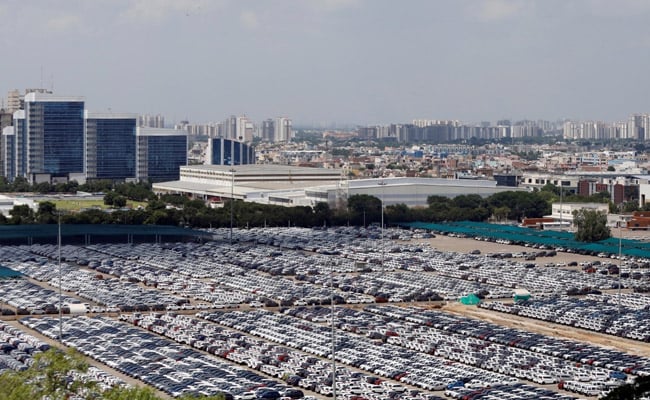
Commerce minister Piyush Goyal has asked automakers to find ways to reduce royalty payments to foreign parent companies for use of technology or brand names, two sources told Reuters, in an effort to boost local investment and reduce outflows.
In country's competitive auto market, top-selling carmakers Maruti Suzuki and Hyundai Motor's local unit pay millions of dollars in royalties to parent companies in Japan and South Korea for using their technology and brand to build and sell cars.
Mr Goyal in a meeting last week asked officials from groups representing carmakers and auto parts manufacturers to review such payments with a view to reducing them, said people with direct knowledge of the discussions.
"The concern raised during the meeting was that the outflow is high, even for old technologies, and something should be done about it," said one of the sources.
The sources declined to be named as the talks are private.
The ministry did not respond to a request for comment.
Government, for years, has debated imposing stricter caps on royalty payments which spiked after 2009 when foreign investment rules were eased and restrictions on such payments were removed.
The country's markets regulator last year suggested imposing curbs on payments exceeding 2 per cent of revenue. The limit was finally set at 5 per cent after complaints from some sectors and fears it may dissuade foreign firms from investing or sharing technology.
Recently however, government has made a renewed push to make the country a major manufacturing hub by encouraging domestic production and curbing imports. It also wants to increase local investment and reduce foreign outflows.
While government does not restrict the amount that can be paid as royalty, any payment by a locally listed company exceeding 5 per cent of revenues needs shareholder approval.
Listed companies such as Maruti Suzuki and parts makers including Bosch, Schaeffler India and Wabco India typically pay royalties of between 1 per cent-5 per cent to their foreign owners.
Maruti Suzuki paid Rs 3,820 crore ($510 million) as royalty to its Japanese parent Suzuki Motor in the fiscal year ending March 31, 2020, amounting to 5 per cent of its revenue, according to its annual report.
Privately-owned companies such as Hyundai's local unit paid $150 million or 2.6 per cent of revenue as royalties to its South Korean parent in fiscal 2019 and Toyota Motor's India arm paid $88 million or 3.4 per cent of revenue to its Japanese parent, government data shows.
Royalty provision has been important in attracting foreign investments into various sectors in India, especially autos, said Vaibhav Gupta, partner at tax firm, Dhruva Advisors.
"Depending on the form in which the government brings back such caps ... it may impact the ability of auto companies to benefit from the use of foreign brands and technical know-how," said Mr Gupta.
He said for many foreign companies royalties are a profit repatriation strategy and changes to these could impact operating and supply chain structures from a fiscal perspective.
Maruti, Toyota and Bosch declined to comment. Hyundai, Schaeffler and Wabco did not respond to emails seeking comment.
Such payments have also been a long-standing issue with minority shareholders.
A February report by proxy firm Institutional Investor Advisory Services showed royalty paid by 31 leading Indian companies with foreign parents, including Maruti and Bosch, grew 9 per cent in fiscal year 2019 to total $1.11 billion.

-
Where You Live Shapes How You Get To Work | The Reason Why

Two-wheelers are the most popular way to get to work in India, accounting for nearly 43% of workplace commutes.
-
High US Salaries, No Green Card Certainty: The Financial Calculation Facing Indian H-1B Families
The suspension of PERM processing at eight technology employers does not cancel existing H-1B visas. What it does is force a question many Indian families have been avoiding: is the US salary worth tying your career and family plans to one employer?
-
Unhedged Position: Can India See An Indonesia-Style Time Correction?
The Nifty is trading below levels it first clocked in 2024. Is there, then, as I have suggested in the headline, potential that the current time correction drags on painfully for the next three-five, even ten years?
-
Navigating Friction And Energy Realities: An Analysis Of Marco Rubio's October Visit To India
Occurring at a critical juncture marked by stalled trade negotiations and escalating geopolitical pressures over global energy supplies, the visit offers a profound window into modern US-India relations.
-
India Exports Capital. Why Not Export Trusteeship?
The big question, then, is whether India can build an institution that global borrowers, investors, banks, and lawyers can trust, even without an Indian connection.
-
France's Economy & Politics Are In Crisis | The Reason Why
Let's look at how the French economy and politics evolved under Nicolas Sarkozy, Franois Hollande and Emmanuel Macron.
-
You May Inherit The Business. You Must Earn Its Credibility.
Succession tests the founder's ability to share authority as much as it tests the next generation's readiness to assume it.
-
Signing Deals Is One Thing; Making Them Work Is Another | The Week In Whys
Sometimes, things don't turn out as planned. Indian companies have lost some bids to rivals, some projects won't produce until 2030.
-
FOMC Wall, PERM Suspension, Hospital Stocks | Talking Points This Week
A PERM suspension would directly affect green-card sponsorship rather than H-1B visas, so the near-term earnings impact could remain relatively limited. The key question is whether this marks a new phase in US scrutiny of Indian IT.
-
Everything, Everywhere, All At Once: Dalal Street's Week To Forget | Joining The Dots
Visa curbs, a Starlink spat and cancer drug caps: what connects this week's shocks for Indian markets









