Government To Steer Clear Of Tata-Mistry Tussle, For Now
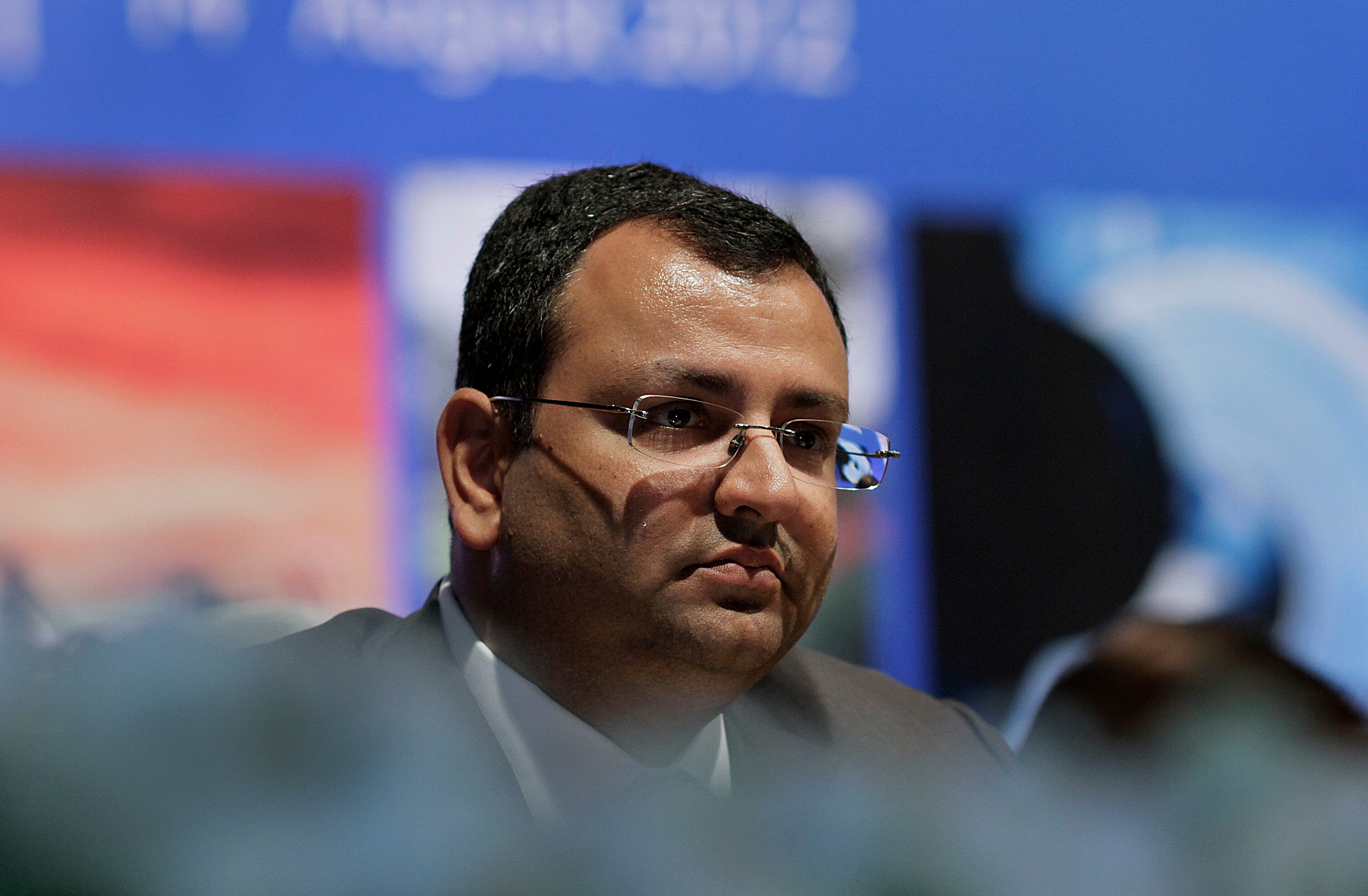
Ousted Tata Group chairman Cyrus Mistry has sought an appointment with Finance Minister Arun Jaitley, who also heads the ministry of corporate affairs, but the government has decided to stay clear of the boardroom tussle in India's largest conglomerate, for now.
Mistry, the first non-family chairman of Tata Sons, the holding company of the Tata Group, who was unceremoniously removed from his position last month, has sought an audience with Jaitley possibly to explain his side of the story. But the finance minister has for now decided not to meet either side as the government does not want to be seen getting embroiled in the Tata Group turmoil, a senior government official said.
Ratan Tata, Mistry's predecessor who was brought in as his replacement in the interim period, has so far not sought an appointment with Jaitley even though there are reports that the two had sought time to meet Prime Minister Narendra Modi.
The official said the government will not suo motu get involved in the turmoil at the Bombay House, the seat of the $100 billion salt-to-software conglomerate.
Ministers, he said, are unlikely to meet either side till the matter reaches the National Company Law Tribunal or any other judicial forum because then it will be a legal battle with the government having practically no role to play. The government does not want to give an impression of siding with either party, the official added.
On his part, Minister of State for Finance Arjun Ram Meghwal said the government is "keeping a close watch on developments" in the Tata-Mistry tussle.
"SEBI and other agencies are also keeping a vigil, but so far, nothing has been referred to the Ministry of Corporate Affairs," he said.
Meghwal is also in-charge of the Ministry of Corporate Affairs.
Mistry has accused Tata Sons of cornering him into being a "lame-duck" chairman in the near four-year tenure and also hiding $18 billion of potential write-downs across five group firms, including Tata Motors and Tata Steel Europe. He has also alleged potential financial issues at the various companies and violations of securities regulations.
His family firm Shapoorji Pallonji Group has 18.4 percent in Tata Sons. As much as 66 percent shares in Tata Sons are held by philanthropic trusts endowed by members of the Tata family.

-
Navigating Friction And Energy Realities: An Analysis Of Marco Rubio's October Visit To India

Occurring at a critical juncture marked by stalled trade negotiations and escalating geopolitical pressures over global energy supplies, the visit offers a profound window into modern US-India relations.
-
India Exports Capital. Why Not Export Trusteeship?
The big question, then, is whether India can build an institution that global borrowers, investors, banks, and lawyers can trust, even without an Indian connection.
-
France's Economy & Politics Are In Crisis | The Reason Why
Let's look at how the French economy and politics evolved under Nicolas Sarkozy, Franois Hollande and Emmanuel Macron.
-
You May Inherit The Business. You Must Earn Its Credibility.
Succession tests the founder's ability to share authority as much as it tests the next generation's readiness to assume it.
-
Signing Deals Is One Thing; Making Them Work Is Another | The Week In Whys
Sometimes, things don't turn out as planned. Indian companies have lost some bids to rivals, some projects won't produce until 2030.
-
FOMC Wall, PERM Suspension, Hospital Stocks | Talking Points This Week
A PERM suspension would directly affect green-card sponsorship rather than H-1B visas, so the near-term earnings impact could remain relatively limited. The key question is whether this marks a new phase in US scrutiny of Indian IT.
-
Everything, Everywhere, All At Once: Dalal Street's Week To Forget | Joining The Dots
Visa curbs, a Starlink spat and cancer drug caps: what connects this week's shocks for Indian markets
-
India Is Going Abroad For Critical Minerals. But It May Take Years To Pay Off | The Reason Why
Although India's steps are in the right direction, they remain modest compared with India's growing dependence.
-
When Everyone Has AI, What Gives You An Edge?
India's young workforce is entering an uncertain world of work where powerful AI tools are becoming widely accessible. The advantage will belong to those who combine deep expertise with digital fluency, and the distinctly human capabilities that technology cannot manufacture.
-
Wrong Labels, High Pesticide Residues Holding Back Agri Exports | The Reason Why
India needs stronger domestic food-safety and labelling standards, with best practices becoming part of everyday business for farmers, traders and food companies.










