Government To Double Ethanol Distillation Capacities To Meet Blending Target By 2025
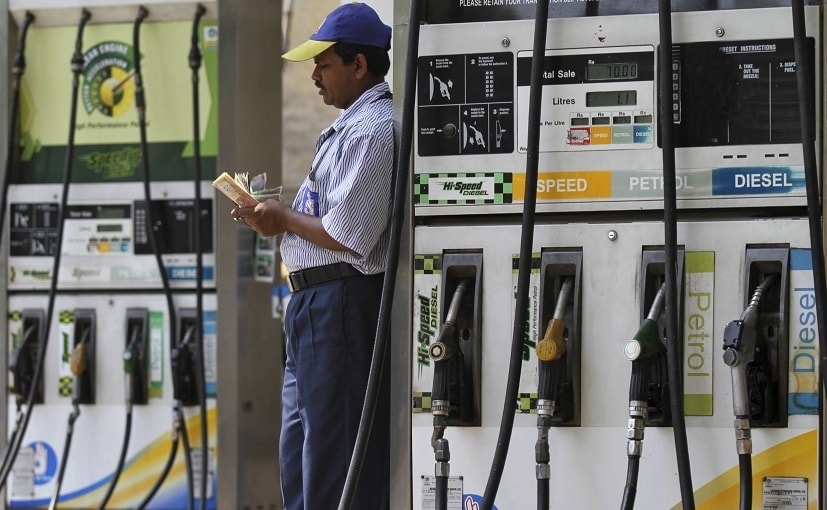
The Government aims to double ethanol distillation capacities to achieve the 20 per cent blending target by 2025. To enable this, sugar mills and distilleries have been asked to enhance their capacities.
The NDA Government has set up the target of achieving 20 per cent ethanol blended petrol by 2025, a target which it has advanced by five years.
Earlier this month, Prime Minister Narendra Modi had released a report of an expert committee on a road map for ethanol blending in India from 2020 till 2025 on the World Environment Day.
India plans to reduce carbon emissions by 35 per cent by 2030 from its 2005 levels.
Secretary in the Ministry of Food and Public Distribution Sudhanshu Pandey told media persons on Tuesday that in order to facilitate capacity expansion of sugar mills and distilleries, bank loans are being provided for which interest subvention up to six per cent is being borne by the Government.
He said that the production of fuel grade ethanol and its supply to oil marketing companies has gone up by five times from 2013-14 to 2018-19.
"In the ethanol supply year (ESY) 2018-19, we touched a historically high figure of about 189 crore litres thereby achieving 5 per cent blending. It is expected that in current ethanol supply year 2020-21, more than 300 crore litres ethanol is likely to be supplied to oil marketing companies to achieve 8 to 8.5 per cent blending levels. It is also likely that we would be achieving 10 per cent blending target by 2022," Mr Pandey said.
He told media persons that ethanol blended petrol will bring positive impact on country's economy.
The Secretary said that it would promote ethanol as a fuel which is indigenous, non-polluting and virtually inexhaustible and would improve the environment and the eco-system as use of E20 fuel reduces carbon monoxide emission by 30 per cent to 50 per cent and hydrocarbon by 20 per cent.
He further informed that due to the upcoming investment of about Rs 41,000 crore in capacity addition of new distilleries, various new employment opportunities will be created in rural areas, which will strengthen the agricultural economy.
Also ethanol blended petrol would save foreign exchange of more than Rs 30,000 crore on account of crude oil import bill and also reduce dependence on imported fossil fuel, Mr Pandey informed.
Shri Pandey said in the next sugar season 2021-22, about 35 metric tonnes of sugar is estimated to be diverted and by 2025 about 60 metric tonnes of sugar is targeted to be diverted to ethanol, which would solve the problem of excess sugarcane as well as sugar and would also help sugar mills in clearing cane price dues of farmers.

-
Talking Points This Week: Tech Nerves, FII Buying, And A Faraway Banking Shock

The global markets are not shining this Diwali. The exception in the large markets is, India.
-
Midterm Rally Lasted A Day. The Hard Reality Of A Divided US May Last Two Years | Opinion
Between a contested AI boom, a debt ceiling that arrives in 2027 and a president with every incentive to act alone, the next two years may prove more volatile than the first day's rally suggests.
-
Blue Wave Will Derail the AI Trade but Won't Dismantle the AI Era | Unhedged Position
The Democrats' sweep of the US Congress will see politics collide with economic forces both over the long and short term.
-
It's Time To Take The GST Council's Bet On Trust Global
Payment records can prove India's services exports, and clear, proportionate rules can bring foreign digital sellers into the tax net.
-
Opinion | India at 38: From Innovation Overperformer to Innovation Powerhouse
India now has 453 VC-backed deep science startups, 18 of them late-stage, after 117 percent growth since 2020. Laurus Labs, at USD 9.3 billion, is the most valuable deep science company in any middle-income economy outside China.
-
Navigating Energy Crossroads: S Jaishankar's Call For Diversified Supply Chains At G20 Ministerial Meeting
As geopolitical fault lines continue to test maritime trade routes and commodity flows, Jaishankar's message remains pertinent: true economic resilience requires open markets, protected transit lines, and a genuine commitment to multilateral cooperation rather than coercion.
-
Indians Are Travelling, But Not Every Journey Is A Holiday | The Week In Whys
Pilgrims, patients and working women are the real travellers, and the system hasn't quite caught up with them.
-
Getting To Work Costs Women More | The Reason Why
It is not just about women paying more than men. It is about women paying much more in cities than in villages.
-
AI Bias In Investing Cannot Be Eliminated, But It Can Be Governed
Framing is a particularly important example as identical financial information presented in terms of gains rather than losses can lead an LLM to reach a different assessment.









