Government To Borrow Rs 6.55 Lakh Crore In Second Half, Sticks To FY24 Plan
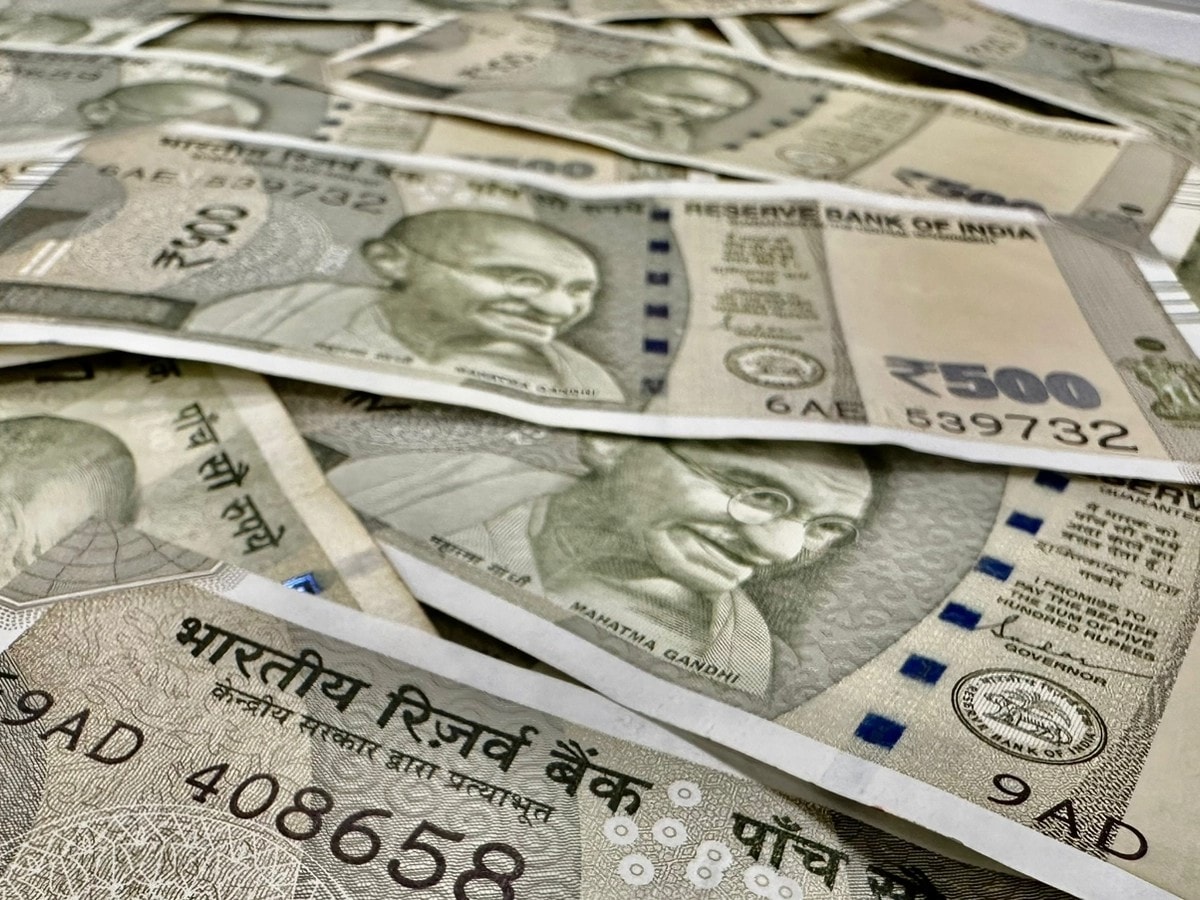
The central government's borrowing for the rest of the fiscal 2024 will stay within the budgeted limit, aided by healthy small savings figures.
The central government, in consultation with the central bank, will borrow Rs 6.55 lakh crore--42.45% of the total Rs 15.43 lakh crore budgeted for FY24--in the second half, according to a Finance Ministry statement on Tuesday.
Sovereign green bonds worth Rs 20,000 crore are expected to be issued as part of the borrowing plan.
In a first, the government also stated it will also issue securities with 50-year maturity, responding to market demand for longer-duration securities.
The share of borrowing under different maturities will be:
3-year: 6.11%.
5-year: 11.45%.
7-year: 9.16%.
10-year: 22.9%
14-year: 15.27%.
30-year: 12.21%.
40-year: 18.32%.
50-year: 4.58%.
The gross market borrowing of Rs 6.55 lakh crore will be completed through 20 weekly auctions, the ministry said.
"The government will continue to carry out switching of securities to smoothen the redemption profile. Out of the Rs 1 lakh crore of budgeted (BE) switch amount, Rs 51,597 crore of switch auctions have already been conducted and the balance amount of switch auctions will be conducted in H2," it said.
The government notified that it will continue to exercise the greenshoe option to retain an additional subscription of up to Rs 2,000 crore against each of the securities indicated in the auction notification.
Through treasury bills, weekly borrowing in the third quarter is expected to be Rs 24,000 crore with net borrowing of Rs -52,000 lakh crore during the quarter.
Of this, Rs 7,000 crore will issued as 91-day treasury bills, Rs 8,000 crore under 182-day treasury bills and Rs 9,000 crore under 364-day treasury bills in each auction to be conducted during the quarter.
To account for temporary mismatches in government accounts, the Reserve Bank of India has fixed the ways and mean advances limit for the second half at Rs 50,000 crore.

-
Blue Wave Will Derail the AI Trade but Won't Dismantle the AI Era | Unhedged Position

The Democrats' sweep of the US Congress will see politics collide with economic forces both over the long and short term.
-
It's Time To Take The GST Council's Bet On Trust Global
Payment records can prove India's services exports, and clear, proportionate rules can bring foreign digital sellers into the tax net.
-
Opinion | India at 38: From Innovation Overperformer to Innovation Powerhouse
India now has 453 VC-backed deep science startups, 18 of them late-stage, after 117 percent growth since 2020. Laurus Labs, at USD 9.3 billion, is the most valuable deep science company in any middle-income economy outside China.
-
Navigating Energy Crossroads: S Jaishankar's Call For Diversified Supply Chains At G20 Ministerial Meeting
As geopolitical fault lines continue to test maritime trade routes and commodity flows, Jaishankar's message remains pertinent: true economic resilience requires open markets, protected transit lines, and a genuine commitment to multilateral cooperation rather than coercion.
-
Indians Are Travelling, But Not Every Journey Is A Holiday | The Week In Whys
Pilgrims, patients and working women are the real travellers, and the system hasn't quite caught up with them.
-
Getting To Work Costs Women More | The Reason Why
It is not just about women paying more than men. It is about women paying much more in cities than in villages.
-
AI Bias In Investing Cannot Be Eliminated, But It Can Be Governed
Framing is a particularly important example as identical financial information presented in terms of gains rather than losses can lead an LLM to reach a different assessment.
-
Joining The Dots | Dark Skies, Steady Diya: Why Hope Holds This Diwali
With war, a weak rupee and foreign outflows weighing on sentiment, policymakers at the NDTV World Summit and market veterans at NDTV Profit Ignite: Diwali Edition offered the same advice: stay invested and filter out the noise.
-
The Curious Case of Equitas Small Finance Bank And A CEO Who Quit For Stock
PN Vasudevan believes persistent investor concerns over a perceived conflict of interest had become a governance overhang on Equitas Small Finance Bank's stock, even as the lender improved profitability and asset quality.










