Government Scraps Higher Surcharge On Foreign Investors As Announced In Budget
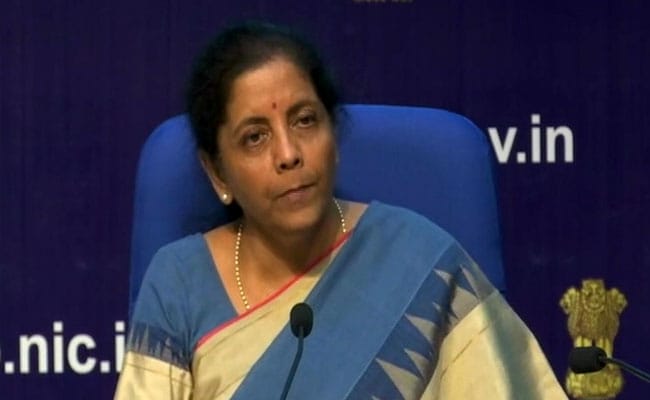
Finance Minister Nirmala Sitharaman on Friday announced the government's decision to scrap the higher tax surcharge on foreign portfolio investors (FPIs). An increase in the effective surcharge on the super rich implemented as part of the Finance Bill 2019 also applied to foreign portfolio investors (FPIs), mainly registered as trusts. The higher taxes had rattled many FPIs as the changes announced in the first budget of the PM Narendra Modi-led second National Democratic Alliance government came into force.
“The enhanced surcharge on FPI goes, in simple words,” Ms Sitharaman said, referring to the budget proposal pertaining to foreign portfolio investors. “In other words, the pre-budget position is restored,” the Finance Minister said.
The rollback of higher surcharge on foreign portfolio investors came after capital market participants and foreign institutional investors presented a charter of demands to the Finance Minister. Those demands includes a rollback of surcharge on FPIs, in a bid to shore up investors' sentiment.
The Ministry of Finance also decided to withdraw he enhanced surcharge on short- and long-term capital gains arising from transfer of equity shares.
"In order to encourage investment in the capital market, it has been decided to withdraw the enhanced surcharge levied by Finance Act, 2019 on long/short term capital gains arising from transfer of equity shares/units referred in section 111A and 112A," MS Sitharaman said.
The implementation of higher surcharge led to a net outflow of shares worth Rs 12,418.73 crore by the foreign portfolio investors in the month of July.
The equity markets also witnessed sharp declines after the government announced imposition of higher tax surcharge on FPIs. Since the Budget day, the Sensex has fallen 8 per cent and the Nifty has plunged 9.35 per cent.

-
A New Samvat Wishlist: Inclusive Prosperity And Human Development

India has strengthened its economic foundations through infrastructure, digital access and enterprise. Its next growth chapter must deepen productivity, create better livelihoods and widen participation in prosperity.
-
Love, Sex Aur Dhokha: The Audacious Plot To Spy On Jensen Huang
A Taipei dinner, a Singapore chip buyer and a suspected Chinese asset: inside the alleged spy operation that got close to NVIDIA's Jensen Huang.
-
Ten Things I Learnt This Samvat
Patience can be a trap. Cheap stocks can stay cheap. Leverage can wipe you out. What did Samvat 2082 teach us? Niraj Shah writes on 10 lessons from the year gone by.
-
Talking Points This Week: Tech Nerves, FII Buying, And A Faraway Banking Shock
The global markets are not shining this Diwali. The exception in the large markets is, India.
-
Midterm Rally Lasted A Day. The Hard Reality Of A Divided US May Last Two Years | Opinion
Between a contested AI boom, a debt ceiling that arrives in 2027 and a president with every incentive to act alone, the next two years may prove more volatile than the first day's rally suggests.
-
Blue Wave Will Derail the AI Trade but Won't Dismantle the AI Era | Unhedged Position
The Democrats' sweep of the US Congress will see politics collide with economic forces both over the long and short term.
-
It's Time To Take The GST Council's Bet On Trust Global
Payment records can prove India's services exports, and clear, proportionate rules can bring foreign digital sellers into the tax net.
-
Opinion | India at 38: From Innovation Overperformer to Innovation Powerhouse
India now has 453 VC-backed deep science startups, 18 of them late-stage, after 117 percent growth since 2020. Laurus Labs, at USD 9.3 billion, is the most valuable deep science company in any middle-income economy outside China.
-
Navigating Energy Crossroads: S Jaishankar's Call For Diversified Supply Chains At G20 Ministerial Meeting
As geopolitical fault lines continue to test maritime trade routes and commodity flows, Jaishankar's message remains pertinent: true economic resilience requires open markets, protected transit lines, and a genuine commitment to multilateral cooperation rather than coercion.









