Government Says Revised Mauritius Treaty To Curb Tax Evasion
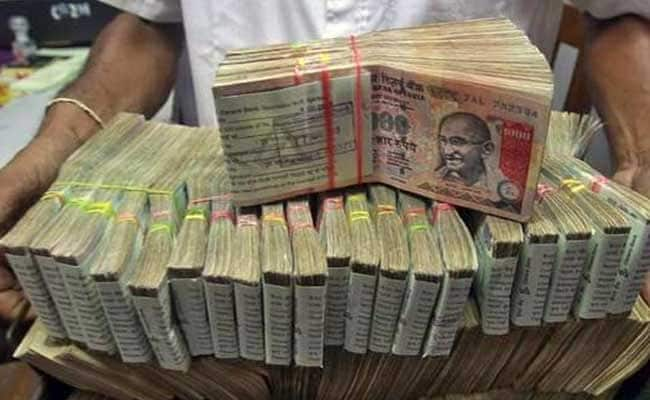
New Delhi: Revised tax treaty with Mauritius, which allows India to tax capital gains on investments routed through the island nation, will tackle round tripping of funds and curb tax evasion, the Finance Ministry said on Monday.
Following the decade-long negotiations, India and Mauritius signed the amendment to the 1983 Double Taxation Avoidance Convention (DTAC) on May 10, and was notified by the Indian government on August 11.
"The Protocol will tackle treaty abuse and round tripping of funds attributed to the India-Mauritius treaty, curb revenue loss, prevent double non-taxation, streamline the flow of investment and stimulate the flow of exchange of information between the two contracting parties."
"It will improve transparency in tax matters and will help curb tax evasion and tax avoidance," a Finance Ministry statement said.
Under the amended treaty, India will impose capital gains tax at 50 per cent of the prevailing domestic rate for two years beginning April 1, 2017. Full rate will apply from April 1, 2019.
But this concessional rate would apply to a Mauritius resident company that can prove that it has a total expenditure of at least Rs 27 lakh in the African island nation and is not a 'shell' company with just a post office address.
"The Protocol also provides for updating of the Exchange of Information Article as per the international standard, provision for assistance in collection of taxes, source-based taxation of other income, amongst other changes," the ministry said.
India received as much as $8.3 billion foreign direct investment (FDI) from Mauritius last fiscal year.
The Finance Ministry said that the Protocol provides for source-based taxation of capital gains arising from alienation of shares acquired on or after April 1, 2017, in a company resident in India with effect from financial year 2017-18.
It also said that investments made before April 1, 2017 have been grandfathered and will not be subject to capital gains taxation in India.
Nangia & Co managing partner Rakesh Nangia said certain investments were routed through Mauritius, solely for purpose of taking the benefit of capital gain tax exemption, because of the lenient residency rules of Mauritius.
"The protocol shall increase India's tax take by tackling this treaty abuse and also by restricting the beneficial provisions during the transition period (2017-2019) only to those having substantial economic activities in Mauritius," Mr Nangia said.
The protocol further provides for source-based taxation of interest income of banks, whereby interest arising in India to Mauritian resident banks will be subject to withholding tax in India at the rate of 7.5 per cent in respect of debt claims or loans made after 31st March, 2017.
However, interest income of Mauritian resident banks in respect of debt-claims existing on or before March 31, 2017 shall be exempt from tax in India as per existing provisions in the Convention.
The three-decade-old taxation treaty, which came into force from April 1, 1983, is said to have been misused by many Indian and multinational companies to avoid paying tax or to route illicit funds.
The DTAC till now provided that capital gains on sale of assets in India by companies registered in Mauritius can only be taxed in Mauritius. While short-term capital gains are taxed at 15 per cent in India, they are exempt in Mauritius.
So, such companies escape paying taxes in both countries.
A large proportion of foreign investment in the stock market comes through companies registered in the Indian Ocean island nation and are exempted from tax in India under the treaty.
"Giving teeth to the exchange of information clause, Indian Tax Authorities would now be able to request information that is 'foreseeably relevant' instead of the erstwhile 'necessary'," Mr Nangia said.

-
High US Salaries, No Green Card Certainty: The Financial Calculation Facing Indian H-1B Families

The suspension of PERM processing at eight technology employers does not cancel existing H-1B visas. What it does is force a question many Indian families have been avoiding: is the US salary worth tying your career and family plans to one employer?
-
Unhedged Position: Can India See An Indonesia-Style Time Correction?
The Nifty is trading below levels it first clocked in 2024. Is there, then, as I have suggested in the headline, potential that the current time correction drags on painfully for the next three-five, even ten years?
-
Navigating Friction And Energy Realities: An Analysis Of Marco Rubio's October Visit To India
Occurring at a critical juncture marked by stalled trade negotiations and escalating geopolitical pressures over global energy supplies, the visit offers a profound window into modern US-India relations.
-
India Exports Capital. Why Not Export Trusteeship?
The big question, then, is whether India can build an institution that global borrowers, investors, banks, and lawyers can trust, even without an Indian connection.
-
France's Economy & Politics Are In Crisis | The Reason Why
Let's look at how the French economy and politics evolved under Nicolas Sarkozy, Franois Hollande and Emmanuel Macron.
-
You May Inherit The Business. You Must Earn Its Credibility.
Succession tests the founder's ability to share authority as much as it tests the next generation's readiness to assume it.
-
Signing Deals Is One Thing; Making Them Work Is Another | The Week In Whys
Sometimes, things don't turn out as planned. Indian companies have lost some bids to rivals, some projects won't produce until 2030.
-
FOMC Wall, PERM Suspension, Hospital Stocks | Talking Points This Week
A PERM suspension would directly affect green-card sponsorship rather than H-1B visas, so the near-term earnings impact could remain relatively limited. The key question is whether this marks a new phase in US scrutiny of Indian IT.
-
Everything, Everywhere, All At Once: Dalal Street's Week To Forget | Joining The Dots
Visa curbs, a Starlink spat and cancer drug caps: what connects this week's shocks for Indian markets
-
India Is Going Abroad For Critical Minerals. But It May Take Years To Pay Off | The Reason Why
Although India's steps are in the right direction, they remain modest compared with India's growing dependence.









